

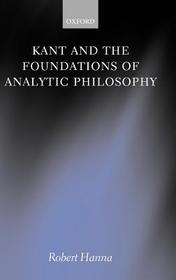
Kant and the Foundations of Analytic Philosophy
-
10% KEDVEZMÉNY?
- A kedvezmény csak az 'Értesítés a kedvenc témákról' hírlevelünk címzettjeinek rendeléseire érvényes.
- Kiadói listaár GBP 70.00
-
31 605 Ft (30 100 Ft + 5% áfa)
Az ár azért becsült, mert a rendelés pillanatában nem lehet pontosan tudni, hogy a beérkezéskor milyen lesz a forint árfolyama az adott termék eredeti devizájához képest. Ha a forint romlana, kissé többet, ha javulna, kissé kevesebbet kell majd fizetnie.
- Kedvezmény(ek) 10% (cc. 3 161 Ft off)
- Kedvezményes ár 28 445 Ft (27 090 Ft + 5% áfa)
Iratkozzon fel most és részesüljön kedvezőbb árainkból!
Feliratkozom
31 605 Ft

Beszerezhetőség
Megrendelésre a kiadó utánnyomja a könyvet. Rendelhető, de a szokásosnál kicsit lassabban érkezik meg.
Why don't you give exact delivery time?
A beszerzés időigényét az eddigi tapasztalatokra alapozva adjuk meg. Azért becsült, mert a terméket külföldről hozzuk be, így a kiadó kiszolgálásának pillanatnyi gyorsaságától is függ. A megadottnál gyorsabb és lassabb szállítás is elképzelhető, de mindent megteszünk, hogy Ön a lehető leghamarabb jusson hozzá a termékhez.
A termék adatai:
- Kiadó OUP Oxford
- Megjelenés dátuma 2001. január 4.
- ISBN 9780198250722
- Kötéstípus Keménykötés
- Terjedelem327 oldal
- Méret 242x162x23 mm
- Súly 613 g
- Nyelv angol 0
Kategóriák
Rövid leírás:
Robert Hanna presents a fresh view of the Kantian and analytic traditions that have dominated continental European and Anglo-American philosophy over the last two centuries, and of the relation between them. The rise of analytic philosophy decisively marked the end of the hundred-year dominance of Kant's philosophy in Europe. But Hanna shows that the analytic tradition also emerged from Kant's philosophy in the sense that its members were able to define and legitimate their ideas only by means of an intensive, extended engagement with, and a partial or complete rejection of, the Critical Philosophy. Hanna puts forward a new 'cognitive-semantic' interpretation of transcendental idealism, and a vigorous defence of Kant's theory of analytic and synthetic necessary truth. These will make Kant and the Foundations of Analytic Philosophy compelling reading not just for specialists in the history of philosophy, but for all who are interested in these fundamental philosophical issues.
TöbbHosszú leírás:
Robert Hanna presents a fresh view of the Kantian and analytic traditions that have dominated continental European and Anglo-American philosophy over the last two centuries, and of the relation between them. The rise of analytic philosophy decisively marked the end of the hundred-year dominance of Kant's philosophy in Europe. But Hanna shows that the analytic tradition also emerged from Kant's philosophy in the sense that its members were able to define and legitimate their ideas only by means of an intensive, extended engagement with, and a partial or complete rejection of, the Critical Philosophy. Hanna's book therefore comprises both an interpretative study of Kant's massive and seminal Critique of Pure Reason, and a critical essay on the historical foundations of analytic philosophy from Frege to Quine.
Hanna considers Kant's key doctrines in the Critique in the light of their reception and transmission by the leading figures of the analytic tradition--Frege, Moore, Russell, Wittgenstein, Carnap, and Quine. But this is not just a study in the history of philosophy, for out of this emerges Hanna's original approach to two much-contested theories that remain at the heart of contemporary philosophy. Hanna puts forward a new 'cognitive-semantic' interpretation of transcendental idealism, and a vigorous defence of Kant's theory of analytic and synthetic necessary truth. These will make Kant and the Foundations of Analytic Philosophy compelling reading not just for specialists in the history of philosophy, but for all who are interested in these fundamental philosophical issues.
Offers an interpretation and defence of Kant's transcendental idealism, neatly dovetailed with an account and critique of analytic philosophy as it developed from Frege to Quine ... provides a sophisticated reconstruction and defence of Kant's conception.
Tartalomjegyzék:
Introduction
Kant and the Semantic Problem
How are Cognitions Possible?
Analyticity within the Limits of Cognition Alone
The Significance of Syntheticity
Necessity Restricted: The Synthetic A Priori
Concluding Un-Quinean Postscript
Bibliography, Index

