

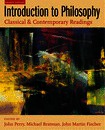
Introduction to Philosophy
Classical and Contemporary Readings
-
10% KEDVEZMÉNY?
- A kedvezmény csak az 'Értesítés a kedvenc témákról' hírlevelünk címzettjeinek rendeléseire érvényes.
- Kiadói listaár GBP 45.00
-
20 317 Ft (19 350 Ft + 5% áfa)
Az ár azért becsült, mert a rendelés pillanatában nem lehet pontosan tudni, hogy a beérkezéskor milyen lesz a forint árfolyama az adott termék eredeti devizájához képest. Ha a forint romlana, kissé többet, ha javulna, kissé kevesebbet kell majd fizetnie.
- Kedvezmény(ek) 10% (cc. 2 032 Ft off)
- Kedvezményes ár 18 286 Ft (17 415 Ft + 5% áfa)
Iratkozzon fel most és részesüljön kedvezőbb árainkból!
Feliratkozom
20 317 Ft

Beszerezhetőség
A kiadónál véglegesen elfogyott, nem rendelhető. Érdemes újra keresni a címmel, hátha van újabb kiadás.
Why don't you give exact delivery time?
A beszerzés időigényét az eddigi tapasztalatokra alapozva adjuk meg. Azért becsült, mert a terméket külföldről hozzuk be, így a kiadó kiszolgálásának pillanatnyi gyorsaságától is függ. A megadottnál gyorsabb és lassabb szállítás is elképzelhető, de mindent megteszünk, hogy Ön a lehető leghamarabb jusson hozzá a termékhez.
A termék adatai:
- Kiadás sorszáma 4
- Kiadó Oxford University Press
- Megjelenés dátuma 2006. november 30.
- ISBN 9780195169249
- Kötéstípus Puhakötés
- Terjedelem834 oldal
- Méret 235x190x30 mm
- Súly 1266 g
- Nyelv angol
- Illusztrációk 5 line illus. 0
Kategóriák
Rövid leírás:
Written for introductory philosophy courses, this work presents a collection of classical and contemporary philosophy. It includes sections on the meaning of life, God and evil, knowledge and reality, the mind/body problem, freedom of will, consciousness, ethics, and philosophical puzzles and paradoxes. It covers an instructor CD.
TöbbHosszú leírás:
Introduction to Philosophy, Fourth Edition, is the most comprehensive topically organized collection of classical and contemporary philosophy available. Building on the exceptionally successful tradition of previous editions, this edition for the first time incorporates the insights of a new coeditor, John Martin Fischer, and has been updated and revised to make it more accessible. Ideal for introductory philosophy courses, the text includes sections on the meaning of life,
God and evil, knowledge and reality, the philosophy of science, the mind/body problem, freedom of will, consciousness, ethics, and philosophical puzzles and paradoxes. It presents seventy substantial--and in some cases complete--selections from the best and most influential works in philosophy, offering a
unique balance between classical and contemporary material. An extensive glossary of philosophical terms is also included.
The fourth edition features fifteen new readings, including work by Albert Camus, Roderick M. Chisholm, Daniel Dennett, Harry G. Frankfurt, William Paley, Derek Parfit, John Perry, Richard Taylor, Peter Van Inwagen, Bernard Williams, and Susan Wolf. Part III, Knowledge and Reality, has been restructured and now includes Plato's Thaetetus, selections by Edmund L. Gettier and Robert Nozick, and an essay by Christopher Grau that explores the philosophical concepts presented in the
popular film The Matrix. Two new ethics puzzles--"The Trolley Problem" and "Ducking Harm and Sacrificing Others"--are also included. This edition incorporates Study Questions after each reading and is accompanied by a student companion website.
Tartalomjegyzék:
*=New to this edition
Preface to the Fourth Edition
Preface to the First Edition
Introduction: On the Study of Philosophy
Part I: Philosophy and the Meaning of Life
Bertrand Russell, The Value of Philosophy
J. J. C. Smart, The Province of Philosophy
Thomas Nagel, The Absurd
Plato, Apology: Defence of Socrates
* Albert Camus, The Myth of Sisyphus
* Richard Taylor, The Meaning of Human Existence
* Susan Wolf, The Meanings of Lives
Part II: God and Evil
Introduction
A. Why Believe?
Saint Anselm, The Ontological Argument
Saint Thomas Aquinas, The Existence of God
Blaise Pascal, The Wager
Bertrand Russell, Why I Am Not a Theist
B. The Problem of Evil
David Hume, Dialogues Concerning Natural Religion
Gottfried Leibniz, God, Evil and the Best of All Possible Worlds
* William Paley, Natural Theology
* John Perry, Dialogue on Good, Evil, and the Existence of God
Part III: Knowledge and Reality
Introduction
* A. Plato and the Concept of Knowledge
* Plato, Thaetetus
* Edmund Gettier, Is Justified True Belief Knowledge?
B. Descartes and the Problems of Skepticism
René Descartes, Meditations on First Philosophy
* Christopher Grau, Bad Dreams, Evil Demons, and the Experience Machine: Philosophy and The Matrix
* Robert Nozick, Excerpt from Philosophical Explanations
C. Hume's Problems and Some Solutions
David Hume, Of Scepticism with Regard to the Senses
David Hume, An Enquiry Concerning Human Understanding
W. C. Salmon, The Problem of Induction
Part IV: Minds, Bodies, and Persons
Introduction
A. The Traditional Problem of Mind and Body
Bertrand Russell, The Argument from Analogy for Other Minds
Gilbert Ryle, Descartes's Myth
David M. Armstrong, The Nature of Mind
David Lewis, Mad Pain and Martian Pain
Daniel Dennett, Intentional Systems
Paul M. Churchland, Eliminative Materialism
B. Minds, Brains, and Machines
Hilary Putnam, Turing Machines
A. M. Turing, Computing Machinery and Intelligence
John R. Searle, Minds, Brains, and Programs
C. Consciousness
Thomas Nagel, What Is It Like to Be a Bat?
Frank Jackson, What Mary Didn't Know
David Lewis, Knowing What It's Like
D. Personal Identity
John Perry, A Dialogue on Personal Identity and Immortality
* Bernard Williams, The Self and the Future
* Derek Parfit, Personal Identity
* Daniel Dennett, Where Am I?
E. Freedom, Determinism, and Responsibility
* Roderick M. Chisholm, Human Freedom and the Self
* Peter Van Inwagen, The Powers of Rational Beings: Freedom of the Will
David Hume, Of Liberty and Necessity
Richard Taylor, Freedom and Determinism
* Harry G. Frankfurt, Alternate Possibilities and Moral Responsibility
Harry G. Frankfurt, Freedom of the Will and the Concept of a Person
Part V: Ethics and Society
Introduction
A. Utilitarianism
Jeremy Bentham, The Principle of Utility
John Stuart Mill, Utilitarianism
E. F. Carritt, Criticisms of Utilitarianism
J. J. C. Smart, Extreme and Restricted Utilitarianism
Bernard Williams, Utilitarianism and Integrity
Peter Singer, Famine, Affluence, and Morality
B. Kantian Ethics
Immanuel Kant, Groundwork of the Metaphysic of Morals
Onora O'Neill, Kantian Approaches to Some Famine Problems
Thomas Nagel, War and Massacre
C. Aristotelian Ethics
Aristotle, Nichomachean Ethics
Thomas Nagel, Aristotle on Eudaimonia
Rosalind Hursthouse, Virtue Theory and Abortion
D. Justice and Equality
John Rawls, A Theory of Justice
Robert Nozick, Justice and Entitlement
G. A. Cohen, Where the Action Is: On the Site of Distributive Justice
John Stuart Mill, The Subjection of Women
Debra Satz, Markets in Women's Reproductive Labor
Kwame Anthony Appiah, Racisms
E. Challenges to Morality
1. Morality and Self-Interest
Plato, The Republic
David Hume, An Enquiry Concerning the Principles of Morals
David Gauthier, Morality and Advantage
J. L. Mackie, The Law of the Jungle: Moral Alternatives and Principles of Evolution
2. Subjectivism, Relativism, and Skepticism
J. L. Mackie, The Subjectivity of Values
Gilbert Harman, Ethics and Observation
Nicholas L. Sturgeon, Moral Explanations
Part VI: Puzzles and Paradoxes
Introduction
A. Zeno's Paradoxes
Achilles and the Tortoise
The Racecourse
The Argument Against Plurality
B. Metaphysical and Epistemological Puzzles and Paradoxes
The Paradox of Identity
The Paradox of the Heap
The Surprise Examination
Goodman's New Riddle of Induction
C. Puzzles of Rational Choice
The Prisoner's Dilemma
Newcomb's Problem
Kavka's Toxin Puzzle
Quinn's Puzzle of the Self-Torturer
D. Paradoxes of Logic, Set Theory, and Semantics
The Paradox of the Liar
Other Versions of the Liar
Russell's Paradox
Grelling's Paradox
* E. Puzzles of Ethics
* The Trolley Problem
* Ducking Harm and Sacrificing Others
Glossary of Philosophical Terms

