

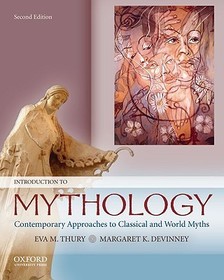
Introduction to Mythology
Contemporary Approaches to Classical and World Myths
-
10% KEDVEZMÉNY?
- A kedvezmény csak az 'Értesítés a kedvenc témákról' hírlevelünk címzettjeinek rendeléseire érvényes.
- Kiadói listaár GBP 55.00
-
24 832 Ft (23 650 Ft + 5% áfa)
Az ár azért becsült, mert a rendelés pillanatában nem lehet pontosan tudni, hogy a beérkezéskor milyen lesz a forint árfolyama az adott termék eredeti devizájához képest. Ha a forint romlana, kissé többet, ha javulna, kissé kevesebbet kell majd fizetnie.
- Kedvezmény(ek) 10% (kb. 2 483 Ft)
- Kedvezményes ár 22 349 Ft (21 285 Ft + 5% áfa)
Iratkozzon fel most és részesüljön kedvezőbb árainkból!
Feliratkozom
24 832 Ft

Beszerezhetőség
Bizonytalan a beszerezhetőség. Érdemes még egyszer keresni szerzővel és címmel. Ha nem talál másik, kapható kiadást, forduljon ügyfélszolgálatunkhoz!
Why don't you give exact delivery time?
A beszerzés időigényét az eddigi tapasztalatokra alapozva adjuk meg. Azért becsült, mert a terméket külföldről hozzuk be, így a kiadó kiszolgálásának pillanatnyi gyorsaságától is függ. A megadottnál gyorsabb és lassabb szállítás is elképzelhető, de mindent megteszünk, hogy Ön a lehető leghamarabb jusson hozzá a termékhez.
A termék adatai:
- Kiadás sorszáma 2
- Kiadó OUP USA
- Megjelenés dátuma 2009. április 30.
- ISBN 9780195332940
- Kötéstípus Puhakötés
- Terjedelem726 oldal
- Méret 253x203x27 mm
- Súly 1439 g
- Nyelv angol
- Illusztrációk 205 black and white halftones, 39 black and white line illustrations 0
Kategóriák
Hosszú leírás:
The only complete world mythology textbook available, Introduction to Mythology: Contemporary Approaches to Classical and World Myths, Second Edition, integrates original texts with explanations, interpretations, theory, and numerous pedagogical aids to introduce students to a wide range of myths from various critical perspectives. Featuring texts from sources around the world, it includes readings from Greek and Roman classics (by Homer, Hesiod, Ovid, and other writers);
Nordic mythology (by Snorri Sturluson); Hindu culture (The Ramayana); Chinese mythology (Nü Kwa; new to this edition) and from such ancient works as The Epic of Gilgamesh, the Bible, and the Mesopotamian story of Enuma Elish (new to this edition). Selections from Native-American sources and folktales and
stories from Africa, Germany, and the United States are also included. In addition, authors Eva Thury and Margaret Devinney draw comparisons between classical myths and such contemporary cultural phenomena as The X Files, Star Trek, Mother Goose, and, new to this edition, Harry Potter, Stagecoach, and Firefly. They also incorporate readings by Carl Jung, Claude Levi-Strauss, Victor Turner, and other scholars who consider mythic material from different analytical
perspectives. Finally, traditional works by writers like John Milton and John Keats as well as those by contemporary authors like Anne Sexton, John Updike, Angela Carter, and James Joyce are presented as examples of literary texts with mythological roots.
Introduction to Mythology uses an innovative pedagogical structure to help students unravel the complex web of literary allusions often found in mythological texts:
Extensive marginal notes provide cross-references and explanations of terms and culture-specific concepts
A glossary of deities and suggested readings for each chapter offer students additional resources
An improved and refined art program features more than 200 illustrations, photographs, and maps
An illustrated timeline places the readings in relation to each other and to historical and cultural events and artifacts
A Student's Website contains chapter objectives and summaries, key terms, study questions, self-tests, and off-site links of interest
An Instructor's Manual includes key terms, pedagogical suggestions, study questions and projects, and sample objective test questions for each chapter
Tartalomjegyzék:
PART 1. INTRODUCTION TO STUDYING MYTH
What Is Myth?
Ways of Understanding Myth
PART 2. MYTHS OF CREATION AND DESTRUCTION
PART 2A. MYTHS OF CREATION
Greek Creation Stories
Ovid's Creation Story
Biblical Creation Stories
Enuma Elish: A Mesopotamian Creation Story
The Prose Edda's Creation Stories
Native American Creation Stories from the Southwestern United States
African Creation Stories
Nü Kwa: A Chinese Creator Goddess
PART 2B. MYTHS OF DESTRUCTION
Ovid's Flood Story
Biblical Flood Stories
Ragnarok
PART 3. HEROES AND TRICKSTERS
The Hero with a Thousand Faces: The book by Joseph Campbell, discussed by David Whomsley
The Epic of Gilgamesh
A Levi-Straussian Analysis of the Epic of Gilgamesh—G.S. Kirk
The Ramayana
Heroes in the Prose Edda—Snorri Sturluson
Oedipus the King—Sophocles
The Structural Study of Myth—Claude Levi-Strauss
Raven: A Native American Trickster
The Mwindo Epic
African and African-American Trickster Stories
Prometheus: The Greek Trickster
Looking Back at Heroes: The Different Versions of a Myth
PART 4. RITUAL AND MYTH
Ritual—Victor Turner
Demeter and Persephone: The Homeric Hymn to Demeter
Isis and Osiris
"Deciphering a Meal"—Mary Douglas
The Rituals of Northern Europe—H.R. Ellis Davidson
Heracles and Dionysus
PART 5. MYTHS AND DREAMS
Man and His Symbols—C.G. Jung
How to Perform a Jungian Analysis of a Myth or Fairy Tale
PART 6. FOLKTALE AND MYTH
The Morphology of the Folktale—Vladimir Propp
A Proppian Analysis of The Wizard of Oz
Household Tales—Wilhelm and Jakob Grimm
Cupid and Psyche—Apuleius
Using Multiple Analyses to Highlight Different Aspects of the Same Tale
PART 7. MYTH IN A CONTEMPORARY CONTEXT
A Study of the Construction of the Daniel Boone Myth
Stagecoach and Firefly: Science Fiction and the Journey into the Unknown
Harry Potter: A Rankian Tale on the Hero of Hogwarts
PART 8. MYTH AND LITERATURE
Mythological Themes in Poetry
Mythological Themes in Native American Literature
Mythological Themes in Modern Narrative

