

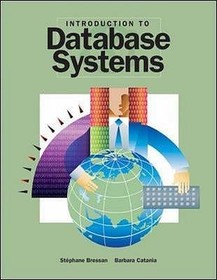
Introduction to Database Systems
-
10% KEDVEZMÉNY?
- A kedvezmény csak az 'Értesítés a kedvenc témákról' hírlevelünk címzettjeinek rendeléseire érvényes.
- Kiadói listaár GBP 31.99
-
15 283 Ft (14 555 Ft + 5% áfa)
Az ár azért becsült, mert a rendelés pillanatában nem lehet pontosan tudni, hogy a beérkezéskor milyen lesz a forint árfolyama az adott termék eredeti devizájához képest. Ha a forint romlana, kissé többet, ha javulna, kissé kevesebbet kell majd fizetnie.
- Kedvezmény(ek) 10% (cc. 1 528 Ft off)
- Kedvezményes ár 13 754 Ft (13 100 Ft + 5% áfa)
Iratkozzon fel most és részesüljön kedvezőbb árainkból!
Feliratkozom
15 283 Ft

Beszerezhetőség
A kiadónál véglegesen elfogyott, nem rendelhető. Érdemes újra keresni a címmel, hátha van újabb kiadás.
Why don't you give exact delivery time?
A beszerzés időigényét az eddigi tapasztalatokra alapozva adjuk meg. Azért becsült, mert a terméket külföldről hozzuk be, így a kiadó kiszolgálásának pillanatnyi gyorsaságától is függ. A megadottnál gyorsabb és lassabb szállítás is elképzelhető, de mindent megteszünk, hogy Ön a lehető leghamarabb jusson hozzá a termékhez.
A termék adatai:
- Kiadó McGraw-Hill
- Megjelenés dátuma 2006. május 1.
- ISBN 9780071246507
- Kötéstípus Puhakötés
- Terjedelem168 oldal
- Méret 236x187x10 mm
- Súly 319 g
- Nyelv angol 0
Kategóriák
Hosszú leírás:
Most books on databases have the size and content of a book of magic written in the ancient language of Tolkien's Ents. To counter this trend, Introduction to Database Systems is small and concise by design. It aims to provide students, academics and professionals with a rigorous, convenient and economical reference.
The book describes the essential concepts pertaining to the design and programming of database applications with relational database management systems. It covers conceptual modelling with the entity-relationship model and logical modelling with the relational model. It also presents the techniques for the normalisation of logical designs based on functional dependencies, i.e. the decomposition into Boyce-Codd and third normal forms.
Also covered are t-upple and domain relational calculi, as well as relational algebra. This book illustrates the main SQL data definition and data manipulation statements and looks at contemporary approaches to coupling SQL with general purpose programming languages.
Introduction to Database Systems concludes with a brief catalogue raisonné of textbooks on databases.
Most books on databases have the size and content of a book of magic written in the ancient language of Tolkien's Ents. To counter this trend, Introduction to Database Systems is small and concise by design. It aims to provide students, academics and professionals with a rigorous, convenient and economical reference.
The book describes the essential concepts pertaining to the design and programming of database applications with relational database management systems. It covers conceptual modelling with the entity-relationship model and logical modelling with the relational model. It also presents the techniques for the normalisation of logical designs based on functional dependencies, i.e. the decomposition into Boyce-Codd and third normal forms.
Also covered are t-upple and domain relational calculi, as well as relational algebra. This book illustrates the main SQL data definition and data manipulation statements and looks at contemporary approaches to coupling SQL with general purpose programming languages.
Introduction to Database Systems concludes with a brief catalogue raisonné of textbooks on databases.
TöbbTartalomjegyzék:
Preface
About the Authors
1 What's in a Database?
2 Relational Model
3 Relational Calculus
4 Relational Algebra
5 SQL
6 SQL and Programming Languages
7 Entity-Relationship Model
8 Normalisation
9 Conclusion
References
Index
Több
