

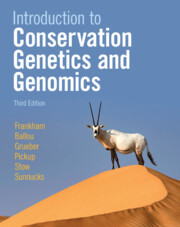
Introduction to Conservation Genetics and Genomics
-
10% KEDVEZMÉNY?
- A kedvezmény csak az 'Értesítés a kedvenc témákról' hírlevelünk címzettjeinek rendeléseire érvényes.
- Kiadói listaár GBP 44.99
-
20 312 Ft (19 345 Ft + 5% áfa)
Az ár azért becsült, mert a rendelés pillanatában nem lehet pontosan tudni, hogy a beérkezéskor milyen lesz a forint árfolyama az adott termék eredeti devizájához képest. Ha a forint romlana, kissé többet, ha javulna, kissé kevesebbet kell majd fizetnie.
- Kedvezmény(ek) 10% (kb. 2 031 Ft)
- Kedvezményes ár 18 281 Ft (17 411 Ft + 5% áfa)
Iratkozzon fel most és részesüljön kedvezőbb árainkból!
Feliratkozom
20 312 Ft

Beszerezhetőség
Még nem jelent meg, de rendelhető. A megjelenéstől számított néhány héten belül megérkezik.
Why don't you give exact delivery time?
A beszerzés időigényét az eddigi tapasztalatokra alapozva adjuk meg. Azért becsült, mert a terméket külföldről hozzuk be, így a kiadó kiszolgálásának pillanatnyi gyorsaságától is függ. A megadottnál gyorsabb és lassabb szállítás is elképzelhető, de mindent megteszünk, hogy Ön a lehető leghamarabb jusson hozzá a termékhez.
A termék adatai:
- Kiadás sorszáma 3
- Kiadó Cambridge University Press
- Megjelenés dátuma 2026. augusztus 31.
- ISBN 9781108927413
- Kötéstípus Puhakötés
- Terjedelem836 oldal
- Nyelv angol 700
Kategóriák
Rövid leírás:
Accessible, educationally rich, and full-color introduction to conservation genetics, fully updated in light of the genomics revolution.
TöbbHosszú leírás:
The third edition of this essential introductory text has been fully updated in light of the genomics revolution. Providing authoritative and engaging coverage for students and professionals of conservation genetics and genomics, conservation biology, and wildlife biology, the authors explain the underpinning mathematics clearly and accessibly throughout. The critical link between theory and practice, so often obscured in applied genetics, is illuminated in each chapter through examples of diverse conservation issues (including strengthened plant coverage), the solutions needed, and detailed step-by-step guides on how genetic principles can be applied. Self-learning is further facilitated through problem sets with solutions, case studies, main point boxes, symbol and software lists, and approximately 600 engaging full-color photos and 300 graphics which relate genetic processes to species level conservation. Highlighting the interdependence between 'ecology' and 'genetics,' this text is educationally rich and visually stunning.
TöbbTartalomjegyzék:
Preface; Acknowledgements; 1. Introduction; 2. Genetic factors contribute to extinction risk; Section I. Measuring and Characterizing Genetic and Genomic Diversity: 3. Genomic diversity; 4. Characterizing genetic and genomic diversity; 5. Characterizing quantitative genetic variation; Section II. Evolutionary Genetics of Natural Populations: 6. Evolution by natural selection in large populations; 7. Evolutionary impacts of mutation, gene flow, and selection in large populations; 8. Evolutionary consequences of small population sizes; 9. Maintenance of genetic and genomic diversity; Section III. Harmful Impacts of Population Size Reduction and Means to Reverse Them: 10. Inbreeding; 11. Inbreeding depression; 12. Loss of genetic diversity in small populations reduces ability to evolve; 13. Population fragmentation causes inadequate gene flow and increased extinction risk; 14. Genetic rescue resulting from gene flow; Section IV. Management Solutions to Genetic Problems: 15. Delineation of species and management units for conservation purposes; 16. Genetically viable populations; 17. Genetic management of ex situ populations; 18. Genetic management of wild populations; 19. Genetic management of reintroductions and translocations; 20. Modified genetic management for species with diverse mating systems and modes of inheritance; 21. Genetic management to assist species cope with climate change; 22. Genetic management to minimize the adverse impacts of invasive species; 23. Use of molecular genetics and genomics in wildlife forensics and to understand species' biology; 24. Integrating genetic management into the broader conservation context; Take home messages; Credits for figures, graphics, and photos; References; Index.
Több
