

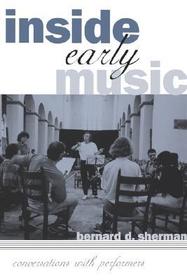
Inside Early Music
Conversations with Performers
-
10% KEDVEZMÉNY?
- A kedvezmény csak az 'Értesítés a kedvenc témákról' hírlevelünk címzettjeinek rendeléseire érvényes.
- Kiadói listaár GBP 37.49
-
17 910 Ft (17 057 Ft + 5% áfa)
Az ár azért becsült, mert a rendelés pillanatában nem lehet pontosan tudni, hogy a beérkezéskor milyen lesz a forint árfolyama az adott termék eredeti devizájához képest. Ha a forint romlana, kissé többet, ha javulna, kissé kevesebbet kell majd fizetnie.
- Kedvezmény(ek) 10% (cc. 1 791 Ft off)
- Kedvezményes ár 16 119 Ft (15 351 Ft + 5% áfa)
Iratkozzon fel most és részesüljön kedvezőbb árainkból!
Feliratkozom
17 910 Ft

Beszerezhetőség
Megrendelésre a kiadó utánnyomja a könyvet. Rendelhető, de a szokásosnál kicsit lassabban érkezik meg.
Why don't you give exact delivery time?
A beszerzés időigényét az eddigi tapasztalatokra alapozva adjuk meg. Azért becsült, mert a terméket külföldről hozzuk be, így a kiadó kiszolgálásának pillanatnyi gyorsaságától is függ. A megadottnál gyorsabb és lassabb szállítás is elképzelhető, de mindent megteszünk, hogy Ön a lehető leghamarabb jusson hozzá a termékhez.
A termék adatai:
- Kiadó OUP USA
- Megjelenés dátuma 2003. október 30.
- ISBN 9780195169454
- Kötéstípus Puhakötés
- Terjedelem432 oldal
- Méret 239x151x29 mm
- Súly 653 g
- Nyelv angol
- Illusztrációk numerous music examples 0
Kategóriák
Rövid leírás:
Bernard D. Sherman invited many of the leading practitioners to speak out about their passion for early music - why they are attracted to this movement and how it shapes their work. Whether debating how to perform Monteverdi's madrigals or comparing Andrew Lawrence-King's Renaissance harp playing to jazz, the performers convey not only a devotion to the spirit of period performance, but the joy of discovery as they struggle to bring the music most truthfully to life.
TöbbHosszú leírás:
The attempt to play music with the styles and instruments of its era--commonly referred to as the early music movement--has become immensely popular in recent years. For instance, Billboard's "Top Classical Albums" of 1993 and 1994 featured Anonymous 4, who sing medieval music, and the best-selling Beethoven recording of 1995 was a period-instruments symphony cycle led by John Eliot Gardiner, who is Deutsche Grammophon's top-selling living conductor. But the movement has generated as much controversy as it has best-selling records, not only about the merits of its results, but also about the validity of its approach. To what degree can we recreate long-lost performing styles? How important are historical period instruments for the performance of a piece? Why should musicians bother with historical information? Are they sacrificing art to scholarship?
Now, in Inside Early Music, Bernard D. Sherman has invited many of the leading practitioners to speak out about their passion for early music--why they are attracted to this movement and how it shapes their work. Readers listen in on conversations with conductors Gardiner, William Christie, and Roger Norrington, Peter Phillips of the Tallis Scholars, vocalists Susan Hellauer of Anonymous 4, forte pianist Robert Levin, cellist Anner Bylsma, and many other leading artists. The book is divided into musical eras--Medieval, Renaissance, Baroque, and Classic and Romantic--with each interview focusing on particular composers or styles, touching on heated topics such as the debate over what is "authentic," the value of playing on period instruments, and how to interpret the composer's intentions. Whether debating how to perform Monteverdi's madrigals or comparing Andrew Lawrence-King's Renaissance harp playing to jazz, the performers convey not only a devotion to the spirit of period performance, but the joy of discovery as they struggle to bring the music most truthfully to life. Spurred on by Sherman's probing questions and immense knowledge of the subject, these conversations movingly document the aspirations, growing pains, and emerging maturity of the most exciting movement in contemporary classical performance, allowing each artist's personality and love for his or her craft to shine through.
From medieval plainchant to Brahms' orchestral works, Inside Early Music takes readers-whether enthusiasts or detractors-behind the scenes to provide a masterful portrait of early music's controversies, challenges, and rewards.
"Excellent . . . . The teeming practical detail of this book is a great achievement in itself, but equally significant is its documentation of the major conceptual issues behind the historical-performance movement" --Anthony Pryer, The Times Literary Supplement, Jan. 16, 1998
Tartalomjegyzék:
Preface and Acknowledgments
Introduction: An Atmosphere of Controversy
PART ONE: The Middle Ages, Plainchant, and "Otherness"
A Different Sense of Time-Marcel Pérès on plainchant
You Can't Sing a Footnote--Susan Hellauer on performing medieval music
Vox Feminea--Barbara Thornton on Hildegard von Bingen
The Colonizing Ear--Christopher Page on medieval music
Postscript: The Middle Ages, Plainchant, and "Otherness"
PART TWO: The Renaissance, Oxbridge, and Italy
The Modern "English Countenance"
There Is No Such Thing as a Norm--Paul Hillier on Renaissance sacred vocal music
Other Kinds of Beauty--Peter Phillips on Palestrina and the Tallis Scholars
Singing Like a Native--Alan Curtis, Rinaldo Alessandrini, and Anthony Rooley on Monteverdi; Afterword
Emotional Logic--Andrew Lawrence-King on instrumental music and improvisation
PART THREE: The Baroque
Consistent Inconsistencies--John Butt on Bach
"One Should Not Make a Rule"--Gustav Leonhardt on Baroque keyboard music
Aladdin's Lamp-- Anner Bylsma on the 'cello (and Vivaldi)
Beyond the Beautiful Pearl--Julianne Baird on the Italian and English styles
You Can Never Be Right for All Time--Nicholas McGegan on Handel
At Home with the Idiom--William Christie on the French Baroque
Triple Counterpoint:--Jeffrey Thomas, Philippe Herreweghe, and John Butt on Singing Bach's Sacred Works
PART FOUR: Classic and Romantic
Restoring Ingredients--Malcolm Bilson on the Fortepiano
Speaking Mozart's Lingo--Robert Levin on Mozart and Improvisation
Taking Music off the Pedestal--Roger Norrington on Beethoven
Postscript: "Classical" and "Romantic" Performance Practice in Beethoven
Reviving Idiosyncrasies--John Eliot Gardiner on Berlioz and Brahms
Reinventing Wheels--Joshua Rifkin on Interpretation and Rhetoric
Epilog

