

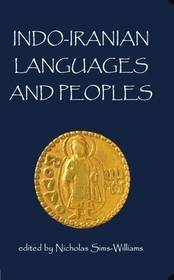
Indo-Iranian Languages and Peoples
Sorozatcím: Proceedings of the British Academy; 116;
-
10% KEDVEZMÉNY?
- A kedvezmény csak az 'Értesítés a kedvenc témákról' hírlevelünk címzettjeinek rendeléseire érvényes.
- Kiadói listaár GBP 70.00
-
31 605 Ft (30 100 Ft + 5% áfa)
Az ár azért becsült, mert a rendelés pillanatában nem lehet pontosan tudni, hogy a beérkezéskor milyen lesz a forint árfolyama az adott termék eredeti devizájához képest. Ha a forint romlana, kissé többet, ha javulna, kissé kevesebbet kell majd fizetnie.
- Kedvezmény(ek) 10% (cc. 3 161 Ft off)
- Kedvezményes ár 28 445 Ft (27 090 Ft + 5% áfa)
Iratkozzon fel most és részesüljön kedvezőbb árainkból!
Feliratkozom
31 605 Ft

Beszerezhetőség
Becsült beszerzési idő: A Prosperónál jelenleg nincsen raktáron, de a kiadónál igen. Beszerzés kb. 3-5 hét..
A Prosperónál jelenleg nincsen raktáron.
Why don't you give exact delivery time?
A beszerzés időigényét az eddigi tapasztalatokra alapozva adjuk meg. Azért becsült, mert a terméket külföldről hozzuk be, így a kiadó kiszolgálásának pillanatnyi gyorsaságától is függ. A megadottnál gyorsabb és lassabb szállítás is elképzelhető, de mindent megteszünk, hogy Ön a lehető leghamarabb jusson hozzá a termékhez.
A termék adatai:
- Kiadó The British Academy
- Megjelenés dátuma 2003. január 23.
- ISBN 9780197262856
- Kötéstípus Keménykötés
- Terjedelem312 oldal
- Méret 243x163x8 mm
- Súly 630 g
- Nyelv angol
- Illusztrációk 8pp halftone plates, numerous maps and halftones 0
Kategóriák
Rövid leírás:
The exciting recent developments in our understanding of the history of the Indo-Iranian languages and their speakers are surveyed and assessed by a group of internationally renowned linguists and archaeologists. In the last few years the materials available for the study of the older Indo-Iranian languages have increased dramatically: there have been sensational discoveries of texts in the ancient languages of north-west India and northern Afghanistan. Previously known data has been exploited in new ways using innovative techniques for compiling, manipulating and disseminating electronic text and digital images. And archaeological finds in India, Pakistan and Central Asia have given rise to new hypotheses concerning the history and pre-history of the Indo-Iranian peoples.
TöbbHosszú leírás:
The exciting recent developments in our understanding of the history of the Indo-Iranian languages and their speakers are surveyed and assessed by a group of internationally renowned linguists and archaeologists.
In the last few years the materials available for the study of the older Indo-Iranian languages have increased dramatically: there have been sensational discoveries of birch-bark scrolls bearing Buddhist texts in the Gandhari language of north-west India, and of leather documents in Bactrian, the ancient language of northern Afghanistan. Previously known data has been exploited in new ways using innovative techniques for compiling, manipulating and disseminating electronic text and digital images. And archaeological finds in India, Pakistan and Central Asia, including the 'Bactria-Margiana Archaeological Complex', have given rise to new hypotheses concerning the history and pre-history of the Indo-Iranian peoples.
The volume also pays tribute to the pioneer work of the great philologist Sir Harold Bailey (1899-1996).
Sir Harold would no doubt have delighted in reading every article within this excellent collection. Több
Tartalomjegyzék:
- Hunting the hapax: Sir Harold W. Bailey (1899-1996)
- Archaeological Models and Asian Indo-Europeans
- The Nuristani Languages
- Gandhari and the Other Indo-Aryan Languages in the Light of Newly-Discovered Karosthi Manuscripts
- Pali and the Languages of Early Buddhism
- The Vocabulary of Buddhist Sanskrit: Problems and Perspectives
- The Avestan Language and its Problems
- Scythian Elements in Old Iranian
- Regional Interaction in Central Asia and Northwest India in the Kidarite and Hephthalite Periods
- Ancient Afghanistan and its Invaders: Linguistic Evidence from the Bactrian Documents and Inscriptions
- Tocharian and Indo-Iranian: Relations between Two Linguistic Areas
- Professor Sir Harold Bailey: An Appreciation

