

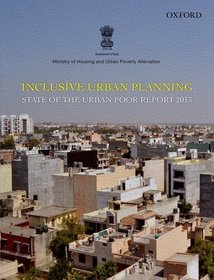
Inclusive Urban Planning
State of the Urban Poor Report 2013
-
10% KEDVEZMÉNY?
- A kedvezmény csak az 'Értesítés a kedvenc témákról' hírlevelünk címzettjeinek rendeléseire érvényes.
- Kiadói listaár GBP 26.99
-
12 185 Ft (11 605 Ft + 5% áfa)
Az ár azért becsült, mert a rendelés pillanatában nem lehet pontosan tudni, hogy a beérkezéskor milyen lesz a forint árfolyama az adott termék eredeti devizájához képest. Ha a forint romlana, kissé többet, ha javulna, kissé kevesebbet kell majd fizetnie.
- Kedvezmény(ek) 10% (kb. 1 218 Ft)
- Kedvezményes ár 10 967 Ft (10 445 Ft + 5% áfa)
Iratkozzon fel most és részesüljön kedvezőbb árainkból!
Feliratkozom
12 185 Ft

Beszerezhetőség
Csak rendelésre kapható a kiadónál, kissé időigényes.
Why don't you give exact delivery time?
A beszerzés időigényét az eddigi tapasztalatokra alapozva adjuk meg. Azért becsült, mert a terméket külföldről hozzuk be, így a kiadó kiszolgálásának pillanatnyi gyorsaságától is függ. A megadottnál gyorsabb és lassabb szállítás is elképzelhető, de mindent megteszünk, hogy Ön a lehető leghamarabb jusson hozzá a termékhez.
A termék adatai:
- Kiadó OUP India
- Megjelenés dátuma 2014. február 13.
- ISBN 9780198097419
- Kötéstípus Puhakötés
- Terjedelem376 oldal
- Méret 281x216x19 mm
- Súly 932 g
- Nyelv angol
- Illusztrációk Line drawings: 76; halftones: 105 0
Kategóriák
Rövid leírás:
This report examines how urban planning systems in India have hitherto excluded the urban poor and reflects that the present initiatives are not sufficient to achieve equitable opportunities for decent living and livelihoods for the urban poor. It not only highlights such problems but also elucidates on the policy options and steps required to remove them. The report also includes international case studies of successful examples of transformation of poor urban regions from South Africa, Brazil, Hong kong, and Canada.
TöbbHosszú leírás:
The State of the Urban Poor Report is a flagship document of the Ministry of Housing and Urban Poverty Alleviation, Government of India. During the past decade, inclusive growth has become an integral objective of policymaking in India. The 2013 Report analyses India's performance in achieving this objective for its urban population. Using a combination of rich empirical data and rigorous analysis, this report covers areas such as spatial development for inclusive settlements; institutional, regulatory, and legislative framework for urban planning; economic contribution of the urban poor; maintenance of tenements for slum rehabilitation; and sustainable transport. Apart from these the volume also includes case studies on financing of incremental housing improvements, tenure regularization in urban slums, inclusive planning in South Africa and Brazil, development of a cultural district in Hong Kong, and public housing in Canada.
The report reflects that the present initiatives are not sufficient to achieve equitable opportunities for decent living and livelihoods for the urban poor. Cities and towns in India still suffer from lack of basic infrastructure and excessive focus on mater plans which has also excluded a large section of the population from the benefits of development. The volume highlights such bottlenecks and also elucidates on the policy options and steps required to remove them.
Tartalomjegyzék:
Foreword
Preface
Introduction and Overview- O.P. Mathur
PART I: INCLUSIVE URBAN PLANNING
1. Evolution of National Policies for Affordable Housing and Basic Services for the Urban Poor
Arun Kumar Misra and Shubhagato Dasgupta
2. Urban Planning and Land Management for Promoting Inclusive Cities
Giovana Beltrão and Earl Kessler
3. Making Cities Work: Planning and Managing Land Use
David Dowall and Peter Ellis
4. What Makes Sustainable Transport Inclusive?
Geetam Tiwari
5. The Intent to Reside: Spatial Illegality, Inclusive Planning, and Urban Social Security
Gautam Bhan
PART II: COUNTRY PAPERS
6. Inclusive Growth, Social Exclusion, and the Urban Poor: Taking a "Production Lens" to Informality in India
Kunal Sen
7. Inclusionary Approaches to Urban Planning: Lessons from South Africa
Susan Parnell
8. The Inclusive City: A New Paradigm of Urban Planning In India
Ananya Roy
9. Institutionalizing Spaces for Negotiations for the Urban Poor: New Vocabulary for Urban Planning
Darshini Mahadevia
10. Inclusive Planning and Urban Reform in a Restructured Development State: The Case of Brazil
Jeroen Klink and Rosana Denaldi
11. Institutional, Regulatory and Legislative Framework for Urban Planning-Lessons from International Experiences
Geoffrey Payne
12. Market-Based Mass Housing Development Strategy for Sustainable Inclusiveness of Cities in India: Challenges and Opportunities
Keiichi Tamaki and Narayanan Edadan
13. Inclusive Urban Planning in the Philippines
Nathaniel von Einsiedel
PART III: CITY CASE STUDIES
14. Inclusive Urban Planning and Management and Maintenance of Tenements in Cities in Maharashtra and Madhya Pradesh
Mukesh Kanaskar and Shweta Gupta
15. Contribution of the Urban Poor: A Pilot Study from Bengaluru
Kala Seetharam Sridhar and A. Venugopala Reddy
16. Incremental Housing Improvements in Chennai: Evidence from Three Low-Income Communities
Nithya V. Raman and Preety Narayan
17. Research Experience of Implementing Tenure Regularization Policies For Slums: Case of Indore and Jaipur
Neelima Risbud
18. Delivering Stakeholder Consultation and Buy-In for Hong Kong's West Kowloon Cultural District (WKCD) Development
Jonathan Beard and Kevin Leung
19. Inclusive Planning-A Case Study of Regent Park Revitalization, Toronto
John Gladki
About the Contributors

