

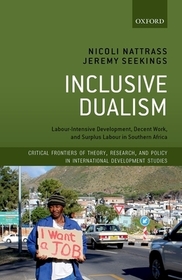
Inclusive Dualism
Labour-intensive Development, Decent Work, and Surplus Labour in Southern Africa
Sorozatcím: Critical Frontiers of Theory, Research, and Policy in International Development Studies;
-
10% KEDVEZMÉNY?
- A kedvezmény csak az 'Értesítés a kedvenc témákról' hírlevelünk címzettjeinek rendeléseire érvényes.
- Kiadói listaár GBP 84.00
-
37 926 Ft (36 120 Ft + 5% áfa)
Az ár azért becsült, mert a rendelés pillanatában nem lehet pontosan tudni, hogy a beérkezéskor milyen lesz a forint árfolyama az adott termék eredeti devizájához képest. Ha a forint romlana, kissé többet, ha javulna, kissé kevesebbet kell majd fizetnie.
- Kedvezmény(ek) 10% (kb. 3 793 Ft)
- Kedvezményes ár 34 133 Ft (32 508 Ft + 5% áfa)
Iratkozzon fel most és részesüljön kedvezőbb árainkból!
Feliratkozom
37 926 Ft

Beszerezhetőség
Megrendelésre a kiadó utánnyomja a könyvet. Rendelhető, de a szokásosnál kicsit lassabban érkezik meg.
Why don't you give exact delivery time?
A beszerzés időigényét az eddigi tapasztalatokra alapozva adjuk meg. Azért becsült, mert a terméket külföldről hozzuk be, így a kiadó kiszolgálásának pillanatnyi gyorsaságától is függ. A megadottnál gyorsabb és lassabb szállítás is elképzelhető, de mindent megteszünk, hogy Ön a lehető leghamarabb jusson hozzá a termékhez.
A termék adatai:
- Kiadó OUP Oxford
- Megjelenés dátuma 2019. május 29.
- ISBN 9780198841463
- Kötéstípus Keménykötés
- Terjedelem230 oldal
- Méret 241x160x24 mm
- Súly 498 g
- Nyelv angol 0
Kategóriák
Rövid leírás:
This book uses the South African case to argue for inclusive dualism as a development strategy in surplus labour countries. It shows that low- and high- productivity firms can co-exist and challenges the notion that a race to the bottom is inevitable.
TöbbHosszú leírás:
W. Arthur Lewis, the founding father of development economics, proposed a dualist model of economic development in which 'surplus' (predominantly under-employed) labour shifted from lower to higher productivity work. In practice, historically, this meant that labour was initially drawn out of subsistence agriculture into low-wage, labour-intensive manufacturing, including in clothing production, before shifting into higher-wage work. This development strategy has become unfashionable. The International Labour Organisation (ILO) worries that low-wage, labour-intensive industry promises little more than an impoverishing 'race to the bottom'. Inclusive Dualism: Labour-intensive Development, Decent Work, and Surplus Labour in Southern Africa argues that decent work fundamentalism, that is the promotion of higher wages and labour productivity at the cost of lower-wage job destruction, is a utopian vision with potentially dystopic consequences for countries with high open unemployment, many of which are in Southern Africa.
Using the South African clothing industry as a case study Inclusive Dualism argues that decent work fundamentalism ignores the inherently differentiated character of industry resulting in the unnecessary destruction of labour-intensive jobs and the bifurcation of society into highly-paid, high-productivity insiders and low-paid or unemployed outsiders. It demonstrates the broader relevance of the South Africa case, examining the growth in surplus labour across Africa. It shows that low- and high-productivity firms can co-exist, and challenges the notion that a race to the bottom is inevitable. Inclusive Dualism instead favours multi-pronged development strategies that prioritise labour-intensive job creation as well as facilitating productivity growth elsewhere without destroying jobs.
Tartalomjegyzék:
Introduction to Inclusive Dualism
Dualism and Development
Labour Productivity and Employment in Surplus Labour Countries
Trajectories of Development and the Global Clothing Industry
The Moral Economy of Low-Wage Work
Decent Work Fundamentalism and Job Destruction in the South African Clothing Industry
The Political Economy of Upgrading: Trade Union Strategy and Industrial Policy in South Africa
Conclusion: Unemployment, Inclusive Dualism, and the Illusion of Decent Work Fundamentalism

