

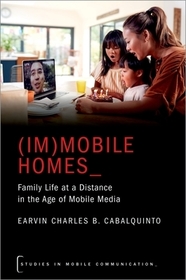
(Im)mobile Homes
Family Life at a Distance in the Age of Mobile Media
Sorozatcím: Studies in Mobile Communication;
-
10% KEDVEZMÉNY?
- A kedvezmény csak az 'Értesítés a kedvenc témákról' hírlevelünk címzettjeinek rendeléseire érvényes.
- Kiadói listaár GBP 34.49
-
15 572 Ft (14 830 Ft + 5% áfa)
Az ár azért becsült, mert a rendelés pillanatában nem lehet pontosan tudni, hogy a beérkezéskor milyen lesz a forint árfolyama az adott termék eredeti devizájához képest. Ha a forint romlana, kissé többet, ha javulna, kissé kevesebbet kell majd fizetnie.
- Kedvezmény(ek) 10% (cc. 1 557 Ft off)
- Kedvezményes ár 14 014 Ft (13 347 Ft + 5% áfa)
Iratkozzon fel most és részesüljön kedvezőbb árainkból!
Feliratkozom
15 572 Ft

Beszerezhetőség
Becsült beszerzési idő: A Prosperónál jelenleg nincsen raktáron, de a kiadónál igen. Beszerzés kb. 3-5 hét..
A Prosperónál jelenleg nincsen raktáron.
Why don't you give exact delivery time?
A beszerzés időigényét az eddigi tapasztalatokra alapozva adjuk meg. Azért becsült, mert a terméket külföldről hozzuk be, így a kiadó kiszolgálásának pillanatnyi gyorsaságától is függ. A megadottnál gyorsabb és lassabb szállítás is elképzelhető, de mindent megteszünk, hogy Ön a lehető leghamarabb jusson hozzá a termékhez.
A termék adatai:
- Kiadó OUP USA
- Megjelenés dátuma 2022. március 31.
- ISBN 9780197524848
- Kötéstípus Puhakötés
- Terjedelem256 oldal
- Méret 150x226x17 mm
- Súly 363 g
- Nyelv angol
- Illusztrációk 20 figures 192
Kategóriák
Rövid leírás:
Enriched by moving stories of transnational families, (Im)mobile Homes explores the importance of smartphones and social media for the transnational Filipino family in Australia.
TöbbHosszú leírás:
The home has been on the forefront of rapid economic, political, social, and technological transformations for many individuals and families across the world. As a country reliant on the exportation of human labor to sustain its national economy, the Philippines exemplifies a valuable case study of the impacts of a globalized and networked society on the everyday dynamics of a transnational family arrangement. Despite ranking among the heaviest Internet users in the world, Filipino citizens are often left with no choice but to navigate digital and transnational environments orchestrated by the uneven distribution of both national and international resources and opportunities.
(Im)mobile Homes investigates the role of smartphones, social media channels, and various mobile applications in forging and sustaining intimate ties among dispersed Filipino family members. Examining the digital lifeworlds of transnational Filipino family in Australia, this volume draws on rich ethnographic study to explore the benefits of digital communication as well as the tensions enabled by the influences of socio-cultural structures, socio-economic conditions, technological affordances, and institutional policies and processes on mobile practices. It portrays the physically distributed yet virtually connected nature of the transnational Filipino family through diverse contexts, such as observing family rituals, performing intimate care, and managing crises, and foregrounds their unique strategies in addressing the interruptions of connecting at a distance. Ultimately, this volume underscores how mobile practices of the transnational Filipino family negotiate the pre-existing and broader structural systems that (re)produce marginalization in a digital and global era.
Enriched by moving stories of transnational families, (Im)mobile Homes offers a critical lens towards interrogating the possibilities and politics of a home from afar in the digital era.
This book is an inspiring analysis of the separated condition that millions of migrants and their distant families find themselves in. Earvin Cabalquinto expertly combines digital media, migration, and mobilities research to show us innovative ways of living with loved ones at a distance while also bringing into stark relief conditions and experiences of inequality and colonial path dependencies. A really engaging and interesting read, and highly recommended.
Tartalomjegyzék:
Preface
Acknowledgements
Introduction
Chapter 1. Mediated (Im)mobilities
Chapter 2. Zones of Reterritorialized Domesticity: 'It's Like Leaving Messages on the Fridge'
Chapter 3. Homeland (Dis)connections: 'It's Like I'm in the Philippines'
Chapter 4. Restaging Interrupted Rituals: 'It's As If They're Beside Me'
Chapter 5. Mobile (Un)caring at a Distance: 'You Really Love Us My Son'
Chapter 6. Bittersweet Festivity: 'We're Not Only Here but We're Also There in Spirit'
Chapter 7. Digital Lifeline in Turbulent Times: 'As Long as They're Okay, I'm Okay'
8. An (Im)mobile Home and Beyond
Methodological Appendix

