

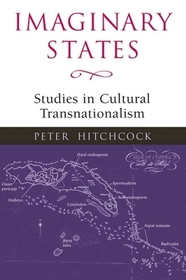
Imaginary States – STUDIES in CULTURAL TRANSNATIONALISM
STUDIES in CULTURAL TRANSNATIONALISM
Sorozatcím: Transnational Cultural Studies; 3;
-
10% KEDVEZMÉNY?
- A kedvezmény csak az 'Értesítés a kedvenc témákról' hírlevelünk címzettjeinek rendeléseire érvényes.
- Kiadói listaár GBP 33.00
-
15 765 Ft (15 015 Ft + 5% áfa)
Az ár azért becsült, mert a rendelés pillanatában nem lehet pontosan tudni, hogy a beérkezéskor milyen lesz a forint árfolyama az adott termék eredeti devizájához képest. Ha a forint romlana, kissé többet, ha javulna, kissé kevesebbet kell majd fizetnie.
- Kedvezmény(ek) 10% (cc. 1 577 Ft off)
- Kedvezményes ár 14 189 Ft (13 514 Ft + 5% áfa)
Kedvezményes ár heti hírlevelünkre feliratkozott ügyfeleinknek.
Iratkozzon fel most és részesüljön kedvezőbb árainkból!
Feliratkozom
Iratkozzon fel most és részesüljön kedvezőbb árainkból!
Feliratkozom
15 765 Ft

Beszerezhetőség
Becsült beszerzési idő: A Prosperónál jelenleg nincsen raktáron, de a kiadónál igen. Beszerzés kb. 3-5 hét..
A Prosperónál jelenleg nincsen raktáron.
Why don't you give exact delivery time?
A beszerzés időigényét az eddigi tapasztalatokra alapozva adjuk meg. Azért becsült, mert a terméket külföldről hozzuk be, így a kiadó kiszolgálásának pillanatnyi gyorsaságától is függ. A megadottnál gyorsabb és lassabb szállítás is elképzelhető, de mindent megteszünk, hogy Ön a lehető leghamarabb jusson hozzá a termékhez.
A termék adatai:
- Kiadó MO – University of Illinois Press
- Megjelenés dátuma 2003. március 19.
- Kötetek száma Hardback
- ISBN 9780252023934
- Kötéstípus Keménykötés
- Terjedelem264 oldal
- Méret 236x163x26 mm
- Súly 528 g
- Nyelv angol 0
Kategóriák
Hosszú leírás:
"
Can transnationalism be separated from capitalist globalization? Can an artist create cultural space and rethink the nation state simultaneously? In Imaginary States, Peter Hitchcock explores such questions to invigorate the analysis of cultural transnationalism.
Juxtaposing the macroeconomic realities of commodities with the creation of cultural workers, Hitchcock offers case studies of Nike and the coffee industry alongside examinations of writings by the Algerian feminist Assia Djebar and the Caribbean writers Edward Glissant, Kamau Brathwaite, and Maryse Conde. The stark contrast of literary examples of cultural transnationalism with discussions of commodity circulation attempts to complicate the relationship between the aesthetic and the economic.
Blocking our imagination, Hitchcock argues, is the desire to produce cultural diversity under the terms of a global economy. In believing that to have one we must pursue the other, we flatten difference, erase complexity, and fail to grasp the imaginaries at stake.
Hitchcock's invocation of the imagination allows for a deeper understanding of transnational ""states""--whether states of being, economic states, or nation states. Proffering that the crisis of globalization is a crisis of the imagination, he urges that cultural transnationalism not be feared or suppressed but approached as a way to imagine difference globally.
"
Több
Juxtaposing the macroeconomic realities of commodities with the creation of cultural workers, Hitchcock offers case studies of Nike and the coffee industry alongside examinations of writings by the Algerian feminist Assia Djebar and the Caribbean writers Edward Glissant, Kamau Brathwaite, and Maryse Conde. The stark contrast of literary examples of cultural transnationalism with discussions of commodity circulation attempts to complicate the relationship between the aesthetic and the economic.
Blocking our imagination, Hitchcock argues, is the desire to produce cultural diversity under the terms of a global economy. In believing that to have one we must pursue the other, we flatten difference, erase complexity, and fail to grasp the imaginaries at stake.
Hitchcock's invocation of the imagination allows for a deeper understanding of transnational ""states""--whether states of being, economic states, or nation states. Proffering that the crisis of globalization is a crisis of the imagination, he urges that cultural transnationalism not be feared or suppressed but approached as a way to imagine difference globally.

