

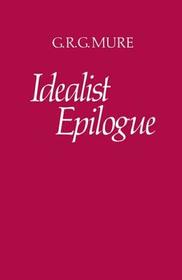
Idealist Epilogue
-
10% KEDVEZMÉNY?
- A kedvezmény csak az 'Értesítés a kedvenc témákról' hírlevelünk címzettjeinek rendeléseire érvényes.
- Kiadói listaár GBP 46.99
-
22 449 Ft (21 380 Ft + 5% áfa)
Az ár azért becsült, mert a rendelés pillanatában nem lehet pontosan tudni, hogy a beérkezéskor milyen lesz a forint árfolyama az adott termék eredeti devizájához képest. Ha a forint romlana, kissé többet, ha javulna, kissé kevesebbet kell majd fizetnie.
- Kedvezmény(ek) 10% (cc. 2 245 Ft off)
- Kedvezményes ár 20 204 Ft (19 242 Ft + 5% áfa)
Iratkozzon fel most és részesüljön kedvezőbb árainkból!
Feliratkozom
22 449 Ft

Beszerezhetőség
Megrendelésre a kiadó utánnyomja a könyvet. Rendelhető, de a szokásosnál kicsit lassabban érkezik meg.
Why don't you give exact delivery time?
A beszerzés időigényét az eddigi tapasztalatokra alapozva adjuk meg. Azért becsült, mert a terméket külföldről hozzuk be, így a kiadó kiszolgálásának pillanatnyi gyorsaságától is függ. A megadottnál gyorsabb és lassabb szállítás is elképzelhető, de mindent megteszünk, hogy Ön a lehető leghamarabb jusson hozzá a termékhez.
A termék adatai:
- Kiadó OUP Oxford
- Megjelenés dátuma 1978. június 8.
- ISBN 9780198245834
- Kötéstípus Keménykötés
- Terjedelem192 oldal
- Méret 218x148x15 mm
- Súly 328 g
- Nyelv angol 0
Kategóriák
Rövid leírás:
The author is not sure that his philosophical career merits an epilogue, but he had an itch to write one, and he thought of composing it in dialogue form, mainly for brevity's sake but also in the hope of imparting a touch of vitality. Yet writers of philosophical dialogue, except Plato, commonly leave one feeling that they would have served their purpose better by straight exposition, or by some sort of Cartesian meditation if they wished to capture benevolence with something a little more human and intimate. The author found that Berkeley had not the art of Plato despite the subtlety of his theme and the beauty of his prose. He also had no intention of defending his views against all corners.
TöbbHosszú leírás:
The author is not sure that his philosophical career merits an epilogue, but he had an itch to write one, and he thought of composing it in dialogue form, mainly for brevity's sake but also in the hope of imparting a touch of vitality. Yet writers of philosophical dialogue, except Plato, commonly leave one feeling that they would have served their purpose better by straight exposition, or by some sort of Cartesian meditation if they wished to capture benevolence with something a little more human and intimate. The author found that Berkeley had not the art of Plato despite the subtlety of his theme and the beauty of his prose. He also had no intention of defending his views against all corners.
Több
