

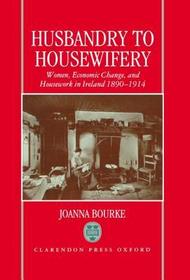
Husbandry to Housewifery
Women, Economic Change, and Housework in Ireland 1890-1914
-
10% KEDVEZMÉNY?
- A kedvezmény csak az 'Értesítés a kedvenc témákról' hírlevelünk címzettjeinek rendeléseire érvényes.
- Kiadói listaár GBP 46.99
-
21 215 Ft (20 205 Ft + 5% áfa)
Az ár azért becsült, mert a rendelés pillanatában nem lehet pontosan tudni, hogy a beérkezéskor milyen lesz a forint árfolyama az adott termék eredeti devizájához képest. Ha a forint romlana, kissé többet, ha javulna, kissé kevesebbet kell majd fizetnie.
- Kedvezmény(ek) 10% (cc. 2 122 Ft off)
- Kedvezményes ár 19 094 Ft (18 185 Ft + 5% áfa)
Iratkozzon fel most és részesüljön kedvezőbb árainkból!
Feliratkozom
21 215 Ft

Beszerezhetőség
Megrendelésre a kiadó utánnyomja a könyvet. Rendelhető, de a szokásosnál kicsit lassabban érkezik meg.
Why don't you give exact delivery time?
A beszerzés időigényét az eddigi tapasztalatokra alapozva adjuk meg. Azért becsült, mert a terméket külföldről hozzuk be, így a kiadó kiszolgálásának pillanatnyi gyorsaságától is függ. A megadottnál gyorsabb és lassabb szállítás is elképzelhető, de mindent megteszünk, hogy Ön a lehető leghamarabb jusson hozzá a termékhez.
A termék adatai:
- Kiadás sorszáma First
- Kiadó Clarendon Press
- Megjelenés dátuma 1993. október 21.
- ISBN 9780198203858
- Kötéstípus Keménykötés
- Terjedelem360 oldal
- Méret 217x146x25 mm
- Súly 348 g
- Nyelv angol
- Illusztrációk tables 0
Kategóriák
Rövid leírás:
This is a study of the lives of Irish women between 1890 and 1914. Joanna Bourke traces the shift of their labour from the fields and into the home, showing how their position within the employment market deteriorated. Controversially, she demonstrates that Irish women welcomed this altered role, preferring housework to many of the other options available to them.
TöbbHosszú leírás:
This book examines the lives of Irish women between 1890 and 1914, tracing the shift of their labour out of the fields and into the home. Joanna Bourke shows how their position within the employment market deteriorated: married women came to be increasingly dependent on their husbands' earnings, while economic opportunities for unmarried and widowed women collapsed. More and more women devoted all their productive enterprise to performing housework. In this thoroughly documented and carefully argued study, Dr Bourke analyses the crucial elements in this change: the coincidence of sectoral shifts in the employment market, increasing investment in the rural economy, and the growth of a labour-intensive household sector. Controversially, she argues that Irish women welcomed their altered role, finding housework preferable to many of the other options available to them.
'Joanna Bourke has written an important and stimulating study of the economics of housework in late nineteenth and early twentieth-century Ireland ... immensely informative book'
Virginia Crossman, Linen Hall Review, Spring 1994

