

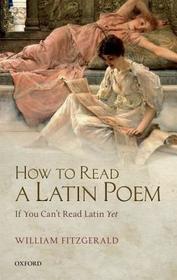
How to Read a Latin Poem
If You Can't Read Latin Yet
-
10% KEDVEZMÉNY?
- A kedvezmény csak az 'Értesítés a kedvenc témákról' hírlevelünk címzettjeinek rendeléseire érvényes.
- Kiadói listaár GBP 45.99
-
20 764 Ft (19 775 Ft + 5% áfa)
Az ár azért becsült, mert a rendelés pillanatában nem lehet pontosan tudni, hogy a beérkezéskor milyen lesz a forint árfolyama az adott termék eredeti devizájához képest. Ha a forint romlana, kissé többet, ha javulna, kissé kevesebbet kell majd fizetnie.
- Kedvezmény(ek) 10% (cc. 2 076 Ft off)
- Kedvezményes ár 18 687 Ft (17 798 Ft + 5% áfa)
Iratkozzon fel most és részesüljön kedvezőbb árainkból!
Feliratkozom
20 764 Ft

Beszerezhetőség
Megrendelésre a kiadó utánnyomja a könyvet. Rendelhető, de a szokásosnál kicsit lassabban érkezik meg.
Why don't you give exact delivery time?
A beszerzés időigényét az eddigi tapasztalatokra alapozva adjuk meg. Azért becsült, mert a terméket külföldről hozzuk be, így a kiadó kiszolgálásának pillanatnyi gyorsaságától is függ. A megadottnál gyorsabb és lassabb szállítás is elképzelhető, de mindent megteszünk, hogy Ön a lehető leghamarabb jusson hozzá a termékhez.
A termék adatai:
- Kiadó OUP Oxford
- Megjelenés dátuma 2013. február 21.
- ISBN 9780199657865
- Kötéstípus Keménykötés
- Terjedelem290 oldal
- Méret 221x147x28 mm
- Súly 496 g
- Nyelv angol 0
Kategóriák
Rövid leírás:
This is a book about poetry, language, and classical antiquity, and explains to the reader with little or no Latin how the language works as a unique vehicle for poetic expression. Fitzgerald guides the reader through samples of Latin poetry to give a sense of how the individual poems feel in Latin and what makes Latin poetry worth reading.
TöbbHosszú leírás:
Latin is very much alive in the poetry written by the great Latin poets, and this book is about their poetry, their language, and their culture. Fitzgerald shows the reader with little or no knowledge of the Latin language how it works as a unique vehicle for poetic expression and thought. Moving between close analysis of particular Latin poems and more general discussions of Latin poets, literature, and society, Fitzgerald gives the un-Latined reader an insider's view of how Latin poetry feels and what makes it worth reading, even today. His book explores what can be said and done in a poetry and a language that are both very different from English and yet have profoundly influenced it. He takes the reader through the whole range of Latin poetry from the trivial, obscene, and vicious, to the sublime, the passionate, and the uplifting. Individual chapters focus on particular authors (such as Vergil and Horace) or on themes (love, hate, civil war), and together they explain why we should care about what the poets of ancient Rome had to say.
If you have ever wondered what all the fuss was about, see for yourselves!
It deserves strong support from all classicists, who should consult it themselves (for personal stimulation and as a way of enlivening their lectures) and recommend it warmly to others who will benefit from it. This book will do much for the popularity of the Latin languagge and Roman verse and will do much to help them survive and stay healthy.
Tartalomjegyzék:
Introduction
Guide to the Pronunciation of Latin
Prelude: To the Reader
Love, and a Genre
Hate, Mockery, and the Physical World
Horace: The Sensation of Mediocrity
Vergil: The Unclassical Classic
Lucan and Seneca: Poets of Apocalypse
Science Fiction: Lucretius' De Rerum Natura and Ovid's Metamorphoses
Epilogue
Guide to Further Reading
Glossary

