

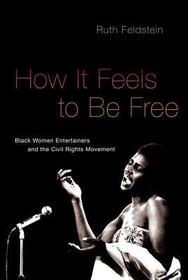
How It Feels to Be Free
Black Women Entertainers and the Civil Rights Movement
-
10% KEDVEZMÉNY?
- A kedvezmény csak az 'Értesítés a kedvenc témákról' hírlevelünk címzettjeinek rendeléseire érvényes.
- Kiadói listaár GBP 33.99
-
15 346 Ft (14 615 Ft + 5% áfa)
Az ár azért becsült, mert a rendelés pillanatában nem lehet pontosan tudni, hogy a beérkezéskor milyen lesz a forint árfolyama az adott termék eredeti devizájához képest. Ha a forint romlana, kissé többet, ha javulna, kissé kevesebbet kell majd fizetnie.
- Kedvezmény(ek) 10% (cc. 1 535 Ft off)
- Kedvezményes ár 13 811 Ft (13 154 Ft + 5% áfa)
Iratkozzon fel most és részesüljön kedvezőbb árainkból!
Feliratkozom
15 346 Ft

Beszerezhetőség
Megrendelésre a kiadó utánnyomja a könyvet. Rendelhető, de a szokásosnál kicsit lassabban érkezik meg.
Why don't you give exact delivery time?
A beszerzés időigényét az eddigi tapasztalatokra alapozva adjuk meg. Azért becsült, mert a terméket külföldről hozzuk be, így a kiadó kiszolgálásának pillanatnyi gyorsaságától is függ. A megadottnál gyorsabb és lassabb szállítás is elképzelhető, de mindent megteszünk, hogy Ön a lehető leghamarabb jusson hozzá a termékhez.
A termék adatai:
- Kiadó OUP USA
- Megjelenés dátuma 2017. február 9.
- ISBN 9780190610722
- Kötéstípus Puhakötés
- Terjedelem306 oldal
- Méret 155x234x20 mm
- Súly 454 g
- Nyelv angol
- Illusztrációk 20 illus. 0
Kategóriák
Rövid leírás:
How It Feels to Be Free examines the role of black female entertainers in the Civil Rights movement.
TöbbHosszú leírás:
Winner of the Benjamin L. Hooks National Book Award
Winnter of the Michael Nelson Prize of the International Association for Media and History
In 1964, Nina Simone sat at a piano in New York's Carnegie Hall to play what she called a "show tune." Then she began to sing: "Alabama's got me so upset/Tennessee made me lose my rest/And everybody knows about Mississippi Goddam!" Simone, and her song, became icons of the civil rights movement. But her confrontational style was not the only path taken by black women entertainers.
In How It Feels to Be Free, Ruth Feldstein examines celebrated black women performers, illuminating the risks they took, their roles at home and abroad, and the ways that they raised the issue of gender amid their demands for black liberation. Feldstein focuses on six women who made names for themselves in the music, film, and television industries: Simone, Lena Horne, Miriam Makeba, Abbey Lincoln, Diahann Carroll, and Cicely Tyson. These women did not simply mirror black activism; their performances helped constitute the era's political history. Makeba connected America's struggle for civil rights to the fight against apartheid in South Africa, while Simone sparked high-profile controversy with her incendiary lyrics. Yet Feldstein finds nuance in their careers. In 1968, Hollywood cast the outspoken Lincoln as a maid to a white family in For Love of Ivy, adding a layer of complication to the film. That same year, Diahann Carroll took on the starring role in the television series Julia. Was Julia a landmark for casting a black woman or for treating her race as unimportant? The answer is not clear-cut. Yet audiences gave broader meaning to what sometimes seemed to be apolitical performances.
How It Feels to Be Free demonstrates that entertainment was not always just entertainment and that "We Shall Overcome" was not the only soundtrack to the civil rights movement. By putting black women performances at center stage, Feldstein sheds light on the meanings of black womanhood in a revolutionary time.
Ruth Feldstein's important new book...is an original exploration of the little-known but central role that black entertainers, especially black women, played in helping communicate and forward the movement's goals... Ms. Feldstein brilliantly demonstrates the ways these women, their images and performance strategies animated transformative struggles for social change.
Tartalomjegyzék:
Introduction
1. "The World Was On Fire": Making New York City Subcultures
2. "Africa's Musical Ambassador": Miriam Makeba and the "Voice of Africa" in the United States
3. "I Don't Trust You Anymore": Nina Simone and Black Cultural Nationalism
4. Hollywood Time: Black Women and Integration Narratives in the Late 1960s
5. Cicely Tyson and African American History: Popular Culture and "Post"-Civil Rights in the 1970s
Epilogue
Notes
Bibliography
Index

