

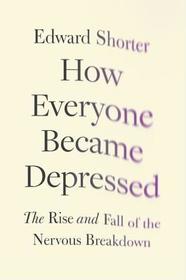
How Everyone Became Depressed
The Rise and Fall of the Nervous Breakdown
-
10% KEDVEZMÉNY?
- A kedvezmény csak az 'Értesítés a kedvenc témákról' hírlevelünk címzettjeinek rendeléseire érvényes.
- Kiadói listaár GBP 41.99
-
18 958 Ft (18 055 Ft + 5% áfa)
Az ár azért becsült, mert a rendelés pillanatában nem lehet pontosan tudni, hogy a beérkezéskor milyen lesz a forint árfolyama az adott termék eredeti devizájához képest. Ha a forint romlana, kissé többet, ha javulna, kissé kevesebbet kell majd fizetnie.
- Kedvezmény(ek) 10% (kb. 1 896 Ft)
- Kedvezményes ár 17 062 Ft (16 250 Ft + 5% áfa)
Iratkozzon fel most és részesüljön kedvezőbb árainkból!
Feliratkozom
18 958 Ft

Beszerezhetőség
Megrendelésre a kiadó utánnyomja a könyvet. Rendelhető, de a szokásosnál kicsit lassabban érkezik meg.
Why don't you give exact delivery time?
A beszerzés időigényét az eddigi tapasztalatokra alapozva adjuk meg. Azért becsült, mert a terméket külföldről hozzuk be, így a kiadó kiszolgálásának pillanatnyi gyorsaságától is függ. A megadottnál gyorsabb és lassabb szállítás is elképzelhető, de mindent megteszünk, hogy Ön a lehető leghamarabb jusson hozzá a termékhez.
A termék adatai:
- Kiadó OUP USA
- Megjelenés dátuma 2013. március 14.
- ISBN 9780199948086
- Kötéstípus Keménykötés
- Terjedelem272 oldal
- Méret 163x236x25 mm
- Súly 573 g
- Nyelv angol 0
Kategóriák
Rövid leírás:
The book argues that the diagnosis of depression has been bent greatly out of shape through misuse and needs to be replaced by other concepts that correspond more closely to what people actually experience. The sturdy term "nerves" from the past is a ready candidate, and "nervous breakdown" is still meaningful to many people. book in this field has such scope, nor such a deeply learned ability to use the past in service of the present.
TöbbHosszú leírás:
This book argues that psychiatry's love affair with the diagnosis of depression has become a death grip. Depression is a real illness, especially in its melancholic form. But most patients who get the diagnosis of 'depression' are also anxious, fatigued, unable to sleep, have all kinds of physical symptoms, and tend to obsess about the whole thing. They do not have a disorder of 'mood'. It is a travesty to call them all 'depressed.' How did this happen? How did everyone become depressed?
A well-known historian, the author describes how in the 19th century patients with those symptoms were considered 'nervous,' and when they lost control it was a 'nervous breakdown.' Then psychiatry turned its back on the whole concept of nerves, and - first under the influence of Freud's psychoanalysis and then the influence of the pharmaceutical industry - the diagnosis of depression took center stage. The result has been a scientific disaster, leading to the misdiagnosis and inappropriate treatment (with antidepressants) of millions of patients. Urging that the diagnosis of depression be re-thought, the book turns a dramatic page in the understanding of psychiatric symptoms that are as common as the common cold.
The book makes an immediate contribution to the debate about DSM5, which is due to be released very soon, in terms of discussing the diagnosis of depression. The author controversially proposes replacing the diagnosis of 'major depression' with 'melancholia' and 'nonmelancholia'; he argues that depression and anxiety usually occur together and are really the same disease; and he says that patients with so-called mood disorders really have a disorder of the entire body.
The author's ability to make use of the enormous well of psychiatry's past history in several languages make this a unique book that contributes to the important discussions today of diagnosis and treatment.
A fascinating and erudite volume Historians and practitioners of psychiatry, psychology, neuroscience, and many other mental health professions will find this book illuminating, interesting, and challenging at the same time.
Tartalomjegyzék:
Table of contents
Chapter 1 Introduction
Chapter 2 Nerves as a Problem
Chapter 3 Rise of Nervous Illness
Chapter 4 Fatigue
Chapter 5 Anxiety
Chapter 6 Melancholia
Chapter 7 Nervous Breakdown
Chapter 8 Paradigm Shift
Chapter 9 Something Wrong With the Label
Chapter 10 Drugs
Chapter 11 Return of the Two Depressions
Chapter 12 Nerves Redux
Chapter 13 Context

