

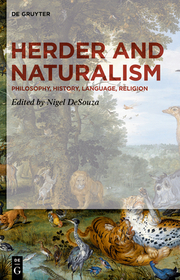
Herder and Naturalism
Philosophy, History, Language, Aesthetics, Religion
-
5% KEDVEZMÉNY?
- A kedvezmény csak az 'Értesítés a kedvenc témákról' hírlevelünk címzettjeinek rendeléseire érvényes.
- Kiadói listaár EUR 94.95
-
37 087 Ft (35 321 Ft + 5% áfa)
Az ár azért becsült, mert a rendelés pillanatában nem lehet pontosan tudni, hogy a beérkezéskor milyen lesz a forint árfolyama az adott termék eredeti devizájához képest. Ha a forint romlana, kissé többet, ha javulna, kissé kevesebbet kell majd fizetnie.
- Kedvezmény(ek) 5% (kb. 1 854 Ft)
- Kedvezményes ár 35 233 Ft (33 555 Ft + 5% áfa)
Iratkozzon fel most és részesüljön kedvezőbb árainkból!
Feliratkozom
37 087 Ft

Beszerezhetőség
Még nem jelent meg, de rendelhető. A megjelenéstől számított néhány héten belül megérkezik.
Why don't you give exact delivery time?
A beszerzés időigényét az eddigi tapasztalatokra alapozva adjuk meg. Azért becsült, mert a terméket külföldről hozzuk be, így a kiadó kiszolgálásának pillanatnyi gyorsaságától is függ. A megadottnál gyorsabb és lassabb szállítás is elképzelhető, de mindent megteszünk, hogy Ön a lehető leghamarabb jusson hozzá a termékhez.
A termék adatai:
- Kiadás sorszáma 1
- Kiadó De Gruyter
- Megjelenés dátuma 2026. szeptember 21.
- ISBN 9783110782325
- Kötéstípus Keménykötés
- Terjedelem312 oldal
- Méret 230x155 mm
- Súly 582 g
- Nyelv angol
- Illusztrációk 11 Illustrations, black & white; 11 Illustrations, color 700
Kategóriák
Hosszú leírás:
Johann Gottfried Herder did not himself use the term "naturalism", which only appears in the later nineteenth century, but scholars now widely agree that its spirit and intent characterize his thought as a whole. Herder sought to provide an account of human beings that squarely places them in nature. Even though he hastens to clarify that "nature is God in all his works", nature is not to be understood according to divine interventionist principles but rather according to its own immanent principles, such as material and organic forces. The original essays collected here explore the many dimensions of Herder’s naturalism: in philosophy, history, language, aesthetics, and religion. Collectively, they illustrate how Herder sought to show that human beings can only properly be understood when they are situated in their spatio-temporal context as linguistic creatures who, through their interactions with each other and their environment, produce the meanings and values that orient them in art, literature, music, customs and practices, but also in economic and political systems and even in religion. This volume sheds light not only on Herder’s thought, but also on a line of thought that emerged in the Enlightenment but whose importance has only grown.
Több
