

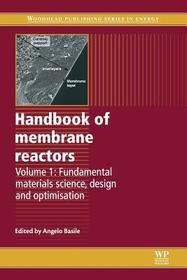
Handbook of Membrane Reactors
Fundamental Materials Science, Design and Optimisation
Sorozatcím: Woodhead Publishing Series in Energy;
-
10% KEDVEZMÉNY?
- A kedvezmény csak az 'Értesítés a kedvenc témákról' hírlevelünk címzettjeinek rendeléseire érvényes.
- Kiadói listaár EUR 240.00
-
99 540 Ft (94 800 Ft + 5% áfa)
Az ár azért becsült, mert a rendelés pillanatában nem lehet pontosan tudni, hogy a beérkezéskor milyen lesz a forint árfolyama az adott termék eredeti devizájához képest. Ha a forint romlana, kissé többet, ha javulna, kissé kevesebbet kell majd fizetnie.
- Kedvezmény(ek) 10% (cc. 9 954 Ft off)
- Kedvezményes ár 89 586 Ft (85 320 Ft + 5% áfa)
Iratkozzon fel most és részesüljön kedvezőbb árainkból!
Feliratkozom
99 540 Ft

Beszerezhetőség
Megjelenése törölve vagy kivonva a forgalomból. Sajnos nem rendelhető.
Why don't you give exact delivery time?
A beszerzés időigényét az eddigi tapasztalatokra alapozva adjuk meg. Azért becsült, mert a terméket külföldről hozzuk be, így a kiadó kiszolgálásának pillanatnyi gyorsaságától is függ. A megadottnál gyorsabb és lassabb szállítás is elképzelhető, de mindent megteszünk, hogy Ön a lehető leghamarabb jusson hozzá a termékhez.
A termék adatai:
- Kiadó Elsevier Science
- Megjelenés dátuma 2018. október 30.
- ISBN 9780081016145
- Kötéstípus Puhakötés
- Terjedelem696 oldal
- Méret 233x155 mm
- Nyelv angol 0
Kategóriák
Hosszú leírás:
Membrane reactors are increasingly replacing conventional separation, process and conversion technologies across a wide range of applications. Exploiting advanced membrane materials, they offer enhanced efficiency, are very adaptable and have great economic potential. There has therefore been increasing interest in membrane reactors from both the scientific and industrial communities, stimulating research and development. The two volumes of the Handbook of membrane reactors draw on this research to provide an authoritative review of this important field.Volume 1 explores fundamental materials science, design and optimisation, beginning with a review of polymeric, dense metallic and composite membranes for membrane reactors in part one. Polymeric and nanocomposite membranes for membrane reactors, inorganic membrane reactors for hydrogen production, palladium-based composite membranes and alternatives to palladium-based membranes for hydrogen separation in membrane reactors are all discussed. Part two goes on to investigate zeolite, ceramic and carbon membranes and catalysts for membrane reactors in more depth. Finally, part three explores membrane reactor modelling, simulation and optimisation, including the use of mathematical modelling, computational fluid dynamics, artificial neural networks and non-equilibrium thermodynamics to analyse varied aspects of membrane reactor design and production enhancement.With its distinguished editor and international team of expert contributors, the two volumes of the Handbook of membrane reactors provide an authoritative guide for membrane reactor researchers and materials scientists, chemical and biochemical manufacturers, industrial separations and process engineers, and academics in this field.
TöbbTartalomjegyzék:
Contributor contact details
Woodhead Publishing Series in Energy
Foreword
Preface
Part I: Polymeric, dense metallic and composite membranes for membrane reactors
Chapter 1: Polymeric membranes for membrane reactors
Abstract:
1.1 Introduction: polymer properties for membrane reactors
1.2 Basics of polymer membranes
1.3 Membrane reactors
1.4 Modelling of polymeric catalytic membrane reactors
1.5 Conclusions
1.7 Appendix: nomenclature
Chapter 2: Inorganic membrane reactors for hydrogen production: an overview with particular emphasis on dense metallic membrane materials
Abstract:
2.1 Introduction
2.2 Development of inorganic membrane reactors (MRs)
2.3 Types of membranes
2.4 Preparation of dense metallic membranes
2.5 Preparation of Pd-composite membranes
2.6 Preparation of Pd-Ag alloy membranes
2.7 Preparation of Pd-Cu alloy composite membranes
2.8 Preparation of Pd-Au membranes
2.9 Preparation of amorphous alloy membranes
2.10 Degradation of dense metallic membranes
2.11 Conclusions and future trends
2.12 Acknowledgements
2.14 Appendix: nomenclature
Chapter 3: Palladium-based composite membranes for hydrogen separation in membrane reactors
Abstract:
3.1 Introduction
3.2 Development of composite membranes
3.3 Palladium and palladium-alloy composite membranes for hydrogen separation
3.4 Performances in membrane reactors
3.5 Conclusions and future trends
3.6 Acknowledgements
3.8 Appendix: nomenclature
Chapter 4: Alternatives to palladium in membranes for hydrogen separation: nickel, niobium and vanadium alloys, ceramic supports for metal alloys and porous glass membranes
Abstract:
4.1 Introduction
4.2 Materials
4.3 Membrane synthesis and characterization
4.4 Applications
4.5 Conclusions
4.7 Appendix: nomenclature
Chapter 5: Nanocomposite membranes for membrane reactors
Abstract:
5.1 Introduction
5.2 An overview of fabrication techniques
5.3 Examples of organic/inorganic nanocomposite membranes
5.4 Structure-property relationships in nanostructured composite membranes
5.5 Major application of hybrid nanocomposites in membrane reactors
5.6 Conclusions and future trends
5.8 Appendix: nomenclature
Part II: Zeolite, ceramic and carbon membranes and catalysts for membrane reactors
Chapter 6: Zeolite membrane reactors
Abstract:
6.1 Introduction
6.2 Separation using zeolite membranes
6.3 Zeolite membrane reactors
6.4 Modeling of zeolite membrane reactors
6.5 Scale-up and scale-down of zeolite membranes
6.6 Conclusion and future trends
6.8 Appendix: nomenclature
Chapter 7: Dense ceramic membranes for membrane reactors
Abstract:
7.1 Introduction
7.2 Principles of dense ceramic membrane reactors
7.3 Membrane preparation and catalyst incorporation
7.4 Fabrication of membrane reactors
7.5 Conclusion and future trends
7.6 Acknowledgements
7.8 Appendices
Chapter 8: Porous ceramic membranes for membrane reactors
Abstract:
8.1 Introduction
8.2 Preparation of porous ceramic membranes
8.3 Characterisation of ceramic membranes
8.4 Transport and separation of gases in ceramic membranes
8.5 Ceramic membrane reactors
8.6 Conclusions and future trends
8.7 Acknowledgements
8.9 Appendix: nomenclature
Chapter 9: Microporous silica membranes: fundamentals and applications in membrane reactors for hydrogen separation
Abstract:
9.1 Introduction
9.2 Microporous silica membranes
9.3 Membrane reactor function and arrangement
9.4 Membrane reactor performance metrics and design parameters
9.5 Catalytic reactions in a membrane reactor configuration
9.6 Industrial considerations
9.7 Future trends and conclusions
9.8 Acknowledgements
9.10 Appendix: nomenclature
Chapter 10: Carbon-based membranes for membrane reactors
Abstract:
10.1 Introduction
10.2 Unsupported carbon membranes
10.3 Supported carbon membranes
10.4 Carbon membrane reactors (CMRs)
10.5 Micro carbon-based membrane reactors
10.6 Conclusions and future trends
10.7 Acknowledgements
10.9 Appendix: nomenclature
Chapter 11: Advances in catalysts for membrane reactors
Abstract:
11.1 Introduction
11.2 Requirements of catalysts for membrane reactors
11.3 Catalyst design, preparation and formulation
11.4 Case studies in membrane reactors
11.5 Deactivation of catalysts
11.6 The role of catalysts in supporting sustainability
11.7 Conclusions and future trends
11.9 Appendix: nomenclature
Part III: Membrane reactor modelling, simulation and optimisation
Chapter 12: Mathematical modelling of membrane reactors: overview of strategies and applications for the modelling of a hydrogen-selective membrane reactor
Abstract:
12.1 Introduction
12.2 Membrane reactor concept and modelling
12.3 A hydrogen-selective membrane reactor application: natural gas steam reforming
12.4 Conclusions
12.5 Acknowledgements
12.7 Appendix: nomenclature
Chapter 13: Computational fluid dynamics (CFD) analysis of membrane reactors: simulation of single-and multi-tube palladium membrane reactors for hydrogen recovery from cyclohexane
Abstract:
13.1 Introduction
13.2 Single palladium membrane tube reactor
13.4 Conclusions and future trends
13.6 Appendix: nomenclature
Chapter 14: Computational fluid dynamics (CFD) analysis of membrane reactors: simulation of a palladium-based membrane reactor in fuel cell micro-cogenerator system
Abstract:
14.1 Introduction
14.2 Polymer electrolyte membrane fuel cell (PEMFC) micro-cogenerator systems and MREF
14.3 Model description and assumptions
14.4 Simulation results and discussion of modelling issues
14.5 Conclusion and future trends
14.6 Acknowledgements
14.8 Appendix: nomenclature
Chapter 15: Computational fluid dynamics (CFD) analysis of membrane reactors: modelling of membrane bioreactors for municipal wastewater treatment
Abstract:
15.1 Introduction
15.2 Design of the membrane bioreactor (MBR)
15.3 Computational fluid dynamics (CFD)
15.4 CFD modelling for MBR applications
15.5 Model calibration and validation techniques
15.6 Future trends and conclusions
15.7 Acknowledgement
15.9 Appendix: nomenclature
Chapter 16: Models of membrane reactors based on artificial neural networks and hybrid approaches
Abstract:
16.1 Introduction
16.2 Fundamentals of artificial neural networks
16.3 An overview of hybrid modeling
16.4 Case study: prediction of permeate flux decay during ultrafiltration performed in pulsating conditions by a neural model
16.5 Case study: prediction of permeate flux decay during ultrafiltration performed in pulsating conditions by a hybrid neural model
16.6 Case study: implementation of feedback control systems based on hybrid neural models
16.7 Conclusions
16.9 Appendix: nomenclature
Chapter 17: Assessment of the key properties of materials used in membrane reactors by quantum computational approaches
Abstract:
17.1 Introduction
17.2 Basic concepts of computational approaches
17.3 Gas adsorption in porous nanostructured materials
17.4 Adsorption and absorption of hydrogen and small gases
17.5 Conclusions and future trends
17.7 Appendix: nomenclature
Chapter 18: Non-equilibrium thermodynamics for the description of transport of heat and mass across a zeolite membrane
Abstract:
18.1 Introduction
18.2 Fluxes and forces from the second law and transport coefficients
18.3 Case studies of heat and mass transport across the zeolite membrane
18.4 Conclusions and future trends
18.5 Acknowledgement
18.7 Appendix: nomenclature
Index
Több
