

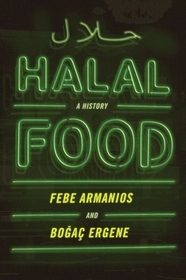
Halal Food
A History
-
10% KEDVEZMÉNY?
- A kedvezmény csak az 'Értesítés a kedvenc témákról' hírlevelünk címzettjeinek rendeléseire érvényes.
- Kiadói listaár GBP 24.49
-
11 057 Ft (10 530 Ft + 5% áfa)
Az ár azért becsült, mert a rendelés pillanatában nem lehet pontosan tudni, hogy a beérkezéskor milyen lesz a forint árfolyama az adott termék eredeti devizájához képest. Ha a forint romlana, kissé többet, ha javulna, kissé kevesebbet kell majd fizetnie.
- Kedvezmény(ek) 10% (cc. 1 106 Ft off)
- Kedvezményes ár 9 951 Ft (9 477 Ft + 5% áfa)
Iratkozzon fel most és részesüljön kedvezőbb árainkból!
Feliratkozom
11 057 Ft

Beszerezhetőség
Megrendelésre a kiadó utánnyomja a könyvet. Rendelhető, de a szokásosnál kicsit lassabban érkezik meg.
Why don't you give exact delivery time?
A beszerzés időigényét az eddigi tapasztalatokra alapozva adjuk meg. Azért becsült, mert a terméket külföldről hozzuk be, így a kiadó kiszolgálásának pillanatnyi gyorsaságától is függ. A megadottnál gyorsabb és lassabb szállítás is elképzelhető, de mindent megteszünk, hogy Ön a lehető leghamarabb jusson hozzá a termékhez.
A termék adatai:
- Kiadó OUP USA
- Megjelenés dátuma 2020. június 22.
- ISBN 9780190088408
- Kötéstípus Puhakötés
- Terjedelem400 oldal
- Méret 231x155x22 mm
- Súly 590 g
- Nyelv angol
- Illusztrációk 39 hts 14
Kategóriák
Rövid leírás:
An overview of the historical and legal roots of halal (permissible) and haram (impermissible) foods in the Islamic tradition and how these are viewed in societies today.
TöbbHosszú leírás:
Food trucks announcing "halal" proliferate in many urban areas but how many non-Muslims know what this means, other than cheap lunch? Here Middle Eastern historians Febe Armanios and Bogac Ergene provide an accessible introduction to halal (permissible) food in the Islamic tradition, exploring what halal food means to Muslims and how its legal and cultural interpretations have changed in different geographies up to the present day.
Historically, Muslims used food to define their identities in relation to co-believers and non-Muslims. Food taboos are rooted in the Quran and prophetic customs, as well as writings from various periods and geographical settings. As in Judaism and among certain Christian sects, Islamic food traditions make distinctions between clean and impure, and dietary choices and food preparation reflect how believers think about broader issues. Traditionally, most halal interpretations focused on animal slaughter and the consumption of intoxicants. Muslims today, however, must also contend with an array of manufactured food products--yogurts, chocolates, cheeses, candies, and sodas--filled with unknown additives and fillers. To help consumers navigate the new halal marketplace, certifying agencies, government and non-government bodies, and global businesses vie to meet increased demands for food piety. At the same time, blogs, cookbooks, restaurants, and social media apps have proliferated, while animal rights and eco-conscious activists seek to recover halal's more wholesome and ethical inclinations.
Covering practices from the Middle East and North Africa to South Asia, Europe, and North America, this timely book is for anyone curious about the history of halal food and its place in the modern world.
An informative starting place for...renewed interested in food studies in the Islamic world.... The authors' focus on the present-day 'halal revolution' is the overarching strength of this book.... Halal Food: A History combines exegesis and economics in order to deliver a fresh take on Muslim politics in the modem world.
Tartalomjegyzék:
Acknowledgments
Abbreviations
Glossary
A Note on Transliteration
Introduction
Chapter 1. Rules
Chapter 2. Meat
Chapter 3. Slaughter
Chapter 4. Intoxicants
Chapter 5. Business
Chapter 6. Standards
Chapter 7. Manufactured Products
Chapter 8. Wholesome
Chapter 9. Cuisine
Chapter 10. Eating Out
Conclusion
Appendices
Notes
Bibliography
Index

