

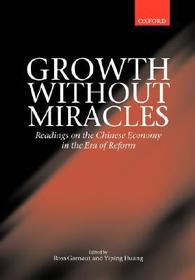
Growth without Miracles
Readings on the Chinese Economy in the Era of Reform
-
10% KEDVEZMÉNY?
- A kedvezmény csak az 'Értesítés a kedvenc témákról' hírlevelünk címzettjeinek rendeléseire érvényes.
- Kiadói listaár GBP 98.00
-
46 819 Ft (44 590 Ft + 5% áfa)
Az ár azért becsült, mert a rendelés pillanatában nem lehet pontosan tudni, hogy a beérkezéskor milyen lesz a forint árfolyama az adott termék eredeti devizájához képest. Ha a forint romlana, kissé többet, ha javulna, kissé kevesebbet kell majd fizetnie.
- Kedvezmény(ek) 10% (cc. 4 682 Ft off)
- Kedvezményes ár 42 138 Ft (40 131 Ft + 5% áfa)
Iratkozzon fel most és részesüljön kedvezőbb árainkból!
Feliratkozom
46 819 Ft

Beszerezhetőség
Megrendelésre a kiadó utánnyomja a könyvet. Rendelhető, de a szokásosnál kicsit lassabban érkezik meg.
Why don't you give exact delivery time?
A beszerzés időigényét az eddigi tapasztalatokra alapozva adjuk meg. Azért becsült, mert a terméket külföldről hozzuk be, így a kiadó kiszolgálásának pillanatnyi gyorsaságától is függ. A megadottnál gyorsabb és lassabb szállítás is elképzelhető, de mindent megteszünk, hogy Ön a lehető leghamarabb jusson hozzá a termékhez.
A termék adatai:
- Kiadó OUP Oxford
- Megjelenés dátuma 2001. március 15.
- ISBN 9780199240593
- Kötéstípus Puhakötés
- Terjedelem528 oldal
- Méret 248x171x27 mm
- Súly 866 g
- Nyelv angol
- Illusztrációk numerous tables 0
Kategóriák
Rövid leírás:
China's economic reform not only significantly improved the living conditions of the Chinese people but also provides a useful model of economic transition from central planning to a market economy. How did the Chinese economic reform succeed? What are the issues still to be addressed? And what are the lessons? This volume brings together thirty articles by prominent economists in the field of Chinese economic studies. It offers authoritative and thorough assessment and analyses of the Chinese experiences during the reform period.
TöbbHosszú leírás:
China's economic reform constitutes one of the most remarkable events of the second half of the twentieth century. It not only significantly improved the living conditions of the Chinese population but also provides a useful model of economic transition from central planning to a market economy. The gradual approach to reform adopted by the Chinese was widely regarded as suboptimal and likely to fail when compared to the shock therapy method applied in the former Soviet Union and the Eastern European economies. But China has out-performed other transitional economies.
To many observers the Chinese experience is either a myth or a miracle. This volume addresses key questions about the initial economic foundations, the reform of macroeconomic policies and macroeconomic stability, the achievements of agricultural reform and the agricultural policy choices facing the Chinese government, the unique characteristics of the township and village enterprises, the successful reform of the state-owned enterprises, the development of factor markets, the contributions of the external sectors to economic growth, the lessons of the Chinese experience for transitional economies, and the challenges for economic threory.
Growth without Miracles brings together thirty widely cited articles by prominent economists in the field of China studies to offer authoritative and through assessment and analyses of Chinas experience during the reform period. It provides a complete story for teachers and students of courses on the Chinese economy and will be of considerable interest to researchers, officials, and business people who want to understand past experiences, current problems, and the future direction of the Chinese economy.
Tartalomjegyzék:
Part 1 Introduction and Overview
1 The Economic Growth of the Chinese Economy: A Historical Perspective
2 The Neither This nor That Economy
3 Completing Chinas Move to the Market
Part 2 Economic Foundations Before Reform
4 Foundations for the Future: The Building of Modern Machinery in Shanghai before the Pacific War
5 Pre-reform Economic Development in China
6 A Long-Term Appraisal of Country Risk
Part 3 Macroeconomic Policy and Stability
7 Economic Growth and Stability in China
8 Chinas Macroeconomic Performance and Management during Transition
Part 4 Agricultural Policy
9 Plan and Market in Chinas Agricultural Commerce
10 Rural Reforms and Agricultural Growth in China
11 How Should China Feed Itself?
Part 5 Rural Industrialization
12 Township, Village, and Private Industry in Chinas Economic Reform
13 Surrounding the Cities from the Countryside
14 The Nature of the Township-Village Enterprise
15 Public vs. Private Ownership of Firms: Evidence from Rural China
Part 6 Enterprise Reform and Industrial Development
16 Enterprise Reform in Chinese Industry
17 Incentives and Autonomy in Chinese State Enterprises
18 The State Sector under Reform
19 Chinas Industrial Growth and Efficiency: A Comparison between the State and the TVE sectors
Part 7 Factor Markets and Income
20 Towards a Labour Market in China
21 Fiscal Decentralization and Growing Regional Disparities in Rural China: Some Evidence in the Provision of Social Services
22 Wage Determination and Occupational Attainment in the Rural Industrial Sector of China
23 Income and Inequality in China: Composition, Distribution, and Growth of Household Income, 1988 to 1995
Part 8 External Sector
24 The Role of Foreign Trade and Investment in Chinas Economic Transformation
25 Institutional Change, Trade Composition, and Export Supply Potential in China
26 Chinas WTO Membership: Whats at Stake?
27 Chinas Integration into the World Economy
Part 9 Lessons from Chinas Experiences
28 How to Reform a Planned Economy: Lessons from China
29 Structural Factors in the Economic Reforms of China
30 Challenges of Chinas Economic System for Economic Theory

