

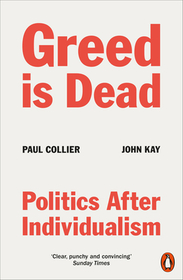
Greed Is Dead
Politics After Individualism
-
20% KEDVEZMÉNY?
- Kiadói listaár GBP 9.99
-
4 510 Ft (4 295 Ft + 5% áfa)
Az ár azért becsült, mert a rendelés pillanatában nem lehet pontosan tudni, hogy a beérkezéskor milyen lesz a forint árfolyama az adott termék eredeti devizájához képest. Ha a forint romlana, kissé többet, ha javulna, kissé kevesebbet kell majd fizetnie.
- Kedvezmény(ek) 20% (cc. 902 Ft off)
- Kedvezményes ár 3 608 Ft (3 436 Ft + 5% áfa)
- A kedvezmény érvényes eddig: 2026. augusztus 31.
3 608 Ft

Beszerezhetőség
Bizonytalan a beszerezhetőség. Érdemes még egyszer keresni szerzővel és címmel. Ha nem talál másik, kapható kiadást, forduljon ügyfélszolgálatunkhoz!
Why don't you give exact delivery time?
A beszerzés időigényét az eddigi tapasztalatokra alapozva adjuk meg. Azért becsült, mert a terméket külföldről hozzuk be, így a kiadó kiszolgálásának pillanatnyi gyorsaságától is függ. A megadottnál gyorsabb és lassabb szállítás is elképzelhető, de mindent megteszünk, hogy Ön a lehető leghamarabb jusson hozzá a termékhez.
A termék adatai:
- Kiadó Penguin Books Ltd
- Megjelenés dátuma 2021. július 29.
- Kötetek száma B-format paperback
- ISBN 9780141994161
- Kötéstípus Puhakötés
- Terjedelem224 oldal
- Méret 198x129x13 mm
- Súly 168 g
- Nyelv angol 0
Kategóriák
Hosszú leírás:
Two of the UK's leading economists call for an end to extreme individualism as the engine of prosperity
'provocative but thought-provoking and nuanced' Telegraph
Throughout history, successful societies have created institutions which channel both competition and co-operation to achieve complex goals of general benefit. These institutions make the difference between societies that thrive and those paralyzed by discord, the difference between prosperous and poor economies. Such societies are pluralist but their pluralism is disciplined.
Successful societies are also rare and fragile. We could not have built modernity without the exceptional competitive and co-operative instincts of humans, but in recent decades the balance between these instincts has become dangerously skewed: mutuality has been undermined by an extreme individualism which has weakened co-operation and polarized our politics.
Collier and Kay show how a reaffirmation of the values of mutuality could refresh and restore politics, business and the environments in which people live. Politics could reverse the moves to extremism and tribalism; businesses could replace the greed that has degraded corporate culture; the communities and decaying places that are home to many could overcome despondency and again be prosperous and purposeful. As the world emerges from an unprecedented crisis we have the chance to examine society afresh and build a politics beyond individualism.

