

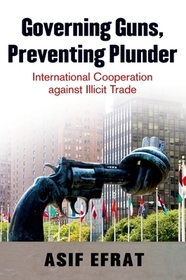
Governing Guns, Preventing Plunder
International Cooperation Against Illicit Trade
-
10% KEDVEZMÉNY?
- A kedvezmény csak az 'Értesítés a kedvenc témákról' hírlevelünk címzettjeinek rendeléseire érvényes.
- Kiadói listaár GBP 71.00
-
32 056 Ft (30 530 Ft + 5% áfa)
Az ár azért becsült, mert a rendelés pillanatában nem lehet pontosan tudni, hogy a beérkezéskor milyen lesz a forint árfolyama az adott termék eredeti devizájához képest. Ha a forint romlana, kissé többet, ha javulna, kissé kevesebbet kell majd fizetnie.
- Kedvezmény(ek) 10% (cc. 3 206 Ft off)
- Kedvezményes ár 28 851 Ft (27 477 Ft + 5% áfa)
Iratkozzon fel most és részesüljön kedvezőbb árainkból!
Feliratkozom
32 056 Ft

Beszerezhetőség
Megrendelésre a kiadó utánnyomja a könyvet. Rendelhető, de a szokásosnál kicsit lassabban érkezik meg.
Why don't you give exact delivery time?
A beszerzés időigényét az eddigi tapasztalatokra alapozva adjuk meg. Azért becsült, mert a terméket külföldről hozzuk be, így a kiadó kiszolgálásának pillanatnyi gyorsaságától is függ. A megadottnál gyorsabb és lassabb szállítás is elképzelhető, de mindent megteszünk, hogy Ön a lehető leghamarabb jusson hozzá a termékhez.
A termék adatai:
- Kiadó OUP USA
- Megjelenés dátuma 2012. augusztus 16.
- ISBN 9780199760305
- Kötéstípus Keménykötés
- Terjedelem384 oldal
- Méret 160x239x30 mm
- Súly 635 g
- Nyelv angol 0
Kategóriák
Rövid leírás:
From human trafficking to smuggling small arms to looting antiquities, illicit trade poses significant threats to international order. So why is it difficult to establish international cooperation against illicit trade? This book offers a novel, thought-provoking answer to this crucial question. Asif Efrat offers a framework for understanding the domestic origins of this conflict-and how the distribution of power shapes the conflict's outcome. Through this framework, Efrat explains why the interests of governments vary across countries, trades, and time. Efrat's findings will change the way we think about illicit trade, offering valuable insights for scholars, activists, and policymakers.
TöbbHosszú leírás:
From human trafficking to smuggling small arms to looting antiquities, illicit trade poses significant threats to international order. So why is it difficult to establish international cooperation against illicit trade? Governing Guns, Preventing Plunder offers a novel, thought-provoking answer to this crucial question.
Conventional wisdom holds that powerful criminal groups obstruct efforts to suppress illicit trade. In contrast, Asif Efrat explains how legitimate actors, such as arms manufacturers or museums that acquire and display looted antiquities, often act to hinder policing efforts. However, such efforts to evade regulation often fuel intense political conflicts between governments that demand action against illicit trade and others that are reluctant to cooperate. The book offers a framework for understanding the domestic origins of this conflict-and how the distribution of power shapes the conflict's outcome. Through this framework, Efrat explains why the interests of governments vary across countries, trades, and time. In a fascinating empirical analysis, he solves a variety of puzzles: Why is the international regulation of small arms much weaker than international drug control? What led the United States and Britain to oppose the efforts against plunder of antiquities and why did they ultimately join these efforts? How did American pressure motivate Israel to tackle sex trafficking? Efrat's findings will change the way we think about illicit trade, offering valuable insights for scholars, activists, and policymakers.
[A]uthoritative, lucid and peppered with interesting episodes... policy-makers will find this book as valuable as academics will.
Tartalomjegyzék:
1 Introduction
2 Theoretical Framework
3 Governing Guns: International Cooperation against the Illicit Trade in Small Arms
4 Preventing Plunder: International Cooperation against the Illicit Trade in Antiquities
5:Protecting Persons:International Cooperation against Human Trafficking
6: Extensions: Opposing Opium, Combating Counterfeits
7: Conclusion
References

