

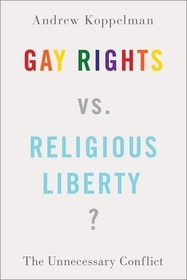
Gay Rights vs. Religious Liberty?
The Unnecessary Conflict
-
10% KEDVEZMÉNY?
- A kedvezmény csak az 'Értesítés a kedvenc témákról' hírlevelünk címzettjeinek rendeléseire érvényes.
- Kiadói listaár GBP 33.99
-
15 346 Ft (14 615 Ft + 5% áfa)
Az ár azért becsült, mert a rendelés pillanatában nem lehet pontosan tudni, hogy a beérkezéskor milyen lesz a forint árfolyama az adott termék eredeti devizájához képest. Ha a forint romlana, kissé többet, ha javulna, kissé kevesebbet kell majd fizetnie.
- Kedvezmény(ek) 10% (kb. 1 535 Ft)
- Kedvezményes ár 13 811 Ft (13 154 Ft + 5% áfa)
Iratkozzon fel most és részesüljön kedvezőbb árainkból!
Feliratkozom
15 346 Ft

Beszerezhetőség
Csak rendelésre kapható a kiadónál, kissé időigényes.
Why don't you give exact delivery time?
A beszerzés időigényét az eddigi tapasztalatokra alapozva adjuk meg. Azért becsült, mert a terméket külföldről hozzuk be, így a kiadó kiszolgálásának pillanatnyi gyorsaságától is függ. A megadottnál gyorsabb és lassabb szállítás is elképzelhető, de mindent megteszünk, hogy Ön a lehető leghamarabb jusson hozzá a termékhez.
A termék adatai:
- Kiadó OUP USA
- Megjelenés dátuma 2020. július 21.
- ISBN 9780197500989
- Kötéstípus Keménykötés
- Terjedelem214 oldal
- Méret 142x211x15 mm
- Súly 376 g
- Nyelv angol 5
Kategóriák
Rövid leírás:
Koppelman offers a solution to the bitterly polarizing gay rights/religious liberty conflict. This is the only book that lays out the interests that must be balanced in any decent compromise, in terms that both sides can recognize and appreciate. Koppelman explains the basis of antidiscrimination law, including the complex idea of dignitary harm. He shows why even those who do not regard religion as important or valid nonetheless have good reasons to support religious liberty, and why those who regard religion as a value of overriding importance should nonetheless reject the extravagant power over nonbelievers that the Supreme Court has recently embraced.
TöbbHosszú leírás:
Should religious people who conscientiously object to facilitating same-sex weddings, and who therefore decline to provide cakes, photography, or other services, be exempted from antidiscrimination laws? This issue has taken on an importance far beyond the tiny number who have made such claims. Gay rights advocates fear that exempting even a few religious dissenters would unleash a devastating wave of discrimination. Conservative Christians fear that the law will treat them like racists and drive them to the margins of American society.
Both sides are mistaken. The answer lies, not in abstract principles, but in legislative compromise. This book clearly and empathetically engages with both sides of the debate. Koppelman explains the basis of antidiscrimination law, including the complex idea of dignitary harm. He shows why even those who do not regard religion as important or valid nonetheless have good reasons to support religious liberty, and why even those who regard religion as a value of overriding importance should nonetheless reject the extravagant power over nonbelievers that the Supreme Court has recently embraced.
Koppelman also proposes a specific solution to the problem: that religious exemptions be granted only to the few businesses that are willing to announce their compunctions and bear the costs of doing so. His approach makes room for America's enormous variety of deeply held beliefs and ways of life. It can help reduce the toxic polarization of American politics.
Professor Koppelman offers a compromise that can satisfy both sides.
Tartalomjegyzék:
Introduction
1. Liberals used to love religious freedom
2. But now they denounce it as a mere excuse for bigotry
3. Worsening the divisions that helped elect Trump
4. Discrimination law can tolerate exceptions
5. Free speech principles are barely relevant
6. "Religion always wins" rules are bad for religious liberty
7. A right to be weird is a good reason to give religion special treatment
8. The racism analogy is misleading
9. There are many ways to compromise
Acknowledgments

