

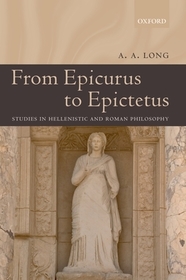
From Epicurus to Epictetus
Studies in Hellenistic and Roman Philosophy
-
10% KEDVEZMÉNY?
- A kedvezmény csak az 'Értesítés a kedvenc témákról' hírlevelünk címzettjeinek rendeléseire érvényes.
- Kiadói listaár GBP 68.00
-
30 702 Ft (29 240 Ft + 5% áfa)
Az ár azért becsült, mert a rendelés pillanatában nem lehet pontosan tudni, hogy a beérkezéskor milyen lesz a forint árfolyama az adott termék eredeti devizájához képest. Ha a forint romlana, kissé többet, ha javulna, kissé kevesebbet kell majd fizetnie.
- Kedvezmény(ek) 10% (cc. 3 070 Ft off)
- Kedvezményes ár 27 632 Ft (26 316 Ft + 5% áfa)
Iratkozzon fel most és részesüljön kedvezőbb árainkból!
Feliratkozom
30 702 Ft

Beszerezhetőség
Megrendelésre a kiadó utánnyomja a könyvet. Rendelhető, de a szokásosnál kicsit lassabban érkezik meg.
Why don't you give exact delivery time?
A beszerzés időigényét az eddigi tapasztalatokra alapozva adjuk meg. Azért becsült, mert a terméket külföldről hozzuk be, így a kiadó kiszolgálásának pillanatnyi gyorsaságától is függ. A megadottnál gyorsabb és lassabb szállítás is elképzelhető, de mindent megteszünk, hogy Ön a lehető leghamarabb jusson hozzá a termékhez.
A termék adatai:
- Kiadó OUP Oxford
- Megjelenés dátuma 2006. szeptember 14.
- ISBN 9780199279128
- Kötéstípus Puhakötés
- Terjedelem456 oldal
- Méret 234x155x22 mm
- Súly 689 g
- Nyelv angol 0
Kategóriák
Rövid leírás:
A. A. Long, one of the world's leading writers on ancient philosophy, presents eighteen essays on the philosophers and schools of the Hellenistic and Roman periods---Epicureans, Stoics, and Sceptics. The discussion ranges over four centuries of innovative and challenging thought in ethics and politics, psychology, epistemology, and cosmology.
TöbbHosszú leírás:
A.A. Long, one of the world's leading writers on ancient philosophy, presents eighteen essays on the philosophers and schools of the Hellenistic and Roman periods---Epicureans, Stoics, and Sceptics. The discussion ranges over four centuries of innovative and challenging thought in ethics and politics, psychology, epistemology, and cosmology.
In From Epicurus to Epictetus, Long's focus is on the distinctive contributions and methodologies of individual thinkers, notably Epicurus, Zeno, Pyrrho, Arcesilaus, Lucretius, Cicero, Seneca, and Epictetus. Placing their philosophy in its cultural context, and considering it in relation to the earlier ideas of Socrates, Plato and Aristotle, he invites his readers to imagine themselves choosing between Stoicism and Epicureanism as philosophies of life. All but one of these pieces has been previously published in periodicals or conference volumes, but the author has revised and updated everything, and has also added postscripts to many of the essays.
This is a book not only for scholars and experts but also, thanks to the author's accessible style, for everyone interested in understanding the legacy and continuing relevance of ancient thought.
...stimulaating collection of essays...[Long] has helped to make Hellenistic philosophy a required subject for every student of classics and philosophy
Tartalomjegyzék:
Preface
Acknowledgements
Citations and Abbreviations
Part One: General
Hellenistic ethics and philosophical power
Hellenistics ethics as the art of life
Part Two: Scepticism
Aristotle and the history of Greek scepticism
Timon: Pyrrhonist and satirist Timon: Pyrrhonist and Timon: Pyrrhonist and satirist Timon: Pyrrhonist and satirist Timon: Pyrrhonist and satirist
Arcesilaus in his time and place
Scepticism about gods in Hellenistic philosophy
Astrology: arguments pro and contra
Part Three: Epicureanism
Chance and laws of nature in Epicureanism
Lucretius and the Epicurean self
Pleasure and social utility - the virtues of being Epicurean
Part Four: Early Stoicism
Zeno's epistemology and Plato's Theaetetus
Stoic psychology and the elucidation of language
The Stoics on world-Conflagration and everlasting recurrence
Part Five: Cicero, and Roman Stoicism
Cicero's Plato and Aristotle
Cicero's politics in De officiis
Stoic philosophers on persons, property ownership and community
Seneca on the self: why now?
Epictetus on understanding and managing emotions
Bibliography
Index of subjects
Index locorum

