

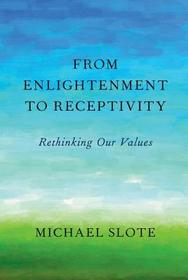
From Enlightenment to Receptivity
Rethinking Our Values
-
10% KEDVEZMÉNY?
- A kedvezmény csak az 'Értesítés a kedvenc témákról' hírlevelünk címzettjeinek rendeléseire érvényes.
- Kiadói listaár GBP 31.99
-
14 443 Ft (13 755 Ft + 5% áfa)
Az ár azért becsült, mert a rendelés pillanatában nem lehet pontosan tudni, hogy a beérkezéskor milyen lesz a forint árfolyama az adott termék eredeti devizájához képest. Ha a forint romlana, kissé többet, ha javulna, kissé kevesebbet kell majd fizetnie.
- Kedvezmény(ek) 10% (kb. 1 445 Ft)
- Kedvezményes ár 12 998 Ft (12 380 Ft + 5% áfa)
Iratkozzon fel most és részesüljön kedvezőbb árainkból!
Feliratkozom
14 443 Ft

Beszerezhetőség
Megrendelésre a kiadó utánnyomja a könyvet. Rendelhető, de a szokásosnál kicsit lassabban érkezik meg.
Why don't you give exact delivery time?
A beszerzés időigényét az eddigi tapasztalatokra alapozva adjuk meg. Azért becsült, mert a terméket külföldről hozzuk be, így a kiadó kiszolgálásának pillanatnyi gyorsaságától is függ. A megadottnál gyorsabb és lassabb szállítás is elképzelhető, de mindent megteszünk, hogy Ön a lehető leghamarabb jusson hozzá a termékhez.
A termék adatai:
- Kiadó OUP USA
- Megjelenés dátuma 2016. december 8.
- ISBN 9780190649647
- Kötéstípus Puhakötés
- Terjedelem264 oldal
- Méret 206x137x20 mm
- Súly 272 g
- Nyelv angol 0
Kategóriák
Rövid leírás:
This new book by Michael Slote argues that Western philosophy on the whole has overemphasized rational control and autonomy at the expense of the important countervailing value and virtue of receptivity. Recently the ideas of caring and empathy have received a great deal of philosophical and public attention, but both these notions rest on the deeper and broader value of receptivity, and in From Enlightenment to Receptivity, Slote seeks to show that we need to focus more on receptivity if we are to attain a more balanced sense and understanding of what is important to us.
TöbbHosszú leírás:
This new book by Michael Slote argues that Western philosophy on the whole has overemphasized rational control and autonomy at the expense of the important countervailing value and virtue of receptivity. Recently the ideas of caring and empathy have received a great deal of philosophical and public attention, but both these notions rest on the deeper and broader value of receptivity, and in From Enlightenment to Receptivity, Slote seeks to show that we need to focus more on receptivity if we are to attain a more balanced sense and understanding of what is important to us.
Beginning with a critique of Enlightenment thinking that calls into question its denial of any central role to considerations of emotion and empathy, he goes on to show how a greater emphasis on these factors and on the receptivity that underlies them can give us a more realistic, balanced, and sensitive understanding of our core ethical and epistemological values. This means rejecting post-modernism's blanket rejection of reason and of compelling real values and recognizing, rather, that receptivity should play a major role in how we lead our lives as individuals, in how we relate to nature, in how we acquire knowledge about the world, and in how we relate morally and politically with others.
In From Enlightenment to Receptivity Slote provides a nice point of entry both into themes from his earlier work and into a number of distinct subfields of philosophy. The book covers a range of topics in normative ethics, metaethics, epistemology, philosophy of religion, feminist philosophy, political philosophy, and environmental philosophy. And it is filled with interesting and provocative ideas. As such, it could be an enjoyable book to teach to an introductory undergraduate class... for the introductory or general reader, the book has much to recommend it.
Tartalomjegyzék:
Introduction
Part I: Beyond Enlightenment
Foreword to Part I
Chapter 1: Empathy and Objectivity
Chapter 2: Epistemology and Emotion
Chapter 3: Caring and Enlightenment
Chapter 4: How Important Is Morality?
Chapter 5: The Impossibility of Perfection
Chapter 6: A New Picture
Part II: Receptivity
Foreword to Part II
Chapter 7: Receptivity to Life
Chapter 8: Green Thinking
Chapter 9: From Enlightenment to Receptivity
Chapter 10: The Virtue of Receptivity
Conclusion

