

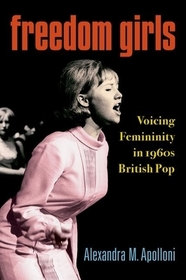
Freedom Girls
Voicing Femininity in 1960s British Pop
-
10% KEDVEZMÉNY?
- A kedvezmény csak az 'Értesítés a kedvenc témákról' hírlevelünk címzettjeinek rendeléseire érvényes.
- Kiadói listaár GBP 105.00
-
47 407 Ft (45 150 Ft + 5% áfa)
Az ár azért becsült, mert a rendelés pillanatában nem lehet pontosan tudni, hogy a beérkezéskor milyen lesz a forint árfolyama az adott termék eredeti devizájához képest. Ha a forint romlana, kissé többet, ha javulna, kissé kevesebbet kell majd fizetnie.
- Kedvezmény(ek) 10% (kb. 4 740 Ft)
- Kedvezményes ár 42 667 Ft (40 635 Ft + 5% áfa)
Iratkozzon fel most és részesüljön kedvezőbb árainkból!
Feliratkozom
47 407 Ft

Beszerezhetőség
Becsült beszerzési idő: A Prosperónál jelenleg nincsen raktáron, de a kiadónál igen. Beszerzés kb. 3-5 hét..
A Prosperónál jelenleg nincsen raktáron.
Why don't you give exact delivery time?
A beszerzés időigényét az eddigi tapasztalatokra alapozva adjuk meg. Azért becsült, mert a terméket külföldről hozzuk be, így a kiadó kiszolgálásának pillanatnyi gyorsaságától is függ. A megadottnál gyorsabb és lassabb szállítás is elképzelhető, de mindent megteszünk, hogy Ön a lehető leghamarabb jusson hozzá a termékhez.
A termék adatai:
- Kiadó OUP USA
- Megjelenés dátuma 2021. november 17.
- ISBN 9780190879891
- Kötéstípus Keménykötés
- Terjedelem336 oldal
- Méret 241x159x25 mm
- Súly 454 g
- Nyelv angol 138
Kategóriák
Rövid leírás:
Freedom Girls: Voicing Femininity in 1960s British Pop tells the stories a group of singers--Sandie Shaw, Cilla Black, Millie Small, Dusty Springfield, Lulu, Marianne Faithfull, and P.P. Arnold--whose singing voices transformed understandings of modern femininity in the 1960s. Often left out of histories of rock and pop music, the stories of these singers show us how the way we speak and sing are tied to the way we understand race and gender. This book analyzes musical recordings, television programs, and a wide range of media produced for young audiences in the 1960s to show how girl singers played a crucial role in the history of pop music.
TöbbHosszú leírás:
Freedom Girls: Voicing Femininity in 1960s British Pop shows how the vocal performances of girl singers in 1960s Britain defined-and sometimes defied-ideas about what it meant to be a young woman in the 1960s British pop music scene. The singing and expressive voices of Sandie Shaw, Cilla Black, Millie Small, Dusty Springfield, Lulu, Marianne Faithfull, and P.P. Arnold, reveal how vocal sound shapes access to social mobility, and consequently, access to power and musical authority. The book examines how Sandie Shaw and Cilla Black's ordinary girl personas were tied to whiteness and, in Black's case, her Liverpool origins. It shows how Dusty Springfield and Jamaican singer Millie Small engaged with the transatlantic sounds of soul and and ska, respectively, transforming ideas about musical genre, race, and gender. It reveals how attitudes about sexuality and youth in rock culture shaped the vocal performances of Lulu and Marianne Faithfull, and how P.P. Arnold has re-narrated rock history to center Black women's vocality.
Freedom Girls draws on a broad array of archival sources, including music magazines, fashion and entertainment magazines produced for young women, biographies and interviews, audience research reports, and others to inform analysis of musical recordings (including such songs as "As Tears Go By," "Son of a Preacher Man," and others) and performances on television programs such as Ready Steady Go!, Shindig, and other 1960s music shows. These performances reveal the historical and contemporary connections between voice, social mobility, and musical authority, and demonstrate how singers used voice to navigate the boundaries of race, class, and gender.
A thoughtful, nuanced, and beautifully written study of British girlhood and music through the upheavals of the 1960s. This book offers a terrific range of case studies including Lulu, Marianne Faithfull, Millie Small, and PP Arnold, to consider girl singers and their fans as bearers of social change in Swinging London. With attention to the materials and metaphorical functions of the voice, Apolloni restores authority to the girls and young women who were raising their voices and remaking the world.
Tartalomjegyzék:
Introduction
Vocal Manners for Moderns
Part I: Ordinary, Extraordinary Voices
Chapter 1: Chart Chicks and Gear Girls: The Limits of Mod Femininity
Chapter 2: A girl in a million, just like a million": Sandie Shaw and Ordinary Girlhood
Chapter 3: Sounding Like Liverpool: Region, Memory, and Cilla Black's Accent
Part II:
Chapter 4: England meets Jamaica's Lollipop Girl: Millie Small, Voice, and Migration
Chapter 5: Race, Self-Invention, and Dusty Springfield's Voice
Part III: Voice, Age, and Sex
Chapter 6: The Last Remaining Virgin in London: Lulu, Whiteness, and Youth
Chapter 7: Sex, Freedom, and Marianne Faithfull's Voice at the Twilight of the Sixties
Chapter 8: Remembering Rock and Roll with P.P. Arnold
Epilogue
Index

