

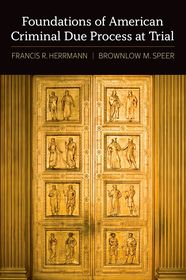
Foundations of American Criminal Due Process at Trial
-
10% KEDVEZMÉNY?
- A kedvezmény csak az 'Értesítés a kedvenc témákról' hírlevelünk címzettjeinek rendeléseire érvényes.
- Kiadói listaár GBP 71.00
-
32 056 Ft (30 530 Ft + 5% áfa)
Az ár azért becsült, mert a rendelés pillanatában nem lehet pontosan tudni, hogy a beérkezéskor milyen lesz a forint árfolyama az adott termék eredeti devizájához képest. Ha a forint romlana, kissé többet, ha javulna, kissé kevesebbet kell majd fizetnie.
- Kedvezmény(ek) 10% (kb. 3 205 Ft)
- Kedvezményes ár 28 851 Ft (27 477 Ft + 5% áfa)
Iratkozzon fel most és részesüljön kedvezőbb árainkból!
Feliratkozom
32 056 Ft

Beszerezhetőség
Becsült beszerzési idő: A Prosperónál jelenleg nincsen raktáron, de a kiadónál igen. Beszerzés kb. 3-5 hét..
A Prosperónál jelenleg nincsen raktáron.
Why don't you give exact delivery time?
A beszerzés időigényét az eddigi tapasztalatokra alapozva adjuk meg. Azért becsült, mert a terméket külföldről hozzuk be, így a kiadó kiszolgálásának pillanatnyi gyorsaságától is függ. A megadottnál gyorsabb és lassabb szállítás is elképzelhető, de mindent megteszünk, hogy Ön a lehető leghamarabb jusson hozzá a termékhez.
A termék adatai:
- Kiadó OUP USA
- Megjelenés dátuma 2025. május 21.
- ISBN 9780199812110
- Kötéstípus Keménykötés
- Terjedelem316 oldal
- Méret 237x166x26 mm
- Súly 617 g
- Nyelv angol 589
Kategóriák
Rövid leírás:
Foundations of American Criminal Due Process at Trial anchors American fair trial rights in the geography and chronology of a Western legal tradition that encompasses Rome, medieval Europe, and England.
TöbbHosszú leírás:
A combination of media, personal experience, and education have introduced the average American to their right to a fair trial by jury, a protection set out in the Bill of Rights of the American Constitution. However, the specific rights that set the jury system up for fair trial procedure have roots far older than the Bill of Rights.
Foundations of American Criminal Due Process at Trial delves into a subject whose historical horizon includes the pulpit of St. Augustine, a workshop of ninth-century forgers, the prosecution of pirates in medieval England, and defendants' demands for basic safeguards in English common-law trials. Francis R. Herrmann and Brownlow M. Speer scrutinize previously overlooked primary sources, underline the influence of canon law and classic writings on English law, and trace the fundamental protections of accused persons to Judeo-Christian principles. A text sure to be of interest to practitioners, scholars, and lay readers, Foundations of American Criminal Due Process at Trial anchors American fair trial rights in the geography and chronology of a Western legal tradition that encompasses Rome, medieval Europe, and England.
A fascinating work, well-referenced and well-structured, covering a wide sweep of history.
Tartalomjegyzék:
Procedural Norms for Criminal Trials in Roman Antiquity
The Formation of Procedural Protections in the Western Church of Late Antiquity and the Early Middle Ages
Defensive Protections in the Western Church of the Ninth Century
Formulating Fair Trial Procedures in the Roman and Canon Law of the Late Eleventh and Twelfth Centuries
Principles of Criminal Procedure in Inquisitorial Proceedings
Due Process Protections for the Accused in Early English Jury Trials
Confronting Opposing Witnesses in Sixteenth-Century England
Requiring Confessions at Common Law to Be Made Voluntarily
Silence and Self-incrimination in England Before the Late Seventeenth Century
Weaknesses of Defensive Safeguards in the Sixteenth and Seventeenth Centuries
Popular Efforts to Bolster Due Process Protections at Criminal Trials in the Later Seventeenth Century
The 1696 Treason Act's Recognition of Fair Procedures
Colonial Esteem of Trial by Jury
Colonial Fears of the Erosion of Right to Trial by Jury
Reinforcing Jury-rights
Epilogue: Reflections on the Foundations

