

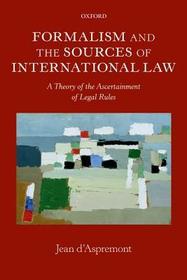
Formalism and the Sources of International Law
A Theory of the Ascertainment of Legal Rules
Sorozatcím: Oxford Monographs in International Law;
-
10% KEDVEZMÉNY?
- A kedvezmény csak az 'Értesítés a kedvenc témákról' hírlevelünk címzettjeinek rendeléseire érvényes.
- Kiadói listaár GBP 41.99
-
20 060 Ft (19 105 Ft + 5% áfa)
Az ár azért becsült, mert a rendelés pillanatában nem lehet pontosan tudni, hogy a beérkezéskor milyen lesz a forint árfolyama az adott termék eredeti devizájához képest. Ha a forint romlana, kissé többet, ha javulna, kissé kevesebbet kell majd fizetnie.
- Kedvezmény(ek) 10% (cc. 2 006 Ft off)
- Kedvezményes ár 18 054 Ft (17 195 Ft + 5% áfa)
Iratkozzon fel most és részesüljön kedvezőbb árainkból!
Feliratkozom
20 060 Ft

Beszerezhetőség
Megrendelésre a kiadó utánnyomja a könyvet. Rendelhető, de a szokásosnál kicsit lassabban érkezik meg.
Why don't you give exact delivery time?
A beszerzés időigényét az eddigi tapasztalatokra alapozva adjuk meg. Azért becsült, mert a terméket külföldről hozzuk be, így a kiadó kiszolgálásának pillanatnyi gyorsaságától is függ. A megadottnál gyorsabb és lassabb szállítás is elképzelhető, de mindent megteszünk, hogy Ön a lehető leghamarabb jusson hozzá a termékhez.
A termék adatai:
- Kiadó OUP Oxford
- Megjelenés dátuma 2013. május 23.
- ISBN 9780199682263
- Kötéstípus Puhakötés
- Terjedelem348 oldal
- Méret 234x172x19 mm
- Súly 534 g
- Nyelv angol 0
Kategóriák
Rövid leírás:
As a result of the growing prominence of international organizations and non-binding instruments there is increasing controversy as to how to delineate the boundaries of international law. This book advocates a return to a more formal way of determining what is and isn't international law, and suggests ways in which this formalism can be modernized
TöbbHosszú leírás:
This book revisits the theory of the sources of international law from the perspective of formalism. It critically analyses the virtues of formalism, construed as a theory of law ascertainment, as a means of distinguishing between law and non-law. The theory of formalism is re-evaluated against the backdrop of the growing acceptance by international legal theorists of the blurring of the lines between law and non-law. At the same time, the book acknowledges that much international normative activity nowadays takes place outside the ambit of traditional international law and that only a limited part of the exercise of public authority at the international level results in the creation of international legal rules.
The theory of ascertainment that the book puts forward attempts to dispel some of the illusions of formalism that accompany the traditional sources of international law. It also sheds light on the tendency of scholars, theorists, and advocates to deformalize the identification of international legal rules with a view to expanding international law. The book seeks to revitalize and refresh the formal identification of rules by engaging with some tenets of the postmodern critique of formalism. As a result, the book not only grapples with the practice of law-making at the international level, but it also offers broad theoretical insights on international law, dealing with the main schools of thought in legal theory (positivism, naturalism, legal realism, policy-oriented jurisprudence, and postmodernism).
This paperback edition features the author's discussion of this book on the EJIL Talk blog.
The author's attempt to rejuvenate formalism in order to distinguish between law and non-law is certainly laudable and long-awaited among international lawyers.
Tartalomjegyzék:
Introduction
The concept and the rationale of formalism in international law
The emergence of formal law-ascertainment in the theory of the sources of international law
The critiques of formal law-ascertainment in the theory of the sources of international law
Deformalization of law-ascertainment in contemporary theory of the sources of international law
Lessons from the discontent with formalism
The configuration of formal ascertainment of international law: the source thesis
The foundations of formal ascertainment of international law: the social thesis
Concluding remarks: Ascertaining international legal rules in the future

