

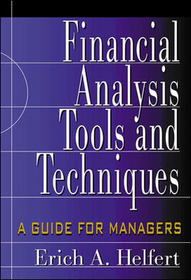
Financial Analysis Tools and Techniques: A Guide for Managers
Sorozatcím: PROFESSIONAL FINANCE & INVESTM;
-
10% KEDVEZMÉNY?
- A kedvezmény csak az 'Értesítés a kedvenc témákról' hírlevelünk címzettjeinek rendeléseire érvényes.
- Kiadói listaár GBP 75.99
-
36 304 Ft (34 575 Ft + 5% áfa)
Az ár azért becsült, mert a rendelés pillanatában nem lehet pontosan tudni, hogy a beérkezéskor milyen lesz a forint árfolyama az adott termék eredeti devizájához képest. Ha a forint romlana, kissé többet, ha javulna, kissé kevesebbet kell majd fizetnie.
- Kedvezmény(ek) 10% (cc. 3 630 Ft off)
- Kedvezményes ár 32 673 Ft (31 118 Ft + 5% áfa)
Iratkozzon fel most és részesüljön kedvezőbb árainkból!
Feliratkozom
36 304 Ft

Beszerezhetőség
Megrendelésre a kiadó utánnyomja a könyvet. Rendelhető, de a szokásosnál kicsit lassabban érkezik meg.
Why don't you give exact delivery time?
A beszerzés időigényét az eddigi tapasztalatokra alapozva adjuk meg. Azért becsült, mert a terméket külföldről hozzuk be, így a kiadó kiszolgálásának pillanatnyi gyorsaságától is függ. A megadottnál gyorsabb és lassabb szállítás is elképzelhető, de mindent megteszünk, hogy Ön a lehető leghamarabb jusson hozzá a termékhez.
A termék adatai:
- Kiadó McGraw Hill
- Megjelenés dátuma 2001. október 16.
- ISBN 9780071378345
- Kötéstípus Keménykötés
- Terjedelem480 oldal
- Méret 226x157x38 mm
- Súly 837 g
- Nyelv angol 0
Kategóriák
Rövid leírás:
Proven Techniques for All Managers and Financial Professionals to Generate, Understand, and Act Upon Key Financial Information
The syntax and "code" of financial analysis, along with the avenues for arriving at appropriate and useful answers, have long seemed like a foreign language to nonfinancial managers. Financial Analysis Tools and Techniques simplifies the process, and provides busy managers and professionals with the guidelines they need for conducting effective analyses and making sound economic trade-offs and business decisions.
In a business systems context, this essential book explains how to:
- Interpret financial statements
- Develop financial projections
- Evaluate business investment decisions
- Assess the implications of financing choices
- Derive the value of a business or security
- Understand the role of analysis in creating shareholder value
Financial Genome by Modernsoft, Inc.
This advanced knowledge-based business analysis and planning software is fully integrated with this book, allowing users to:
- Access data from databases, spreadsheets, user input
- Develop free-form or structured analyses with consistency
- Produce a wide variety of customizable financial statements
- Create integrated financial pro-forma projections
Download Financial Genome for a free 30-day trial from www.modernsoft.com (See Appendix I for details)
Since the first of its ten editions appeared in 1963, Erich Helfert's seminal Techniques of Financial Analysis has provided business students as well as financial practitioners with a concise and practical overview of financial analysis tools and concepts. What sets this classic text apart then, and continues to distinguish it today, has been its focus on the continuous interrelationship between management decisions and the economic value of a business, explained in a unique systems context.
Financial Analysis: Tools and Techniques adapts this seminal reference to today's fast-changing professional market and establishes a new benchmark for direct, concise, and practical financial analysis information and interpretation. Specifically addressing key analytical needs in the tumultuous twenty-first-century business environment, it comments on valuable business applications of the tools and concepts with insights from Erich Helfert and his consulting clients.
Providing focused analyses of the economics of business investments and valuation, presenting discussions of cash-flow trade-offs and time-value analysis against the strategic backdrop of the business system, and emphasizing enhancement of shareholder value through value-based management (VBM), Financial Analysis: Tools and Techniques will help all nonfinancial managers to make sound investment, operating, and financing decisions. Concise yet sufficiently detailed, it covers the full range of financial analysis issues, including:
- Managing the business as a system
- Financial statements
- Funds cycles for manufacturing, sales, and service
- Cash management
- Ratio analysis and performance
- Pro-forma financial statements
- Financial modeling
- Leverage
- Financial growth plans
- Time value of money
- Analysis of investment decisions
- Using return standards
- Cost of capital
- Financing choices
- Definitions of value
- Shareholder value and value-based methodologies
Financial Analysis: Tools and Techniques is a quick and easy read for the nonfinancial manager and an excellent refresher and reference for the financial professional. In conjunction with its companion software Financial Genome, it represents the next step in financial analysisone that gives financial analysis and economic decisions their proper importance and context in the successful operation of a business.
TöbbTartalomjegyzék:
Introduction
Chapter 1 The Challenge of Financial/Economic Decision-making
Lessons for the Millennium
The New Economy
Some Key Questions
The Basics Never Change
The Economic Manager
Understanding Business Economics
Appropriate Economic Tools
The Practice of Financial/Economic Analysis
Day to Day Decisions and Operational Planning
Supporting Strategy Development
Performance Assessment and Incentives
Valuation and Investor Communications
The Value Creating Company
Relevant Decision Information
Economic Incentives
Total Systems Management
Chapter 2 A Systems Context for Financial Management
A Dynamic Perspective of Business
Decision Context
The Business System
Investment Decisions
Operating Decisions
Financing Decisions
Interrelationship of Strategy and Value Creation
The Nature of Financial Statements
The Balance Sheet
The Income Statement
The Cash Flow Statement
The Statement of Changes in Shareholders’ (Owners’) Equity
The Context of Financial Analysis
Key Issues
Analytical Support
Chapter 3 Managing Operating Funds
Funds Flow Cycles
The Funds Cycle for Manufacturing
The Funds Cycle for Sales
The Funds Cycle for Services
Variability of Funds Flows
Growth/Decline Variations
Seasonal Variations
Cyclical Variations
Generalized Funds Flow Relationships
Interpreting Funds Flow Data
Funds Management and Shareholder Value
Cash Management
Working Capital Management
Investment Management
Key Issues
Analytical Support
Chapter 4 Assessment of Business Performance
Ratio Analysis and Performance
Management’s Point of View
Operational Analysis
Resource Management
Profitability
Owners’ Point of View
Investment Return
Disposition of Earnings
Market Indicators
Lenders’ Point of View
Liquidity
Financial Leverage
Debt Service
Ratios as a System
Elements of Return on Assets
Elements of Return on Equity
Integration of Financial Performance Analysis
Some Special Issues
Inventory Costing
Depreciation Methods
The Impact of Inflation
Key Issues
Analytical Support
Chapter 5 Projection of Financial Requirements
Pro Forma Financial Statements
Pro Forma Income Statement
Pro Forma Balance Sheet
Pro Forma Cash Flow Statement
Cash Budgets
Operating Budgets
Sales Budget
Production Budget
Interrelationship of Financial Projections
Financial Modeling
Sensitivity Analysis
Key Issues
Analytical Support
Chapter 6 Dynamics and Growth of the Business System
Leverage
Operating Leverage
Target Profit Analysis
Financial Leverage
Financial Growth Plans
Basic Financial Growth Model
Sustainable Growth and the Sustainable Growth Equation
Integrated Financial Plan
Key Issues
Analytical Support
Chapter 7 Cash Flows and the Time Value of Money
The Time Value of Money
Discounting, Compounding, and Equivalence
Components of Analysis
Net Investment
Net Operating Cash Inflows
Economic Life
Terminal (Residual) Value
Methods of Analysis
Simple Measures
Economic Investment Measures
Net Present Value
Present Value Payback
Profitability Index (BCR)
Internal Rate of Return (IRR, Yield)
Annualized Net Present Value
Applying Time-Adjusted Measures
Key Issues
Analytical Support
Chapter 8 Analysis of Investment Decisions
Strategic Perspective
Decisional Framework
Problem Definition
Nature of the Investment
Future Costs and Benefits
Incremental Cash Flows
Relevant Accounting Data
Sunk Costs
Refinements of Investment Analysis
A Machine Replacement
Net Investment Refined
Operating Cash Inflows Refined
Unequal Economic Lives
Capital Additions and Recoveries
Analytical Framework
A Business Expansion
Mutually Exclusive Alternatives
Maintain versus Replace
Full-Fledged versus Economy Solution
Comparing Different Scenarios
Dealing with Risk and Changing Circumstances
Specifying Risk
Ranges of Estimates
Business Investments as Options
Probabilistic Simulation
Risk-Adjusted Return Standards
When to Use Investment Measures
Some Further Considerations
Leasing—A Financing Choice
Accelerated Depreciation
Inflation and Investment Analysis
Accuracy
Key Issues
Analytical Support
Chapter 9 Cost of Capital and Business Decisions
Decisional Context
Investment Decisions
Operating Decisions
Financing Decisions
Cost of Operating Funds
Cost of Long-term Debt
Cost of Shareholders’ Equity
Preferred Stock
Common Equity
Weighted Cost of Capital
Cost Choices
Weighting the Proportions
Calculating the Weighted Cost of Capital
Cost of Capital and Return Standards
Cost of Capital as a Cutoff Rate
Risk Categories
Cost of Capital in Multibusiness Companies
Multiple Rate Analysis
Key Issues
Analytical Support
Chapter 10 Analysis of Financing Choices
Framework for Analysis
Cost of Incremental Funds
Risk Exposure
Flexibility
Timing
Control
The Choice
Techniques of Calculation
Current Performance
Long-Term Debt in the Capital Structure
Preferred Stock in the Capital Structure
Common Stock in the Capital Structure
Range of Earnings Chart
The Optimal Capital Structure
Some Special Forms of Financing
Leasing
Convertible Securities
Stock Rights
Warrants
Key Issues
Analytical Support
Chapter 11 Valuation and Business Performance
Definitions of Value
Economic Value
Market Value
Book Value
Liquidation Value
Breakup Value
Reproduction Value
Collateral Value
Assessed Value
Appraised Value
Going Concern Value
Shareholder Value
Value to the Investor
Bond Values
Preferred Stock Values
Common Stock Values
Specialized Valuation Issues
Rights and Warrants
Options
Business Valuation
Valuing the Equity
Valuing the Total Company
Using Shortcuts in Valuing an Ongoing Business
Key Issues
Analytical Support
Chapter 12 Managing for Shareholder Value
Shareholder Value Creation in Perspective
Evolution of Value-Based Methodologies
A Review of Key Measures
Economic Profit and CFROI
Creating Value in Restructuring and Combinations
Restructuring and Value
Combinations and Synergy
Combinations and Share Values
Integration of Value Analysis
Perspectives
Expectations
Time Period
Cash Flow Pattern
Ongoing Values
Comparables
Negotiations
Key Issues
Analytical Support
Appendix I Financial Analysis Using Financial Genome
Appendix II Glossary of Key Terms and Concepts
Appendix III Financial Information and On-Line Sources
Appendix IV Basic Inflation Concepts
Appendix V Some Issues in Multinational Financial Analysis
Index
Footnotes
Chapter 6
1
Chapter 12
1
Appendix 2
1

