

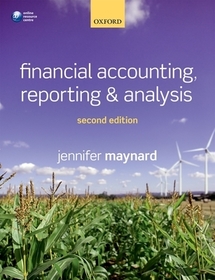
Financial Accounting, Reporting, and Analysis
-
10% KEDVEZMÉNY?
- A kedvezmény csak az 'Értesítés a kedvenc témákról' hírlevelünk címzettjeinek rendeléseire érvényes.
- Kiadói listaár GBP 69.99
-
31 600 Ft (30 095 Ft + 5% áfa)
Az ár azért becsült, mert a rendelés pillanatában nem lehet pontosan tudni, hogy a beérkezéskor milyen lesz a forint árfolyama az adott termék eredeti devizájához képest. Ha a forint romlana, kissé többet, ha javulna, kissé kevesebbet kell majd fizetnie.
- Kedvezmény(ek) 10% (cc. 3 160 Ft off)
- Kedvezményes ár 28 440 Ft (27 086 Ft + 5% áfa)
Iratkozzon fel most és részesüljön kedvezőbb árainkból!
Feliratkozom
31 600 Ft

Beszerezhetőség
Becsült beszerzési idő: A Prosperónál jelenleg nincsen raktáron, de a kiadónál igen. Beszerzés kb. 3-5 hét..
A Prosperónál jelenleg nincsen raktáron.
Why don't you give exact delivery time?
A beszerzés időigényét az eddigi tapasztalatokra alapozva adjuk meg. Azért becsült, mert a terméket külföldről hozzuk be, így a kiadó kiszolgálásának pillanatnyi gyorsaságától is függ. A megadottnál gyorsabb és lassabb szállítás is elképzelhető, de mindent megteszünk, hogy Ön a lehető leghamarabb jusson hozzá a termékhez.
A termék adatai:
- Kiadás sorszáma 2
- Kiadó OUP Oxford
- Megjelenés dátuma 2017. május 11.
- ISBN 9780198745310
- Kötéstípus Puhakötés
- Terjedelem936 oldal
- Méret 247x196x39 mm
- Súly 1763 g
- Nyelv angol
- Illusztrációk 51 line colour 0
Kategóriák
Rövid leírás:
Offering both technical and interpretative content, this is the only truly balanced financial accounting textbook to provide students not only with the 'how' and 'why' of financial information, but also guidance on what this means in practice.
TöbbHosszú leírás:
Are you looking for an engaging, decision-focussed approach to financial reporting that encourages students to develop their interpretative skills?
Building on the success of the first edition, this textbook takes a 'how, why, what' approach to financial accounting, interwoven in each chapter. From chapter one, students understand how financial information is prepared and presented, why it is prepared and presented in this way, and what the resulting financial information means for users. Designed for students taking a step beyond their introductory financial accounting training, the textbook equips them with all the key tools they will require when they enter professional practice.
Reflective of the latest International Financial Reporting Standards (IFRS) and International Accounting Standards (IAS), this textbook delivers concise, clear explanations of all the key issues in accounting standards that students need to know. Content maps to professional accounting body syllabi, making this the perfect choice for accounting courses which offer exemptions.
Chapters are rich with 3 types of examples to enhance understanding:
- Illustrative examples of real-world situations;
- Worked examples demonstrating the calculation of figures required for financial statements;
- Extracts from company annual reports demonstrate how the theory relates to financial reporting in practice.
More engaging, more balanced, and more applied than other offerings, this is exactly the textbook your financial reporting students need!
Extensive online resources accompany the textbook and include:
For students:
? Solutions to all the end-of-chapter questions in the book including walkthroughs of solutions to key questions;
? Additional graded questions including professional body questions;
? Additional interpretative case studies based on real-life companies;
? A guided tour through a company report
? Specific study skills tips for accounting students
For lecturers:
? Customisable PowerPoint slides
? Solutions to all the additional online questions
? Outline solutions to the interpretative case studies
? Group discussion questions
'A very engaging book with worked examples in each chapter and excelleng online resources to support students' learning. It offers a fresh approach to teaching accounting and achieves the perfect balance between the theoretical foundations and interpretation of financial statements.'
Tartalomjegyzék:
Introduction
Financial reporting and accounting
Financial reporting in context
The financial reporting system
Corporate governance, sustainability, and ethics
Published financial statements of companies
Techniques for the interpretation of financial statements
Income statement reporting issues
Reporting performance
Revenue from contracts with customers
Earnings per share
Taxation
Statement of financial position reporting issues
Property, plant, equipment, and impairment
Intangible assets
Inventories
Liabilities
Financial instruments
Leases
Employee benefits and share based payments
Consolidated financial statements
Subsidiaries
Associates, joint arrangements, and statements of cash flow
Interpretation of financial statements revisited

