

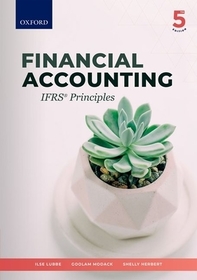
Financial accounting
IFRS Principles
-
10% KEDVEZMÉNY?
- A kedvezmény csak az 'Értesítés a kedvenc témákról' hírlevelünk címzettjeinek rendeléseire érvényes.
- Kiadói listaár GBP 39.99
-
18 055 Ft (17 195 Ft + 5% áfa)
Az ár azért becsült, mert a rendelés pillanatában nem lehet pontosan tudni, hogy a beérkezéskor milyen lesz a forint árfolyama az adott termék eredeti devizájához képest. Ha a forint romlana, kissé többet, ha javulna, kissé kevesebbet kell majd fizetnie.
- Kedvezmény(ek) 10% (kb. 1 806 Ft)
- Kedvezményes ár 16 249 Ft (15 476 Ft + 5% áfa)
Iratkozzon fel most és részesüljön kedvezőbb árainkból!
Feliratkozom
18 055 Ft

Beszerezhetőség
Csak rendelésre kapható a kiadónál, kissé időigényes.
Why don't you give exact delivery time?
A beszerzés időigényét az eddigi tapasztalatokra alapozva adjuk meg. Azért becsült, mert a terméket külföldről hozzuk be, így a kiadó kiszolgálásának pillanatnyi gyorsaságától is függ. A megadottnál gyorsabb és lassabb szállítás is elképzelhető, de mindent megteszünk, hogy Ön a lehető leghamarabb jusson hozzá a termékhez.
A termék adatai:
- Kiadás sorszáma 5
- Kiadó OUP Southern Africa
- Megjelenés dátuma 2020. szeptember 30.
- ISBN 9780190746926
- Kötéstípus Puhakötés
- Terjedelem856 oldal
- Méret 240x170x40 mm
- Súly 1218 g
- Nyelv angol 25
Kategóriák
Hosszú leírás:
The fifth edition of Financial Accounting: IFRS® Principles is a concepts-based South African text that assumes a basic knowledge of financial accounting, and then helps readers understand and apply the International Financial Reporting Standards (IFRS® Standards). It also references the IFRS for SMEs® Standard, which is applicable to small and medium-sized enterprises. The book has been updated to bring it in line with the 2018 Conceptual Framework. It has been revised to be more accessible, and now includes simpler, more concise explanations, conceptual diagrams and additional worked examples.The pedagogy of the book supports the development of crucial strategies and sound financial reporting knowledge, providing an excellent balance between theory, practice and strategy. It is suitable for second and third-year courses in financial accounting on the Chartered Accountant or General Accountant stream at universities as well as universities of technology
TöbbTartalomjegyzék:
Part 1: Financial Reporting
Chapter 1: The financial reporting environment and frameworks
Chapter 2: Presentation of financial statements
Chapter 3: Statements of cash flows
Chapter 4: Owner's equity
Chapter 5: Accounting policies, changes in accounting estimates and errors
Chapter 6: Earnings per share and headline earnings per share
Chapter 7: Analysis and evaluation of financial statements
Part 2: Elements Of Financial Statements
Chapter 8: Property, plant and equipment
Chapter 9: Investment properties
Chapter 10: Intangible assets
Chapter 11: Inventory
Chapter 12: Financial instruments
Chapter 13: Impairment of assets
Chapter 14: Provisions, contingent liabilities and contingent assets
Chapter 15: Leases
Chapter 16: Income taxes
Chapter 17: Borrowing costs
Chapter 18: Events after the reporting period
Chapter 19: Non-current assets held for sale and discontinued operations
Chapter 20: Revenue from contracts with customers
Chapter 21: Foreign exchange transactions
Chapter 22: Employee benefits and share-based payments
Part 3: Accounting for Groups
Chapter 23: Business combinations
Chapter 24: Separate financial statements
Chapter 25: Consolidated financial statements
Chapter 26: Accounting for associates, joint ventures and joint arrangements

