

-
10% KEDVEZMÉNY?
- A kedvezmény csak az 'Értesítés a kedvenc témákról' hírlevelünk címzettjeinek rendeléseire érvényes.
- Kiadói listaár GBP 92.00
-
41 538 Ft (39 560 Ft + 5% áfa)
Az ár azért becsült, mert a rendelés pillanatában nem lehet pontosan tudni, hogy a beérkezéskor milyen lesz a forint árfolyama az adott termék eredeti devizájához képest. Ha a forint romlana, kissé többet, ha javulna, kissé kevesebbet kell majd fizetnie.
- Kedvezmény(ek) 10% (kb. 4 154 Ft)
- Kedvezményes ár 37 384 Ft (35 604 Ft + 5% áfa)
Iratkozzon fel most és részesüljön kedvezőbb árainkból!
Feliratkozom
41 538 Ft

Beszerezhetőség
Megrendelésre a kiadó utánnyomja a könyvet. Rendelhető, de a szokásosnál kicsit lassabban érkezik meg.
Why don't you give exact delivery time?
A beszerzés időigényét az eddigi tapasztalatokra alapozva adjuk meg. Azért becsült, mert a terméket külföldről hozzuk be, így a kiadó kiszolgálásának pillanatnyi gyorsaságától is függ. A megadottnál gyorsabb és lassabb szállítás is elképzelhető, de mindent megteszünk, hogy Ön a lehető leghamarabb jusson hozzá a termékhez.
A termék adatai:
- Kiadó OUP USA
- Megjelenés dátuma 2013. február 21.
- ISBN 9780199861125
- Kötéstípus Keménykötés
- Terjedelem224 oldal
- Méret 163x239x22 mm
- Súly 533 g
- Nyelv angol 0
Kategóriák
Rövid leírás:
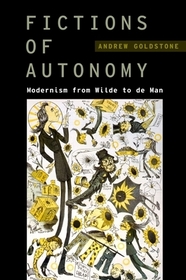
Fictions of Autonomy presents a revisionary account of aesthetic autonomy and transnational modernism with a range of readings that includes works by Wilde, Eliot, Joyce, Barnes, and Stevens alongside writings by theorists like Adorno and de Man.
TöbbHosszú leírás:
No aspect of modernist literature has attracted more passionate defenses, or more furious denunciations, than its affinity for the idea of autonomy. A belief in art as a law unto itself is central to the work of many writers from the late nineteenth century to the present. But is this belief just a way of denying art's social contexts, its roots in the lives of its creators, its political and ethical obligations?
Fictions of Autonomy argues that the concept of autonomy is, on the contrary, essential for understanding modernism historically. Disputing the prevailing skepticism about autonomy, Andrew Goldstone shows that the pursuit of relative independence within society is modernism's distinctive way of relating to its contexts. Goldstone examines an expansive modernist field in fiction, poetry, and theory--Oscar Wilde, J.-K. Huysmans, Henry James, Marcel Proust, T.S. Eliot, James Joyce, Wallace Stevens, Djuna Barnes, Theodor Adorno, Paul de Man--in order to reveal an ever-shifting preoccupation with autonomy. Drawing on Bourdieu's sociology, formalist reading, and historical contextualization, this book demonstrates the importance of autonomy to modernist themes as varied as domestic service, artistic aging, expat life, and non-referentiality.
Nothing less than an argument for a wholesale revision of the assumptions of modernist studies, Fictions of Autonomy is also an intervention in literary theory. This book shows why anyone interested in literary history, the sociology of culture, and aesthetics needs to take account of the social, stylistic, and political significance of the problem, and the potential, of autonomy.
The author's thoughtful and important consideration of literary autonomy reopens a provocative conversation with new insight, and it is intelligently and articulately conveyed.
Tartalomjegyzék:
Contents
Series Editors' Foreword
Acknowledgments
Introduction
An institutional approach
Aesthetic autonomy in practice and in philosophy
Thee fictions of autonomy and their themes
Modernist studies and the expanded field
Autonomy from Labor
In Service to Art for Art's Sake from Wilde to Proust
Aesthetic autonomy? Our servants will do that for us
Wilde: the truth of masks with manners
Huysmans: the decadent master-servant dialectic
Henry James: the subtlety of service
Proust: service in the magic circle
Aestheticist self-consciousness
Autonomy from the Person
Impersonality and Lateness in Eliot and Adorno
Adorno's theory of impersonality
Eliot's late style, 1910-1958
Four Quartets and musical lateness
The late style and the intentional fallacy
Expatriation as Autonomy
Djuna Barnes, James Joyce, and Aesthetic Cosmopolitanism
Nightwood: the luminous deterioration of cosmopolitanism
French nights and the artist's lifestyle
Wandering Jews, wandering Americans
"Vagaries Malicieux": losing all connection at the Deux Magots
Stephen Dedalus's hat
Literature without External Reference
Tautology in Wallace Stevens and Paul de Man
The aesthete is the aesthete
The Academy of Fine Ideas: Stevens and de Man in the university
De Man, modernism, and the correspondence theory
The sound of autonomy
The plain sense of tautology
Epilogue: Autonomy Now
Autonomy, literary study, and knowledge production
Autonomy abroad: proliferation on the world stage
The truth about fictions of autonomy
Index

