

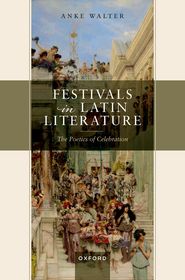
Festivals in Latin Literature
The Poetics of Celebration
-
10% KEDVEZMÉNY?
- A kedvezmény csak az 'Értesítés a kedvenc témákról' hírlevelünk címzettjeinek rendeléseire érvényes.
- Kiadói listaár GBP 99.00
-
44 698 Ft (42 570 Ft + 5% áfa)
Az ár azért becsült, mert a rendelés pillanatában nem lehet pontosan tudni, hogy a beérkezéskor milyen lesz a forint árfolyama az adott termék eredeti devizájához képest. Ha a forint romlana, kissé többet, ha javulna, kissé kevesebbet kell majd fizetnie.
- Kedvezmény(ek) 10% (cc. 4 470 Ft off)
- Kedvezményes ár 40 229 Ft (38 313 Ft + 5% áfa)
Iratkozzon fel most és részesüljön kedvezőbb árainkból!
Feliratkozom
44 698 Ft

Beszerezhetőség
Becsült beszerzési idő: A Prosperónál jelenleg nincsen raktáron, de a kiadónál igen. Beszerzés kb. 3-5 hét..
A Prosperónál jelenleg nincsen raktáron.
Why don't you give exact delivery time?
A beszerzés időigényét az eddigi tapasztalatokra alapozva adjuk meg. Azért becsült, mert a terméket külföldről hozzuk be, így a kiadó kiszolgálásának pillanatnyi gyorsaságától is függ. A megadottnál gyorsabb és lassabb szállítás is elképzelhető, de mindent megteszünk, hogy Ön a lehető leghamarabb jusson hozzá a termékhez.
A termék adatai:
- Kiadó OUP Oxford
- Megjelenés dátuma 2025. május 29.
- ISBN 9780198931454
- Kötéstípus Keménykötés
- Terjedelem336 oldal
- Méret 240x165x25 mm
- Súly 641 g
- Nyelv angol 701
Kategóriák
Rövid leírás:
Festivals feature prominently in Latin literature, even in works that are not explicitly dedicated to festive days like Ovid's Fasti. This book explores the role of festivals in elegiac, lyric, and epic poetry, as well as historiography
TöbbHosszú leírás:
Festivals feature prominently in Latin literature, even in works that are not explicitly dedicated to festive days like Ovid's Fasti. Festivals in Latin Literature explores the role of festivals in elegiac, lyric, and epic poetry, as well as historiography. In all of these, festivals play a more pervasive role than has so far been realised. Tibullus' elegiac oeuvre rests on an interplay between amatory and festive poetics that even has a political meaning to it, and Propertius uses festivals in his fourth book of elegies to question, from an amatory perspective, the memory typically associated with some key Roman festivals. In the poetry of Sulpicia and Ovid's Tristia, festivals allow voices that are otherwise marginalised to shape their own fame and commemoration. Horace's Odes and the Carmen saeculare rest on an intriguing interplay of festivity in the private sphere, which forms but a fleeting and precious moment, and the monumentality of public festivals, in which the poet styles himself as a master of Roman time. Post-Vergilian Latin epicists use festivals to explore the fragility of human identity in a world dominated by the gods, in Ovid's Metamorphoses, and to question further the commemoration connected with festive days. In particular, Statius in his Thebaid undermines the foundational importance of festivals in the Aeneid, vividly staging the problematic meaning of festivals that convey a premature commemoration of an epic conflict that is unspeakable (nefas). Finally, in Livy's ab urbe condita and Tacitus' Histories, festivals both provide structure and capture long-term developments in Roman history, including Rome's rise to power and the collapse of its morals, while situating both works in broader historiographical and intertextual dialogues.
The book sheds new light on these authors and works, uncovering their unique 'festive poetics'. It demonstrates that Latin literature adds important new aspects to our general understanding of festivals, which, as seen throughout the book, offer even richer avenues of creating meaning and shaping or questioning commemoration than is often assumed.
An important contribution in its niche, primarily of interest to advanced students and scholars of Roman poetry.
Tartalomjegyzék:
Introduction
Festivals in Love Elegy
Elegiac Appendices: Sulpicia and Ovid's Tristia
Festivals in Horace's Odes
Festivals in Epic
Festivals in Historiography
Conclusion

