

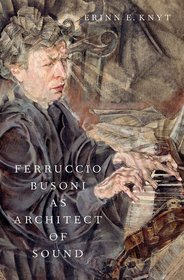
Ferruccio Busoni as Architect of Sound
-
10% KEDVEZMÉNY?
- A kedvezmény csak az 'Értesítés a kedvenc témákról' hírlevelünk címzettjeinek rendeléseire érvényes.
- Kiadói listaár GBP 58.00
-
26 187 Ft (24 940 Ft + 5% áfa)
Az ár azért becsült, mert a rendelés pillanatában nem lehet pontosan tudni, hogy a beérkezéskor milyen lesz a forint árfolyama az adott termék eredeti devizájához képest. Ha a forint romlana, kissé többet, ha javulna, kissé kevesebbet kell majd fizetnie.
- Kedvezmény(ek) 10% (kb. 2 619 Ft)
- Kedvezményes ár 23 568 Ft (22 446 Ft + 5% áfa)
Iratkozzon fel most és részesüljön kedvezőbb árainkból!
Feliratkozom
26 187 Ft

Beszerezhetőség
Becsült beszerzési idő: A Prosperónál jelenleg nincsen raktáron, de a kiadónál igen. Beszerzés kb. 3-5 hét..
A Prosperónál jelenleg nincsen raktáron.
Why don't you give exact delivery time?
A beszerzés időigényét az eddigi tapasztalatokra alapozva adjuk meg. Azért becsült, mert a terméket külföldről hozzuk be, így a kiadó kiszolgálásának pillanatnyi gyorsaságától is függ. A megadottnál gyorsabb és lassabb szállítás is elképzelhető, de mindent megteszünk, hogy Ön a lehető leghamarabb jusson hozzá a termékhez.
A termék adatai:
- Kiadó OUP USA
- Megjelenés dátuma 2023. május 4.
- ISBN 9780197625491
- Kötéstípus Keménykötés
- Terjedelem328 oldal
- Méret 236x163x27 mm
- Súly 617 g
- Nyelv angol
- Illusztrációk 36 b/w figures, 20 music examples 284
Kategóriák
Rövid leírás:
Ferruccio Busoni as Architect of Sound presents Busoni as an innovator inspired not only by past musical traditions but also by a contemporary interest in experimentalism and architecture. Author Erinn E. Knyt explores how Busoni's compositional innovation made a lasting impact in musical language and spatialized architectural music.
TöbbHosszú leírás:
Ferruccio Busoni as Architect of Sound presents the composer as an innovator inspired not only by past musical traditions but also by a contemporary interest in experimentalism. In the twentieth-century, Busoni wrote pieces where sound radiates from different directions, created montage formal structures, and freely used all twelve pitches of the chromatic scale without avoiding consonances. This book reveals how he also applied his understanding of tangible architectural spaces, buildings, and floor plans to his music, reconciling the spatial and temporal divide in music through an interdisciplinary approach. His innovation prompted and inspired new trends in pitch organization, the spatialization of sound, and the expansion of formal structures. Transcending physical boundaries of compositional innovation, Busoni also engaged in a rich exchange of ideas with contemporary architects and artists.
Through a broad analysis of Busoni's compositional activities, musicologist Erinn E. Knyt brings Busoni's music into dialogue with more recent accounts of modernism in music that move beyond elitist esotericism and notions of rupture with the past. In addition, she facilitates a discourse between Busoni and other twentieth-century artists and explores how Busoni's spatialized architectural music left a lasting imprint on future generations of musicians and early film pioneers.
Erinn E. Knyt, currently the most active Busoni scholar, continues her series of detailed examinations of his contribution to music in the first quarter of the twentieth century, here on an extended scale. Supported as in former publications by careful archival work, she shows how his lifelong fascination with architecture and related concepts permeated many aspects of his original works and arrangements. Her conceptualization of Busoni's creative work contributes to a better understanding of the forms that musical modernism can take when not tied to a clear break with the past as the sole criterion for significance.
Tartalomjegyzék:
List of Illustrations
Acknowledgements
Introduction: Ferruccio Busoni and Architecture
Chapter One: The Cathedral of the Future and Young Classicality
Chapter Two: Busoni's Architectural Structures
Chapter Three: The Circle of Sound
Chapter Four: Busoni's Liquid Architecture
Chapter Five: Beyond Busoni: Building Music in the Twentieth Century
Selected Bibliography
Index

