

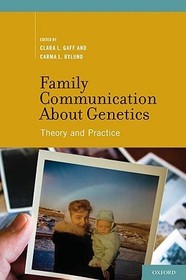
Family Communication about Genetics
Theory and Practice
-
10% KEDVEZMÉNY?
- A kedvezmény csak az 'Értesítés a kedvenc témákról' hírlevelünk címzettjeinek rendeléseire érvényes.
- Kiadói listaár GBP 80.00
-
36 120 Ft (34 400 Ft + 5% áfa)
Az ár azért becsült, mert a rendelés pillanatában nem lehet pontosan tudni, hogy a beérkezéskor milyen lesz a forint árfolyama az adott termék eredeti devizájához képest. Ha a forint romlana, kissé többet, ha javulna, kissé kevesebbet kell majd fizetnie.
- Kedvezmény(ek) 10% (kb. 3 612 Ft)
- Kedvezményes ár 32 508 Ft (30 960 Ft + 5% áfa)
Iratkozzon fel most és részesüljön kedvezőbb árainkból!
Feliratkozom
36 120 Ft

Beszerezhetőség
Megrendelésre a kiadó utánnyomja a könyvet. Rendelhető, de a szokásosnál kicsit lassabban érkezik meg.
Why don't you give exact delivery time?
A beszerzés időigényét az eddigi tapasztalatokra alapozva adjuk meg. Azért becsült, mert a terméket külföldről hozzuk be, így a kiadó kiszolgálásának pillanatnyi gyorsaságától is függ. A megadottnál gyorsabb és lassabb szállítás is elképzelhető, de mindent megteszünk, hogy Ön a lehető leghamarabb jusson hozzá a termékhez.
A termék adatai:
- Kiadó OUP USA
- Megjelenés dátuma 2010. július 1.
- ISBN 9780195369823
- Kötéstípus Keménykötés
- Terjedelem312 oldal
- Méret 160x236x25 mm
- Súly 596 g
- Nyelv angol
- Illusztrációk 7 illustrations 0
Kategóriák
Rövid leírás:
This new title is the only book available that focuses explicitly on family communication about genetic issues. Gaff and Bylund pair an expert in communication theory with a genetic practitioner for each chapter to ensure theoretically strong content that is relevant to practice. Accessible and useful to specialists and non-specialists, each chapter begins with a brief summary of key concepts, and there is a useful appendix explaining basic concepts and common inheritance patterns.
TöbbHosszú leírás:
Genetics is in all senses a family affair. The diagnosis of a genetic condition affects not only the patient and biological family members who may themselves be at risk, but also "family" more generally as support may be sought from those considered kin and who may or may not be at risk themselves. It is considered best practice in genetic consultations to explore who will be informed within the family when a genetic condition or risk is diagnosed, particularly when the health of other family members is at risk. There is little guidance or consensus on how to achieve the implicit goal of informed family members while respecting patient confidentiality, however. There is a need for practitioners to be aware of the dynamics of family communication and to have guidance about how they may sensitively facilitate communication about genetics within families.
This handbook facilitates the development of clinical practices relating to family communication about genetics. Relevant theories of family communication are summarized and related to a clinical genetics milieu and, from this, frameworks for practitioners are presented. A book of this nature is particularly timely as the completion of the Human Genome Project will result in an unprecedented amount of information about genetic constitution and health risks becoming available to individuals and their families. The presence of a potentially genetic condition in a family is not a new phenomenon. However, the growth in testing for genetic conditions, common complex conditions and variants that may influence health as well as drug metabolism means that a greater number of individuals will face decisions about communicating this information to their relatives. Many health professionals in all levels of health care will be confronted with issues of responsibility and practice in family communication about genetic information as they become providers of this testing.

