

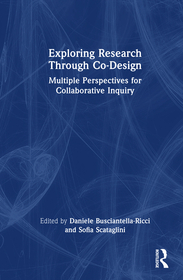
Exploring Research Through Co-Design
Multiple Perspectives for Collaborative Inquiry
-
10% KEDVEZMÉNY?
- Kiadói listaár GBP 187.99
-
84 877 Ft (80 835 Ft + 5% áfa)
Az ár azért becsült, mert a rendelés pillanatában nem lehet pontosan tudni, hogy a beérkezéskor milyen lesz a forint árfolyama az adott termék eredeti devizájához képest. Ha a forint romlana, kissé többet, ha javulna, kissé kevesebbet kell majd fizetnie.
- Kedvezmény(ek) 10% (kb. 8 488 Ft)
- Kedvezményes ár 76 389 Ft (72 752 Ft + 5% áfa)
76 389 Ft

Beszerezhetőség
Még nem jelent meg, de rendelhető. A megjelenéstől számított néhány héten belül megérkezik.
Why don't you give exact delivery time?
A beszerzés időigényét az eddigi tapasztalatokra alapozva adjuk meg. Azért becsült, mert a terméket külföldről hozzuk be, így a kiadó kiszolgálásának pillanatnyi gyorsaságától is függ. A megadottnál gyorsabb és lassabb szállítás is elképzelhető, de mindent megteszünk, hogy Ön a lehető leghamarabb jusson hozzá a termékhez.
A termék adatai:
- Kiadás sorszáma 1
- Kiadó CRC Press
- Megjelenés dátuma 2026. október 12.
- ISBN 9781032901374
- Kötéstípus Keménykötés
- Terjedelem436 oldal
- Méret 234x156 mm
- Súly 453 g
- Nyelv angol
- Illusztrációk 135 Illustrations, black & white; 86 Halftones, black & white; 49 Line drawings, black & white; 4 Tables, black & white 700
Kategóriák
Rövid leírás:
This book offers an insightful examination of how co-design can revolutionize research practices across various fields. It introduces a cognitive model for RTC that is grounded in the Control System Theory (CST) and integrates elements from Research Through Design (RTD).
TöbbHosszú leírás:
Over the past few decades, key studies have highlighted the benefits and challenges of co-design, emphasising its potential to generate creativity, improve research quality, and deliver user-centred outcomes. However, formalising co-design as a research method and establishing a unified framework for its application remains a challenge. This book addresses these issues by introducing and expanding the concept of Research through Co-Design (RTC).
This book offers an insightful examination of how co-design can revolutionise research practices across various disciplines. It introduces a cognitive model for RTC that is grounded in the Control Systems Theory (CST) and integrates elements from Research through Design (RTD). Bringing together contributions from 41 authors across 13 nations, this title provides a collection of cross-disciplinary perspectives and experiences covering STEM, design research, and the third or social economy sector. The 22 chapters showcase diverse applications and reveal the potential of co-design in producing knowledge and valuable insights and methodological approaches that can enhance research practices. By highlighting theoretical frameworks and practical case studies, the book illustrates how RTC can be effectively utilised in a range of academic and professional contexts.
The reader will gain a thorough understanding of RTC and how it can be utilised across multiple disciplines and settings. Exploring Research Through Co-Design: Multiple Perspectives for Collaborative Inquiry is an essential resource for researchers, academics, and students who are interested in leveraging co-design as a research strategy, including those in the fields of human factors and ergonomics, design thinking, engineering, social economy projects, and other multidisciplinary contexts.
TöbbTartalomjegyzék:
1. Research through Co-Design: The Early Idea and Origin. 2. Participatory Research through Design: Supporting Critical, Embodied Engagement with Matters of Concern. 3. RRI Operationalization in Ecosystems through Co-Creation. 4. Participatory Action Research through Design: A Conceptualisation Bridging the Gap between Three
Interrelated Concepts 5. Transnational Research through Co-Design: Case Studies of UK-China Collaborative Projects. 6. A Multidimensional Research through Co-Design Framework: The Case of Two Urban Transformation Initiatives in Tuscan Municipalities, Italy. 7. Research through Design with Ontologies and Worldviews in
Communities and Platforms. 8. Research through Co-Designing to Explore the Potential of Open Design and Collaboration-by-Iteration. 9. Homegrown Urbanism: Lessons from Dharavi, Mumbai. 10. Humanity-Centered Co-Design: Shaping the Future of Healthcare Innovation. 11. Re-Framing Co-Design Practices: Towards a Pluriversal
Mindset in Co-Design. 12. Co-Design for Inquiry through Practices. 13. The Ripple Framework: Reflecting on the Research Value of a Generative Co-Design Framework. 14. Mapping Minds: The Power of Cognitive Maps as
a Co-Creative Design Research Tool. 15. Methodological Considerations for Codesigning Public Services with Marginalised Groups Using Digital (Ethnographic) and Remote Research Methods. 16. Co-Designing with Public Administrators of 14 Climate-Neutral-to-Be Cities. 17. Co-Designing Inclusive Wayfinding Systems with Cultural
Institutions. 18. Research through Co-Design: Designing Bathroom Furniture with Older Adults. 19. Lower Limb Prostheses: Co-Designing Form and Function. 20. Co-Design and User-Centered Design for Medical Devices:
Managing the Burdens of Regulatory Constraints. 21. Empowering Industry 5.0 Education through Digital
Ergonomics and Simulation: A Practical Approach Using the ema Software Suite. 22. The Future of Research through Co-Design

