

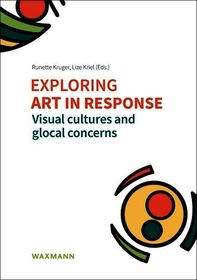
Exploring art in response
Visual cultures and glocal concerns
-
5% KEDVEZMÉNY?
- A kedvezmény csak az 'Értesítés a kedvenc témákról' hírlevelünk címzettjeinek rendeléseire érvényes.
- Kiadói listaár EUR 37.90
-
14 803 Ft (14 098 Ft + 5% áfa)
Az ár azért becsült, mert a rendelés pillanatában nem lehet pontosan tudni, hogy a beérkezéskor milyen lesz a forint árfolyama az adott termék eredeti devizájához képest. Ha a forint romlana, kissé többet, ha javulna, kissé kevesebbet kell majd fizetnie.
- Kedvezmény(ek) 5% (kb. 740 Ft)
- Kedvezményes ár 14 063 Ft (13 393 Ft + 5% áfa)
Iratkozzon fel most és részesüljön kedvezőbb árainkból!
Feliratkozom
14 803 Ft

Beszerezhetőség
Csak rendelésre kapható a kiadónál, kissé időigényes.
Why don't you give exact delivery time?
A beszerzés időigényét az eddigi tapasztalatokra alapozva adjuk meg. Azért becsült, mert a terméket külföldről hozzuk be, így a kiadó kiszolgálásának pillanatnyi gyorsaságától is függ. A megadottnál gyorsabb és lassabb szállítás is elképzelhető, de mindent megteszünk, hogy Ön a lehető leghamarabb jusson hozzá a termékhez.
A termék adatai:
- Kiadó Waxmann Verlag GmbH
- Megjelenés dátuma 2025. május 12.
- ISBN 9783830949701
- Kötéstípus Puhakötés
- Terjedelem220 oldal
- Méret 18x150x210 mm
- Súly 322 g
- Nyelv angol
- Illusztrációk with numerous coloured illustrations 586
Kategóriák
Rövid leírás:
This book shows how artists, educators, and scholars confront challenges in their societies. It explores the legacy of colonization, the preservation of heritage, the unmaking of dominant knowledge systems, and the reshaping of memory and history from below. Issues like gender and socioeconomic inequality are addressed across global contexts. Together, these perspectives offer ways to reimagine collective agency in the arts as a means to confront shared and specific concerns.
TöbbHosszú leírás:
Exploring art in response - Visual cultures and glocal concerns demonstrates the various ways in which artists, art educators and scholars address the challenges that impede our respective societies. The concerns unpicked in these chapters include the afterlife of colonisation that continues to affect our understanding of art from the Global South; the work of preserving heritage, of unmaking epistemological frameworks, of (re)making collective memory and of newly shaping history 'from below'. Issues that cut across communities from South to North, such as gender- and socioeconomic inequality, are similarly engaged. In addressing both common and unique challenges, the book provides opportunities for reimagining the ways in which our collective agency in the arts may help us prevail over the concerns that impact us.

