

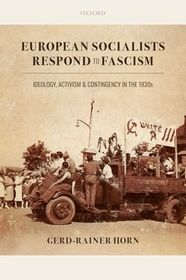
European Socialists Respond to Fascism
Ideology, Activism and Contingency in the 1930s
-
10% KEDVEZMÉNY?
- A kedvezmény csak az 'Értesítés a kedvenc témákról' hírlevelünk címzettjeinek rendeléseire érvényes.
- Kiadói listaár GBP 28.99
-
13 849 Ft (13 190 Ft + 5% áfa)
Az ár azért becsült, mert a rendelés pillanatában nem lehet pontosan tudni, hogy a beérkezéskor milyen lesz a forint árfolyama az adott termék eredeti devizájához képest. Ha a forint romlana, kissé többet, ha javulna, kissé kevesebbet kell majd fizetnie.
- Kedvezmény(ek) 10% (cc. 1 385 Ft off)
- Kedvezményes ár 12 465 Ft (11 871 Ft + 5% áfa)
Iratkozzon fel most és részesüljön kedvezőbb árainkból!
Feliratkozom
13 849 Ft

Beszerezhetőség
Becsült beszerzési idő: A Prosperónál jelenleg nincsen raktáron, de a kiadónál igen. Beszerzés kb. 3-5 hét..
A Prosperónál jelenleg nincsen raktáron.
Why don't you give exact delivery time?
A beszerzés időigényét az eddigi tapasztalatokra alapozva adjuk meg. Azért becsült, mert a terméket külföldről hozzuk be, így a kiadó kiszolgálásának pillanatnyi gyorsaságától is függ. A megadottnál gyorsabb és lassabb szállítás is elképzelhető, de mindent megteszünk, hogy Ön a lehető leghamarabb jusson hozzá a termékhez.
A termék adatai:
- Kiadó OUP Oxford
- Megjelenés dátuma 2020. július 10.
- ISBN 9780198863731
- Kötéstípus Puhakötés
- Terjedelem224 oldal
- Méret 234x156x12 mm
- Súly 346 g
- Nyelv angol 27
Kategóriák
Rövid leírás:
Based on documents collected in six European countries, European Socialists Respond to Fascism: Ideology, Activism and Contingency in the 1930s is a transnational study of largely parallel developments in Austria, Belgium, France, Germany, and Spain in the years 1933-1936.
TöbbHosszú leírás:
Based on documents collected in six European countries, European Socialists Respond to Fascism: Ideology, Activism and Contingency in the 1930s is a transnational study of largely parallel developments in Austria, Belgium, France, Germany, and Spain in the years 1933-1936.
Triggered into action by the shock effect of the Nazi rise to power in Germany, socialists throughout Western Europe entered an unusually active period of practical reorientation and debate over political strategy which helped determine the contours of European politics up to the outbreak of World War II and beyond. Stressing the transnational dimension of this process while simultaneously integrating local, regional, and national factors, this work finds that it was social democracy, rather than communism, that acted as the primary vehicle for radical change among European marxists during the 1930s.
Following major figures within the European left and the significant events that made up the inter-war period, Gerd-Rainer Horn demonstrates the interconnectedness of Europe's interwar socialists. Finally, Horn manages to relate these findings to the ongoing interdisciplinary debate on structure, agency, and contingency in the historical process.
Tartalomjegyzék:
List of Abbreviations
Introduction
The Itineraries of the LSI and the Comintern
An International United Front?
The Era of United Fronts
The Promise of the Plan
The Nature of a Popular Front
Transnational Consciousness Within the European Left
Piston-Box and Steam
Contingency in the Historical Process
Notes
Index

