

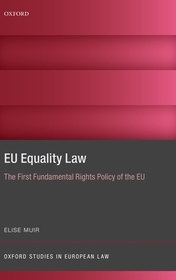
EU Equality Law
The First Fundamental Rights Policy of the EU
Sorozatcím: Oxford Studies in European Law;
-
10% KEDVEZMÉNY?
- A kedvezmény csak az 'Értesítés a kedvenc témákról' hírlevelünk címzettjeinek rendeléseire érvényes.
- Kiadói listaár GBP 105.00
-
47 407 Ft (45 150 Ft + 5% áfa)
Az ár azért becsült, mert a rendelés pillanatában nem lehet pontosan tudni, hogy a beérkezéskor milyen lesz a forint árfolyama az adott termék eredeti devizájához képest. Ha a forint romlana, kissé többet, ha javulna, kissé kevesebbet kell majd fizetnie.
- Kedvezmény(ek) 10% (cc. 4 741 Ft off)
- Kedvezményes ár 42 667 Ft (40 635 Ft + 5% áfa)
Iratkozzon fel most és részesüljön kedvezőbb árainkból!
Feliratkozom
47 407 Ft

Beszerezhetőség
Megrendelésre a kiadó utánnyomja a könyvet. Rendelhető, de a szokásosnál kicsit lassabban érkezik meg.
Why don't you give exact delivery time?
A beszerzés időigényét az eddigi tapasztalatokra alapozva adjuk meg. Azért becsült, mert a terméket külföldről hozzuk be, így a kiadó kiszolgálásának pillanatnyi gyorsaságától is függ. A megadottnál gyorsabb és lassabb szállítás is elképzelhető, de mindent megteszünk, hogy Ön a lehető leghamarabb jusson hozzá a termékhez.
A termék adatai:
- Kiadó OUP Oxford
- Megjelenés dátuma 2018. november 7.
- ISBN 9780198814665
- Kötéstípus Keménykötés
- Terjedelem248 oldal
- Méret 241x164x22 mm
- Súly 538 g
- Nyelv angol 0
Kategóriák
Rövid leírás:
The focus of this monograph is on the evolution of EU policies designed to realize specific fundamental rights, and how this is delivered in EU equality law.
TöbbHosszú leírás:
The European Union is a supranational organisation with a set of circumscribed powers. Although these powers do not include an all-encompassing fundamental rights' mandate, today's existential challenges - from economic to refugee crisis, via concerns for compliance with the rule of law in some of its Member States - increase the pressure on the EU to develop tools for protection and promotion of such rights.
One way of addressing the tension between the lack of a general mandate and vivid calls for protection is for the EU to focus on selected fundamental rights which it has competence to regulate. One such example is EU law on the fundamental right to equal treatment that has blossomed since the late 1990s. In developing selected fundamental right policies that can be imposed on domestic actors, as EU law does, supranational intervention needs to be carefully tailored to the plural landscape where they are intended to flourish.
This monograph calls for a nuanced use of the infrastructure of EU law to convey shared values at domestic level across Europe.
Muir's exploration of equality makes for a thoughtful, rich, and original contribution to bibliography providing a critique not only on equality but also, more broadly, on rights discourse and the separation of powers in the EU.
Tartalomjegyzék:
Introduction
Checks and Balances in the Process of Fundamental Rights' Law-Making in the EU
EU Equality Law at a Constitutional Crossroads
Distinguishing Legislation giving Expression to Fundamental Rights: Lessons from EU Equality Law
The Legislative Embedding of the Governance of EU Equality Law
Conclusion

