

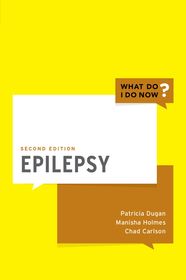
Epilepsy
Sorozatcím: What Do I Do Now;
-
10% KEDVEZMÉNY?
- A kedvezmény csak az 'Értesítés a kedvenc témákról' hírlevelünk címzettjeinek rendeléseire érvényes.
- Kiadói listaár GBP 38.99
-
18 627 Ft (17 740 Ft + 5% áfa)
Az ár azért becsült, mert a rendelés pillanatában nem lehet pontosan tudni, hogy a beérkezéskor milyen lesz a forint árfolyama az adott termék eredeti devizájához képest. Ha a forint romlana, kissé többet, ha javulna, kissé kevesebbet kell majd fizetnie.
- Kedvezmény(ek) 10% (cc. 1 863 Ft off)
- Kedvezményes ár 16 764 Ft (15 966 Ft + 5% áfa)
Iratkozzon fel most és részesüljön kedvezőbb árainkból!
Feliratkozom
18 627 Ft

Beszerezhetőség
Becsült beszerzési idő: A Prosperónál jelenleg nincsen raktáron, de a kiadónál igen. Beszerzés kb. 3-5 hét..
A Prosperónál jelenleg nincsen raktáron.
Why don't you give exact delivery time?
A beszerzés időigényét az eddigi tapasztalatokra alapozva adjuk meg. Azért becsült, mert a terméket külföldről hozzuk be, így a kiadó kiszolgálásának pillanatnyi gyorsaságától is függ. A megadottnál gyorsabb és lassabb szállítás is elképzelhető, de mindent megteszünk, hogy Ön a lehető leghamarabb jusson hozzá a termékhez.
A termék adatai:
- Kiadás sorszáma 2
- Kiadó OUP USA
- Megjelenés dátuma 2025. október 20.
- ISBN 9780197673751
- Kötéstípus Puhakötés
- Terjedelem206 oldal
- Méret 213x160x7 mm
- Súly 295 g
- Nyelv angol 655
Kategóriák
Rövid leírás:
Epilepsy, Second Edition, part of the "What Do I Do Now?" series, offers an easy-to-use reference guide for clinicians. Each chapter uses a case-based approach to show the reader what they may encounter when treating a patient with epilepsy. The book covers concepts including epilepsy diagnosis, treatment options, and ongoing care.
TöbbHosszú leírás:
Part of the "What Do I Do Now?" series, Epilepsy (Second Edition) serves as an easy-to-use reference guide for anyone working with epilepsy patients. This book offers a case-based approach to give a holistic look at concepts for understanding and treating epilepsy. These concepts range from initial diagnosis to determining treatment options to understanding the role of epilepsy in patients' day-to-day life. Topics represent common clinical scenarios and frequent areas assessed in standardized examinations.
The book includes 33 case studies and is broken up into four parts: Section 1: Diagnostic Dilemmas; Section 2: Treatment Considerations: Antiseizure Medications; Section 3: Treatment Considerations: Diagnosis and Management of Refractory Epilepsy; and Section 4: Prognostic, Neuropsychiatric, Social, and Behavioral Issues. Each case study provides a discussion of the diagnosis, key points to remember, and selected references for further reading. In this new edition, all cases and references have been updated, reflecting the advances in pharmacological treatment and understanding of epilepsy in the past ten years.
Engaging and succinct, Epilepsy, Second Edition, is an essential resource for clinicians and students at any stage in their career.
Tartalomjegyzék:
Section 1: Diagnostic Dilemmas
1. First Unprovoked Seizure—Is It Epilepsy?
2. Febrile Seizures and Other Seizures in Infants
3. Self-Limited Focal Epilepsies of Childhood
4. Nonconvulsive Seizures in Acutely Ill Patients
5. Psychogenic Nonepileptic Seizures
6. Seizures Versus Parasomnias
7. Seizure Versus Syncope
Section 2: Treatment Considerations—Antiseizure Medications (ASMs)
8. First Unprovoked Seizure—When to Treat
9. Initial Treatment of Generalized Epilepsy
10. Initial Treatment of Focal Epilepsy
11. Status Epilepticus
12. Adverse Effects of Antiseizure Medications—Rash
13. Adverse Effects of Antiseizure Medications—Idiosyncratic Reactions
14. Adverse Effects of Antiseizure Medications—Bone Health
15. Toxicity and Therapeutic Monitoring of Antiseizure Medications
16. Generic Antiseizure Medication Substitutions
17. Withdrawal of Antiseizure Medications
18. Drug-Drug Interactions: Antiseizure Medications
19. Drug-Drug Interactions: Other Medications
20. Antiseizure Medication Safety: Pregnancy and Breastfeeding
21. Treatment of Epilepsy in the Elderly
Section 3: Treatment Considerations—Diagnosis and Management of Refractory Epilepsy
22. Refractory Epilepsy: General Approach
23. Refractory Idiopathic Generalized Epilepsy
24. Refractory Focal Epilepsy
25. Epilepsy Surgery
26. Neurostimulation for Drug-Resistant Epilepsy
Section 4: Prognostic, Neuropsychiatric, Social, and Behavioral Issues
27. Epilepsy and Mood Disorders
28. Psychosis and Seizures
29. Cognitive and Behavioral Issues
30. Sleep Disturbances in Epilepsy
31. Epilepsy and Fertility
32. Sudden Unexplained Death in Epilepsy (SUDEP)
33. Impact of Epilepsy on Work, Driving, and Other Activities

