

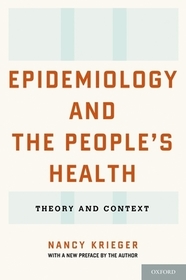
Epidemiology and the People's Health
Theory and Context
-
10% KEDVEZMÉNY?
- A kedvezmény csak az 'Értesítés a kedvenc témákról' hírlevelünk címzettjeinek rendeléseire érvényes.
- Kiadói listaár GBP 45.99
-
21 971 Ft (20 925 Ft + 5% áfa)
Az ár azért becsült, mert a rendelés pillanatában nem lehet pontosan tudni, hogy a beérkezéskor milyen lesz a forint árfolyama az adott termék eredeti devizájához képest. Ha a forint romlana, kissé többet, ha javulna, kissé kevesebbet kell majd fizetnie.
- Kedvezmény(ek) 10% (cc. 2 197 Ft off)
- Kedvezményes ár 19 774 Ft (18 833 Ft + 5% áfa)
Iratkozzon fel most és részesüljön kedvezőbb árainkból!
Feliratkozom
21 971 Ft

Beszerezhetőség
Megrendelésre a kiadó utánnyomja a könyvet. Rendelhető, de a szokásosnál kicsit lassabban érkezik meg.
Why don't you give exact delivery time?
A beszerzés időigényét az eddigi tapasztalatokra alapozva adjuk meg. Azért becsült, mert a terméket külföldről hozzuk be, így a kiadó kiszolgálásának pillanatnyi gyorsaságától is függ. A megadottnál gyorsabb és lassabb szállítás is elképzelhető, de mindent megteszünk, hogy Ön a lehető leghamarabb jusson hozzá a termékhez.
A termék adatai:
- Kiadó OUP USA
- Megjelenés dátuma 2013. szeptember 19.
- ISBN 9780199348428
- Kötéstípus Puhakötés
- Terjedelem400 oldal
- Méret 155x231x27 mm
- Súly 522 g
- Nyelv angol 0
Kategóriák
Rövid leírás:
This concise, conceptually rich, and accessible book is a rallying cry for a return to the study and discussion of epidemiologic theory: what it is, why it matters, how it has changed over time, and its implications for improving population health and promoting health equity.
TöbbHosszú leírás:
Epidemiology is often referred to as the science of public health. However, unlike other major sciences, its theoretical foundations are rarely articulated. While the idea of epidemiologic theory may seem dry and arcane, it is at its core about explaining the people's health. It is about life and death. It is about biology and society. It is about ecology and the economy. It is about how myriad aspects of people's lives--involving work, dignity, desire, love, play, conflict, discrimination, and injustice--become literally incorporated into our bodies and manifest in our health status, individually and collectively. And it is about essential knowledge critical for improving the people's health and minimizing inequitable burdens of disease, disability, and death.
Woven from a vast array of schools of thought, including those in the natural, social, and biomedical sciences, epidemiologic theory is a rich tapestry whose time for analysis is long overdue. By tracing its history and contours from ancient societies on through the development of--and debates within--contemporary epidemiology worldwide, Dr. Krieger shows how epidemiologic theory has long shaped epidemiologic practice, knowledge, and the politics of public health. Outlining an ecosocial theory of disease distribution that situates both population health and epidemiologic theory in societal and ecologic context, she offers a more holistic picture of how we embody the human experience.
Tartalomjegyzék:
Preface
Chapter 1: Does Epidemiologic Theory Exist? On Science. Data, and Explaining
Disease Distribution
Chapter 2: Health in the Balance: Early Theories About Patterns of
Disease Occurrence
Chapter 3: Epidemiology Emerges: Early Theories and Debating Determinants of
Disease Distribution-Poison. Filth, Class, & Race ( 1600-1900)
Chapter 4: Epidemiology Expands: Germs, Genes. and the (Social)
Environment ( 1900-1950)
Chapter 5: Contemporary Mainstream Epidemiologic Theory:
Biomedical and Lifestyle
Chapter 6: Social Epidemiologic Alternatives: Sociopolitical
and Psychosocial Frameworks
Chapter 7: Ecosocial Theory of Disease Distribution: Embodying
Societal & Ecologic Context
Chapter 8: Epidemiologic Theory Counts: Harm, Knowledge,
Action, and the People's Health

