

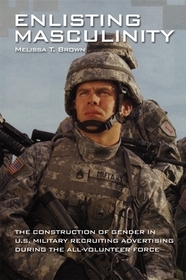
Enlisting Masculinity
The Construction of Gender in US Military Recruiting Advertising during the All-Volunteer Force
Sorozatcím: Oxford Studies in Gender and International Relations;
-
10% KEDVEZMÉNY?
- A kedvezmény csak az 'Értesítés a kedvenc témákról' hírlevelünk címzettjeinek rendeléseire érvényes.
- Kiadói listaár GBP 107.50
-
48 536 Ft (46 225 Ft + 5% áfa)
Az ár azért becsült, mert a rendelés pillanatában nem lehet pontosan tudni, hogy a beérkezéskor milyen lesz a forint árfolyama az adott termék eredeti devizájához képest. Ha a forint romlana, kissé többet, ha javulna, kissé kevesebbet kell majd fizetnie.
- Kedvezmény(ek) 10% (kb. 4 853 Ft)
- Kedvezményes ár 43 683 Ft (41 603 Ft + 5% áfa)
Iratkozzon fel most és részesüljön kedvezőbb árainkból!
Feliratkozom
48 536 Ft

Beszerezhetőség
Megrendelésre a kiadó utánnyomja a könyvet. Rendelhető, de a szokásosnál kicsit lassabban érkezik meg.
Why don't you give exact delivery time?
A beszerzés időigényét az eddigi tapasztalatokra alapozva adjuk meg. Azért becsült, mert a terméket külföldről hozzuk be, így a kiadó kiszolgálásának pillanatnyi gyorsaságától is függ. A megadottnál gyorsabb és lassabb szállítás is elképzelhető, de mindent megteszünk, hogy Ön a lehető leghamarabb jusson hozzá a termékhez.
A termék adatai:
- Kiadó OUP USA
- Megjelenés dátuma 2012. március 22.
- ISBN 9780199842827
- Kötéstípus Keménykötés
- Terjedelem240 oldal
- Méret 234x156x17 mm
- Súly 549 g
- Nyelv angol 0
Kategóriák
Rövid leírás:
Based on an analysis of more than 300 print advertisements as well as television commercials and recruiting websites, this book explores how the U.S. military branches have deployed gender and, in particular, ideas about masculinity to sell military service to potential recruits during the all-volunteer force.
TöbbHosszú leírás:
Enlisting Masculinity explores how the U.S. military branches have deployed gender and, in particular, ideas about masculinity to sell military service to potential recruits. Military service has strong historical ties to masculinity, but conscription ended during a period when masculinity was widely perceived to be in crisis and women's roles were expanding. The central question the book asks is whether, in the era of the all-volunteer force, masculinity is the underlying basis of military recruiting appeals and, if so, in what forms? It also asks how women fit into the gendering of service. Based on an analysis of more than 300 print advertisements published between the early 1970s and 2007, as well as television commercials, recruiting websites, and media coverage of recruiting, the book argues that masculinity is still a foundation of the appeals, but each branch deploys various constructions of masculinity that serve its particular personnel needs and culture, with conventional martial masculinity being only one among them. While the Marines rely almost exclusively on a traditional, warrior form of masculinity, the Army, Navy, and Air Force draw on various strands of masculinity that are in circulation in the wider culture. The inclusion of a few token women in recruiting advertisements has become routine, but the representations of service make it clear that men are the primary audience and combat is their exclusive domain. Although most Americans believe they can ignore the military in the era of the all-volunteer force, when it comes to popular culture and ideas about gender, the military is not a thing apart from society, and military recruiting materials are implicated in our broader conceptions of masculinity and of military service.
When we say that military service 'builds men' we usually think of military socialization - dismantling the old and building the new man. Melissa Brown's careful reading of military advertisements returns us to the enticement, the gendered seduction of military masculinity. If boot camp is the shock,'these ads of manhood based on glory, honor and manhood, are the awe.
Tartalomjegyzék:
List of Illustrations and Tables
Acknowledgements
Chapter 1: Introduction
Chapter 2: Concepts and Context: Masculinity, Citizenship, and the Creation of the AVF
Chapter 3: The Army
Chapter 4: The Navy
Chapter 5: The Marine Corps
Chapter 6: The Air Force
Chapter 7: Recruiting a Volunteer Force in Wartime
Chapter 8: Conclusion
Appendix
Bibliography
Notes
Index

