

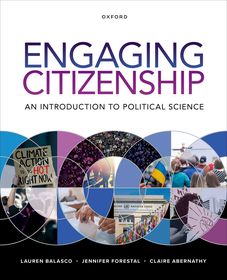
Engaging Citizenship
An Introduction to Political Science
-
10% KEDVEZMÉNY?
- A kedvezmény csak az 'Értesítés a kedvenc témákról' hírlevelünk címzettjeinek rendeléseire érvényes.
- Kiadói listaár GBP 87.99
-
39 727 Ft (37 835 Ft + 5% áfa)
Az ár azért becsült, mert a rendelés pillanatában nem lehet pontosan tudni, hogy a beérkezéskor milyen lesz a forint árfolyama az adott termék eredeti devizájához képest. Ha a forint romlana, kissé többet, ha javulna, kissé kevesebbet kell majd fizetnie.
- Kedvezmény(ek) 10% (kb. 3 973 Ft)
- Kedvezményes ár 35 754 Ft (34 052 Ft + 5% áfa)
Iratkozzon fel most és részesüljön kedvezőbb árainkból!
Feliratkozom
39 727 Ft

Beszerezhetőség
Becsült beszerzési idő: A Prosperónál jelenleg nincsen raktáron, de a kiadónál igen. Beszerzés kb. 3-5 hét..
A Prosperónál jelenleg nincsen raktáron.
Why don't you give exact delivery time?
A beszerzés időigényét az eddigi tapasztalatokra alapozva adjuk meg. Azért becsült, mert a terméket külföldről hozzuk be, így a kiadó kiszolgálásának pillanatnyi gyorsaságától is függ. A megadottnál gyorsabb és lassabb szállítás is elképzelhető, de mindent megteszünk, hogy Ön a lehető leghamarabb jusson hozzá a termékhez.
A termék adatai:
- Kiadó OUP USA
- Megjelenés dátuma 2024. szeptember 16.
- ISBN 9780197515679
- Kötéstípus Puhakötés
- Terjedelem512 oldal
- Méret 226x191x25 mm
- Súly 1066 g
- Nyelv angol 521
Kategóriák
Rövid leírás:
Engaging Citizenship introduces students to the fundamentals of political science through the lens of citizenship, democracy, and civic engagement. Each chapter uses one of the four subfields of political science-political theory, comparative politics, American politics, and international relations-to present foundational concepts while encouraging students to consider essential questions of democratic citizenship.
TöbbHosszú leírás:
Engaging Citizenship introduces students to the fundamentals of political science through the lens of citizenship, democracy, and civic engagement. This unique approach aims to help students understand the relevant of political science to their own lives and cultivate the knowledge, skills, values, and habits they need to engage in political life. The text is grounded in three key learning goals: 1) to explore the main subfields of political science, 2) to develop a broad understanding of the U.S. political system within a global context, and 3) to engage with the political process as educated and empowered citizens.
The text is divided into four sections-Explaining Statehood, Organizing Political Life, Shaping Participatory Processes, and Challenging the State-to introduce students to the fundamental questions of political science, such as the reasons why citizens join states, the arguments supportive and critical of democracy, and the avenues citizens use to influence state actions. In each section, there are four chapters; each chapter represents one of the four subfields of political science (political theory, comparative politics, American politics, and international relations) and presents its respective theories, concepts, and issues in response to that section's theme. In this way, the text provides a rich and balanced introduction to all four subfields in conversation with one another.
The text is accompanied by a series of online civic engagement activities, providing interactive opportunities for students to engage with the themes discussed in each section. In this way, Engaging Citizenship makes it easy for faculty who wish to create opportunities for hands-on learning about citizenship and civic engagement. These activities enable students to practice the skills of effective citizenship and to familiarize themselves with avenues for participation in their communities.
I see this book being a primary text used for Introduction to Political Science courses. ... I think the competitive advantage is that the authors tried to ensure that each subfield in the discipline was adequately represented in the book. I really liked this, because often times authors focus on one or two subfields and ignore the rest." - Henry Tecklenburg, Georgia Southern University
Tartalomjegyzék:
Preface: Why Citizenship?
Chapter 1: Unpacking Citizenship
Part 1: Explaining Statehood
Chapter 2: Justifying the State
Chapter 3: Comparing State Strength and Fragility
Chapter 4: Defining Rights in the United States
Chapter 5: Establishing Security
Part 2: Organizing Political Life
Chapter 6: Defining Democracy
Chapter 7: Comparing Democratic Regimes
Chapter 8: Exploring Democratic Institutions in the United States
Chapter 9: Ordering the Global System
Part 3: Shaping Participatory Processes
Chapter 10: Structuring Participation
Chapter 11: (De)-Democratizing Political Regimes
Chapter 12: Participating in the U.S. Political System
Chapter 13: Governing Global Politics
Part 4: Challenging the State
Chapter 14: Resisting State Authority
Chapter 15: Mobilizing Contentious Politics
Chapter 16: Framing Political Conflict in the United States
Chapter 17: Holding States Accountable through International Law

