

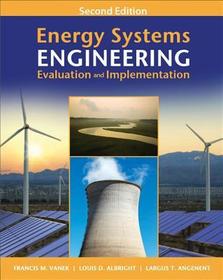
Energy Systems Engineering: Evaluation and Implementation, Second Edition
-
10% KEDVEZMÉNY?
- A kedvezmény csak az 'Értesítés a kedvenc témákról' hírlevelünk címzettjeinek rendeléseire érvényes.
- Kiadói listaár GBP 72.99
-
32 954 Ft (31 385 Ft + 5% áfa)
Az ár azért becsült, mert a rendelés pillanatában nem lehet pontosan tudni, hogy a beérkezéskor milyen lesz a forint árfolyama az adott termék eredeti devizájához képest. Ha a forint romlana, kissé többet, ha javulna, kissé kevesebbet kell majd fizetnie.
- Kedvezmény(ek) 10% (kb. 3 295 Ft)
- Kedvezményes ár 29 659 Ft (28 247 Ft + 5% áfa)
Iratkozzon fel most és részesüljön kedvezőbb árainkból!
Feliratkozom
32 954 Ft

Beszerezhetőség
Bizonytalan a beszerezhetőség. Érdemes még egyszer keresni szerzővel és címmel. Ha nem talál másik, kapható kiadást, forduljon ügyfélszolgálatunkhoz!
Why don't you give exact delivery time?
A beszerzés időigényét az eddigi tapasztalatokra alapozva adjuk meg. Azért becsült, mert a terméket külföldről hozzuk be, így a kiadó kiszolgálásának pillanatnyi gyorsaságától is függ. A megadottnál gyorsabb és lassabb szállítás is elképzelhető, de mindent megteszünk, hogy Ön a lehető leghamarabb jusson hozzá a termékhez.
A termék adatai:
- Kiadás sorszáma 2
- Kiadó McGraw-Hill Education
- Megjelenés dátuma 2012. április 1.
- ISBN 9780071787789
- Kötéstípus Keménykötés
- Terjedelem672 oldal
- Méret 238x195x38 mm
- Súly 1256 g
- Nyelv angol 0
Kategóriák
Rövid leírás:
Fully updated to cover the latest energy systems and technologies, this new edition offers a balanced analytical approach to assessing options and making decisions about energy systems, while emphasizing a portfolio approach in which a range of energy options are employed rather than one technology.
TöbbHosszú leírás:
The defining guide to energy systems engineering--updated for the latest technologies
"Broad in scope, with focused instructional detail, this text offers a uniquely excellent, student-accessible educational resource for integrating thermodynamic, alternative, and renewable energy conversion processes." -- Professor Randy L. Vander Wal, Department of Materials Science and Engineering, Penn State University
"A carefully written book, providing good breadth as well as depth on major conventional and sustainable energy systems." -- Professor David Dillard, Department of Engineering Science & Mechanics, Virginia Tech
Fully revised throughout, Energy Systems Engineering, Second Edition discusses fossil, nuclear, and renewable energy sources, emphasizing a technology-neutral, portfolio approach to energy systems options. The book covers major energy technologies, describing how they work, how they are quantitatively evaluated, their cost, and their benefit or impact on the natural environment.
Evaluating project scope, cost, energy consumption, and technical efficiency is clearly addressed. Example problems help you to quantify the performance of each technology and better assess its potential. Hundreds of illustrations and end-of-chapter exercises aid in your understanding of the concepts presented in this practical guide.
Coverage includes:
- Systems and economic tools for energy systems
- Climate change and climate modeling
- Fossil fuel resources
- Stationary combustion systems
- Carbon sequestration
- Nuclear energy systems
- Solar resource evaluation
- Solar photovoltaic technologies
- Active and passive solar thermal systems
- Wind energy systems
- New chapter on energy from biological sources
- Transportation energy technologies
- Systems perspective on transportation engineering
The defining guide to energy systems engineering--updated for the latest technologies
"Broad in scope, with focused instructional detail, this text offers a uniquely excellent, student-accessible educational resource for integrating thermodynamic, alternative, and renewable energy conversion processes." -- Professor Randy L. Vander Wal, Department of Materials Science and Engineering, Penn State University
"A carefully written book, providing good breadth as well as depth on major conventional and sustainable energy systems." -- Professor David Dillard, Department of Engineering Science & Mechanics, Virginia Tech
Fully revised throughout, Energy Systems Engineering, Second Edition discusses fossil, nuclear, and renewable energy sources, emphasizing a technology-neutral, portfolio approach to energy systems options. The book covers major energy technologies, describing how they work, how they are quantitatively evaluated, their cost, and their benefit or impact on the natural environment.
Evaluating project scope, cost, energy consumption, and technical efficiency is clearly addressed. Example problems help you to quantify the performance of each technology and better assess its potential. Hundreds of illustrations and end-of-chapter exercises aid in your understanding of the concepts presented in this practical guide.
Coverage includes:
- Systems and economic tools for energy systems
- Climate change and climate modeling
- Fossil fuel resources
- Stationary combustion systems
- Carbon sequestration
- Nuclear energy systems
- Solar resource evaluation
- Solar photovoltaic technologies
- Active and passive solar thermal systems
- Wind energy systems
- New chapter on energy from biological sources
- Transportation energy technologies
- Systems perspective on transportation engineering
Tartalomjegyzék:
Ch 1. Introduction
Ch 2. Systems Tools for Energy Systems
Ch 3. Economic Tools for Energy Systems
Ch 4. Climate Change and Climate Modeling
Ch 5. Fossil Fuel Resources
Ch 6. Stationary Combustion Systems
Ch 7. Carbon Sequestration
Ch 8. Nuclear Energy Systems
Ch 9. The Solar Resource
Ch 10. Solar Photovoltaic Technologies
Ch 11. Active Solar Thermal Applications
Ch 12. Passive Solar Thermal Applications
Ch 13. Wind Energy Systems
Ch 14. Bioenergy Resources and Systems
Ch 15. Transportation Energy Technologies
Ch 16. Systems Perspective on Transportation Energy
Ch 17. Conclusion: Creating the Twenty-First Century Energy System
Appendix A: Perpetual Julian Date Calendar
Appendix B: LCR Table
Appendix C: CF Table
Appendix D: Numerical Answers to Select Problems
Appendix E: Common Conversions
Appendix F: Information about Thermodynamic Constants
Index

