

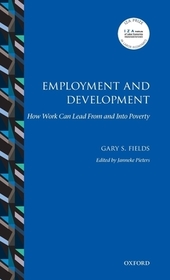
Employment and Development
How Work Can Lead From and Into Poverty
Sorozatcím: IZA Prize in Labor Economics;
-
10% KEDVEZMÉNY?
- A kedvezmény csak az 'Értesítés a kedvenc témákról' hírlevelünk címzettjeinek rendeléseire érvényes.
- Kiadói listaár GBP 110.00
-
49 665 Ft (47 300 Ft + 5% áfa)
Az ár azért becsült, mert a rendelés pillanatában nem lehet pontosan tudni, hogy a beérkezéskor milyen lesz a forint árfolyama az adott termék eredeti devizájához képest. Ha a forint romlana, kissé többet, ha javulna, kissé kevesebbet kell majd fizetnie.
- Kedvezmény(ek) 10% (kb. 4 967 Ft)
- Kedvezményes ár 44 699 Ft (42 570 Ft + 5% áfa)
Iratkozzon fel most és részesüljön kedvezőbb árainkból!
Feliratkozom
49 665 Ft

Beszerezhetőség
Megrendelésre a kiadó utánnyomja a könyvet. Rendelhető, de a szokásosnál kicsit lassabban érkezik meg.
Why don't you give exact delivery time?
A beszerzés időigényét az eddigi tapasztalatokra alapozva adjuk meg. Azért becsült, mert a terméket külföldről hozzuk be, így a kiadó kiszolgálásának pillanatnyi gyorsaságától is függ. A megadottnál gyorsabb és lassabb szállítás is elképzelhető, de mindent megteszünk, hogy Ön a lehető leghamarabb jusson hozzá a termékhez.
A termék adatai:
- Kiadó OUP Oxford
- Megjelenés dátuma 2018. december 14.
- ISBN 9780198815501
- Kötéstípus Keménykötés
- Terjedelem468 oldal
- Méret 221x148x32 mm
- Súly 716 g
- Nyelv angol 0
Kategóriák
Rövid leírás:
This book brings together the contributions of 2014 IZA Prize in Labor Economics award winner Gary Fields to address global employment and poverty problems. The central questions in his work are how economic growth affects standards of living, how labor markets work in developing countries, and how different labor market policies affect well-being.
TöbbHosszú leírás:
Employment and Development brings together the contributions of 2014 IZA Prize in Labor Economics award winner Gary S. Fields to address global employment and poverty problems. Most of the poor in developing countries live in households in which people work, but still they are poor because the best available work pays so little. Employment and Development: How Work Can Lead From and Into Poverty questions how economic growth affects standards of living, how labor markets work in developing countries, and how different labor market policies affect well-being.
Through a collection of essays, this book tackles major questions in development and labor economics. Who benefits from economic growth and who is hurt by economic decline? Why are distributional factors and labor market conditions improving in some countries but not in others? How do developing countries' labor markets work? How would labor market conditions change if different policies were to be put into effect? What are the welfare consequences of these changes? Through distributional analysis, Fields examines inequality, poverty, income mobility, and economic well-being, and through analysis of changing labor market conditions he examines employment and unemployment, employment composition, and labor earnings. By concentrating on the poor and understanding how the labor markets work for them and how their labor market earnings might be raised in response to different policy interventions, Fields addresses questions of first-order importance for human well-being.
Tartalomjegyzék:
Part I: Introduction by the Editor
Part II: Introduction by the Author
Part III: Setting the Framework
Aid, Growth, and Jobs: A Five Part Policy Framework
The Distributional Effects of Economic Growth
How the Poor are Working
Part IV: Modelling Labor Markets and the Effects of Labor Market Policies
Rural-Urban Migration, Urban Unemployment and Underemployment, and Job Search Activity in LDCs
On-the-Job Search in a Labor Market Model
A Welfare Economic Approach to Growth and Distribution in the Dual Economy
Labor Market Modeling and the Urban Informal Sector
Changes over Time in Individual Countries
Part V: Assessing Changes in Income Distribution
On Inequality Comparisons
Do Inequality Measures Measure Inequality?
The Absolute Poverty Approach
Economic Well-Being
Income Mobility
Earnings Mobility, Inequality, and Economic Growth
Part VI: Bringing the Components Together
Private and Social Returns to Education
A Welfare Economic Analysis of Labor Market Policies
Part VII: Concluding Thoughts
Directions for Future Research

