

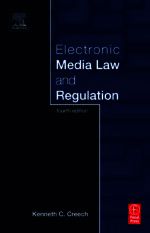
Electronic Media Law and Regulation
-
10% KEDVEZMÉNY?
- Kiadói listaár GBP 34.99
-
15 797 Ft (15 045 Ft + 5% áfa)
Az ár azért becsült, mert a rendelés pillanatában nem lehet pontosan tudni, hogy a beérkezéskor milyen lesz a forint árfolyama az adott termék eredeti devizájához képest. Ha a forint romlana, kissé többet, ha javulna, kissé kevesebbet kell majd fizetnie.
- Kedvezmény(ek) 10% (kb. 1 579 Ft)
- Kedvezményes ár 14 218 Ft (13 541 Ft + 5% áfa)
14 218 Ft

Beszerezhetőség
A kiadónál véglegesen elfogyott, nem rendelhető. Érdemes újra keresni a címmel, hátha van újabb kiadás.
Why don't you give exact delivery time?
A beszerzés időigényét az eddigi tapasztalatokra alapozva adjuk meg. Azért becsült, mert a terméket külföldről hozzuk be, így a kiadó kiszolgálásának pillanatnyi gyorsaságától is függ. A megadottnál gyorsabb és lassabb szállítás is elképzelhető, de mindent megteszünk, hogy Ön a lehető leghamarabb jusson hozzá a termékhez.
A termék adatai:
- Kiadás sorszáma 4, Revised
- Kiadó Focal Press
- Megjelenés dátuma 2003. március 21.
- ISBN 9780240805092
- Kötéstípus Puhakötés
- Terjedelem460 oldal
- Méret 233x149 mm
- Súly 662 g
- Nyelv angol 0
Kategóriák
Hosszú leírás:
Electronic Media Law and Regulation 4E is an overview of the major legal and regulatory issues facing broadcasting, cable, and developing media. It enables current and prospective electronic media professionals to easily understand the complex and intimidating realm of law and regulation by presenting information from major cases, rules, regulations, and legal documents in a concise and readable manner.
This latest edition further examines continuing technological developments and new economic models, discussing such issues as media convergence and consolidation of ownership. Reflecting the most recent court decisions and changes in FCC rules, policies and organization, the book also covers the growing importance of intellectual property law as applied to digital media and the Internet. A companion web page will supply Internet links to the full opinions of important cases and documents related to chapter topics, as well as to other sites that support each unit. A link to the FCC site offers access to crucial forms and other materials.
Electronic Media Law and Regulation 4E emphasizes principles, the conceptual pillars of the electronic media industry, using carefully selected and edited case law and original regulatory text. The text also covers regulation of cable television, changes in telecommunication law and policy, and developing technologies and potential regulatory frameworks for the 21st century. Additionally, two companion web sites, one for students and one for instructors, will provide users with additional cases, review questions, and syllabi.
Electronic Media Law and Regulation 4E is an overview of the major legal and regulatory issues facing broadcasting, cable, and developing media. It enables current and prospective electronic media professionals to easily understand the complex and intimidating realm of law and regulation by presenting information from major cases, rules, regulations, and legal documents in a concise and readable manner.
This latest edition further examines continuing technological developments and new economic models, discussing such issues as media convergence and consolidation of ownership. Reflecting the most recent court decisions and changes in FCC rules, policies and organization, the book also covers the growing importance of intellectual property law as applied to digital media and the Internet. A companion web page will supply Internet links to the full opinions of important cases and documents related to chapter topics, as well as to other sites that support each unit. A link to the FCC site offers access to crucial forms and other materials.
Electronic Media Law and Regulation 4E emphasizes principles, the conceptual pillars of the electronic media industry, using carefully selected and edited case law and original regulatory text. The text also covers regulation of cable television, changes in telecommunication law and policy, and developing technologies and potential regulatory frameworks for the 21st century. Additionally, two companion web sites, one for students and one for instructors, will provide users with additional cases, review questions, and syllabi.

