

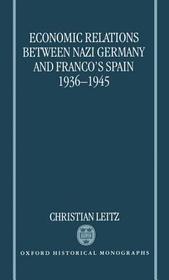
Economic Relations between Nazi Germany and Franco's Spain 1936-1945
Sorozatcím: Oxford Historical Monographs;
-
15% KEDVEZMÉNY?
- A kedvezmény csak az 'Értesítés a kedvenc témákról' hírlevelünk címzettjeinek rendeléseire érvényes.
- Kiadói listaár GBP 145.00
-
65 467 Ft (62 350 Ft + 5% áfa)
Az ár azért becsült, mert a rendelés pillanatában nem lehet pontosan tudni, hogy a beérkezéskor milyen lesz a forint árfolyama az adott termék eredeti devizájához képest. Ha a forint romlana, kissé többet, ha javulna, kissé kevesebbet kell majd fizetnie.
- Kedvezmény(ek) 15% (cc. 0 Ft off)
- Kedvezményes ár 55 647 Ft (52 998 Ft + 5% áfa)
- A kedvezmény érvényes eddig: 2026. augusztus 5.
Iratkozzon fel most és részesüljön kedvezőbb árainkból!
Feliratkozom
65 467 Ft

Beszerezhetőség
Megrendelésre a kiadó utánnyomja a könyvet. Rendelhető, de a szokásosnál kicsit lassabban érkezik meg.
Why don't you give exact delivery time?
A beszerzés időigényét az eddigi tapasztalatokra alapozva adjuk meg. Azért becsült, mert a terméket külföldről hozzuk be, így a kiadó kiszolgálásának pillanatnyi gyorsaságától is függ. A megadottnál gyorsabb és lassabb szállítás is elképzelhető, de mindent megteszünk, hogy Ön a lehető leghamarabb jusson hozzá a termékhez.
A termék adatai:
- Kiadó Clarendon Press
- Megjelenés dátuma 1996. október 10.
- ISBN 9780198206453
- Kötéstípus Keménykötés
- Terjedelem272 oldal
- Méret 224x144x21 mm
- Súly 473 g
- Nyelv angol
- Illusztrációk tables 0
Kategóriák
Rövid leírás:
This is the first comprehensive study of the economic relations between Nazi Germany and Franco's Spain (1936-1945). It demonstrates how, during the Spanish Civil War, Germany helped General Franco to victory and at the same time attempted to turn Spain into an economic colony.
TöbbHosszú leírás:
This is the first comprehensive study of the economic relationship between Nazi Germany and Franco's Spain between the outbreak of the Spanish Civil War and the end of the Second World War. It demonstrates how, during the Spanish Civil War, the Nazi regime helped General Franco to victory, but at the same time tried to turn Spain into an economic colony. Despite the involved techniques employed by the Nazis to control German trade with Spain - and determined efforts to influence the Spanish mining industry - the Germans were never able to intimidate Franco into completely surrendering control of his national assets. The German situation was weakened in September 1939, when the war against Britain and France effectively cut Spain off from the Third Reich. Based on documents in German and Spanish as well as British and American archives, this book makes a significant contribution not only to our understanding of Spanish history, but also of international relations in the 1930s and 1940s.
Leitz' book is a very well researched, thoughtfully written exploration of the economic interdependence of two authoritatian regimes during an extraordinary period in world history.

