

-
10% KEDVEZMÉNY?
- A kedvezmény csak az 'Értesítés a kedvenc témákról' hírlevelünk címzettjeinek rendeléseire érvényes.
- Kiadói listaár EUR 91.95
-
38 136 Ft (36 320 Ft + 5% áfa)
Az ár azért becsült, mert a rendelés pillanatában nem lehet pontosan tudni, hogy a beérkezéskor milyen lesz a forint árfolyama az adott termék eredeti devizájához képest. Ha a forint romlana, kissé többet, ha javulna, kissé kevesebbet kell majd fizetnie.
- Kedvezmény(ek) 10% (cc. 3 814 Ft off)
- Kedvezményes ár 34 322 Ft (32 688 Ft + 5% áfa)
Iratkozzon fel most és részesüljön kedvezőbb árainkból!
Feliratkozom
38 136 Ft

Beszerezhetőség
Megrendelésre a kiadó utánnyomja a könyvet. Rendelhető, de a szokásosnál kicsit lassabban érkezik meg.
Why don't you give exact delivery time?
A beszerzés időigényét az eddigi tapasztalatokra alapozva adjuk meg. Azért becsült, mert a terméket külföldről hozzuk be, így a kiadó kiszolgálásának pillanatnyi gyorsaságától is függ. A megadottnál gyorsabb és lassabb szállítás is elképzelhető, de mindent megteszünk, hogy Ön a lehető leghamarabb jusson hozzá a termékhez.
A termék adatai:
- Kiadó Elsevier Science
- Megjelenés dátuma 2005. augusztus 23.
- ISBN 9780120884599
- Kötéstípus Puhakötés
- Terjedelem464 oldal
- Méret 228x152 mm
- Súly 720 g
- Nyelv angol 0
Kategóriák
Hosszú leírás:
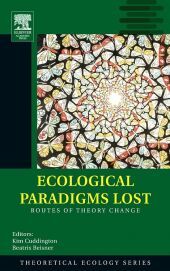
This edited volume in the Theoretical Ecology series addresses the historical development and evolution of theoretical ideas in the field of ecology. Not only does Ecological Paradigms Lost recount the history of the discipline by practitioners of the science of ecology, it includes commentary on these historical reflections by philosophers of science. Even though the theories discussed are, in many cases, are at the forefront of research, the language and approach make this material accessible to non-theoreticians. The book is structured in 5 major sections including population ecology, epidemiology, community ecology, evolutionary biology and ecosystem ecology. In each section a chapter by an eminent, experienced ecologist is complemented by analysis from a newer, cutting-edge researcher.
TöbbTartalomjegyzék:
"
1. Why a History of Ecology: An Introduction
Beatrix E. Beisner and Kim Cuddington
Part I
POPULATION ECOLOGY
2. Unstructured Models in Ecology: Past, Present and Future
3.Unstructured population models: Do population-level assumptions yield general theory?
4. The ""Structureï¿1⁄2 of Population Ecology: Philosophical Reflections on Unstructured and Structured Models
Part II
EPIDEMIOLOGICAL ECOLOGY
5. The Law of Mass Action in Epidemiology: A Historical Perspective
6. Extensions to Mass Action Mixing
7. Mass Action and System Analysis of Infection Transmission
Part III
COMMUNITY ECOLOGY
8. Community Diversity and Stability: Changing Perspectives and Changing Definitions
9. Perspectives on Diversity, Structure and Stability
10. Diversity and Stability: Theories, Models and Data
Part IV
EVOLUTIONARY ECOLOGY
11. On the Integration of Community Ecology and Evolutionary Biology: Historical Perspectives and Current Prospects
12. Modeling the ecological context of evolutionary change: dï¿1⁄2jï¿1⁄2 vu or something new?
13. The Elusive Synthesis
Part V
ECOSYSTEM ECOLOGY
14. The Loss of Narrative
15. Ecological Management: Control, Uncertainty and Understanding
16. Is Ecosystem Management a Postmodern Science?
Kevin de Laplante
Part VI
CONCLUSION
17. Kuhnian Paradigms Lost: Embracing the pluralism of ecological theory"

