

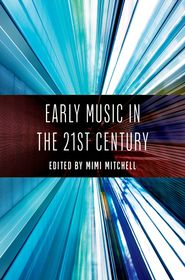
Early Music in the 21st Century
-
10% KEDVEZMÉNY?
- A kedvezmény csak az 'Értesítés a kedvenc témákról' hírlevelünk címzettjeinek rendeléseire érvényes.
- Kiadói listaár GBP 19.99
-
9 550 Ft (9 095 Ft + 5% áfa)
Az ár azért becsült, mert a rendelés pillanatában nem lehet pontosan tudni, hogy a beérkezéskor milyen lesz a forint árfolyama az adott termék eredeti devizájához képest. Ha a forint romlana, kissé többet, ha javulna, kissé kevesebbet kell majd fizetnie.
- Kedvezmény(ek) 10% (cc. 955 Ft off)
- Kedvezményes ár 8 595 Ft (8 186 Ft + 5% áfa)
Iratkozzon fel most és részesüljön kedvezőbb árainkból!
Feliratkozom
9 550 Ft

Beszerezhetőség
Becsült beszerzési idő: A Prosperónál jelenleg nincsen raktáron, de a kiadónál igen. Beszerzés kb. 3-5 hét..
A Prosperónál jelenleg nincsen raktáron.
Why don't you give exact delivery time?
A beszerzés időigényét az eddigi tapasztalatokra alapozva adjuk meg. Azért becsült, mert a terméket külföldről hozzuk be, így a kiadó kiszolgálásának pillanatnyi gyorsaságától is függ. A megadottnál gyorsabb és lassabb szállítás is elképzelhető, de mindent megteszünk, hogy Ön a lehető leghamarabb jusson hozzá a termékhez.
A termék adatai:
- Kiadó OUP USA
- Megjelenés dátuma 2025. január 13.
- ISBN 9780197683071
- Kötéstípus Puhakötés
- Terjedelem344 oldal
- Méret 226x150x17 mm
- Súly 590 g
- Nyelv angol
- Illusztrációk 28 579
Kategóriák
Rövid leírás:
This collection about the early music movement will appeal to performers, teachers, academics, instrument makers, amateur musicians, and music lovers. With chapters about new ways to study, teach, perform, and listen to early music, there is something to appeal to everyone. The diverse group of authors--from young to established voices who live across the globe--offer positive, diverse, exciting, and challenging points of view about how the early music movement can go forward into the future.
TöbbHosszú leírás:
How can the early music movement move into the future? Could this be a transformative moment for change and growth? In this collection of essays, a diverse group of young and established voices from across the globe offers exciting, positive, and challenging thoughts about how we can reimagine the early music movement in this new century.
Nicholas Kenyon's preface is followed by sixteen chapters written by performers, scholars, and pedagogues. They introduce new ways to conduct research, discuss various performative issues, offer numerous educational directions and exciting technological tools, and-perhaps most importantly-suggest ways we can engage with the present as well as with the past. These chapters include material that has been translated into English for the first time and are presented under Methodological Viewpoints, (Non) Historical Instruments, Pedagogical Perspectives, Transformative Technologies, and Revisiting History. An accompanying website provides additional audio and video material.
This post-revival period for the early music movement is crucial for its enduring success. How can a revival movement that looks to the past for inspiration engage with today's social and technological concerns? Early Music in the 21st Century asks important questions for everyone interested in early music—performers, teachers, academics, instrument makers, historians, and music lovers. By encouraging a return to the revolutionary spirit of the pioneering generations, this book offers a plethora of positive possibilities for the future of early music.
Early Music in the 21st Century, through excellent scholarship and compelling musical examples on the companion website, admirably succeeds in introducing students to multiple paths forward in early-music research.
Tartalomjegyzék:
Foreword: Polarization, Reintegration, and Diversity
Sir Nicholas Kenyon
1. Introduction
Mimi Mitchell
Part I: Methodological Viewpoints
2. Early Music: Views from Ethnomusicology
Caroline Bithell
3. Renewing Historical Performance through an Embodiment of Historical Acting Techniques
Jed Wentz
4. Historical Interpretation Research-New Sources and Methodologies
Kai Köpp
Part II: (Non) Historical Instruments
5. Making (Faking?) Early Music
Jeremy Montagu
6. Plastic Fantastic?
Fiona Brock, Andrew Hughes, and Jeremy Uden
7. Modern Versus Historical Instruments: International Bach Competition Leipzig
Mimi Mitchell
Part III: Pedagogical Perspectives
8. Professionalizing Historical Performance: The Past and Present of Early Music Education in Am-sterdam
Kailan Rubinoff
9. "HIP for All" or Specialized Training: Diverse Missions for Early Music in Higher Education
Kelly Landerkin and Claire Michon
10. Nows, Thens, and Truths: Attending to the Present in Performing the Past
Jonathan Impett
11. Towards a More Inclusive Early Music
Deanna Pellerano
Part IV: Transformative Technologies
12. Early Music and the Paradox of Technology
Alon Schab
13. "Nutrition in an Age of Diet Soft Drinks": the Utopa Baroque Organ in Amsterdam
Hans Fidom
14. Developing Virtual Acoustic Systems for Use in Early Music Research
Eoin Callery and Jonathan Abel
Part V: Revisiting History
15. The New Dutch Recorder Sound of the 1960s
Robert Ehrlich
16. Early Music in the Latin Americas: An Alternative Scene
Melodie Michel
17. Remixes and Radical Revivals: Baroque Opera Production and the Opera Wars
Caitlin Vincent
Index

