

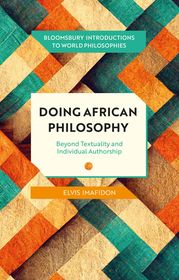
Doing African Philosophy
Beyond Textuality and Individual Authorship
Sorozatcím: Bloomsbury Introductions to World Philosophies;
-
13% KEDVEZMÉNY?
- A kedvezmény csak az 'Értesítés a kedvenc témákról' hírlevelünk címzettjeinek rendeléseire érvényes.
- Kiadói listaár GBP 55.00
-
26 276 Ft (25 025 Ft + 5% áfa)
Az ár azért becsült, mert a rendelés pillanatában nem lehet pontosan tudni, hogy a beérkezéskor milyen lesz a forint árfolyama az adott termék eredeti devizájához képest. Ha a forint romlana, kissé többet, ha javulna, kissé kevesebbet kell majd fizetnie.
- Kedvezmény(ek) 13% (cc. 3 416 Ft off)
- Kedvezményes ár 22 860 Ft (21 772 Ft + 5% áfa)
Iratkozzon fel most és részesüljön kedvezőbb árainkból!
Feliratkozom
26 276 Ft

Beszerezhetőség
Még nem jelent meg, de rendelhető. A megjelenéstől számított néhány héten belül megérkezik.
Why don't you give exact delivery time?
A beszerzés időigényét az eddigi tapasztalatokra alapozva adjuk meg. Azért becsült, mert a terméket külföldről hozzuk be, így a kiadó kiszolgálásának pillanatnyi gyorsaságától is függ. A megadottnál gyorsabb és lassabb szállítás is elképzelhető, de mindent megteszünk, hogy Ön a lehető leghamarabb jusson hozzá a termékhez.
A termék adatai:
- Kiadó Bloomsbury Publishing (UK)
- Megjelenés dátuma 2026. február 19.
- Kötetek száma Hardback
- ISBN 9781350464278
- Kötéstípus Keménykötés
- Terjedelem240 oldal
- Méret 216x138 mm
- Nyelv angol 700
Kategóriák
Rövid leírás:
Articulates the importance of oral traditions and symbolism as repositories of philosophical knowledge and reaffirms African systems of thought as philosophy.
TöbbHosszú leírás:
What defines a philosophical tradition? The primacy of the written text and individual authorship are two major defining and interwoven credentials that have been used to deny African philosophical thought prior to the postcolonial phase. In this significant contribution to the search for identity and authenticity of African philosophy, Elvis Imafidon questions the relevance of authorship and textuality in the production, storage and transmission of knowledge. Drawing from the rich and robust philosophical heritages of sub-Saharan African traditions, he showcases the many non-textual and textual ways philosophy is collaboratively and intersubjectively done and critiqued.
His focus is on two major repositories of philosophical knowledges: orality and symbolism. Storytelling, adages, names and naming, folklores, proverbs and forms of symbolically encoded knowledges found in artefacts, symbols, textile patterns, motifs and corporeal and performative arts contest dominant narratives. They ask us to rethink the logic of binaries between literacy and illiteracy, text and non-text, and speech and writing.
Paying close attention to the Binis and Esans in Southern Nigeria, the Akans and Gas in Ghana, the Shonas in Zimbabwe, and the Zulu people in South Africa, Imafidon affirms the place of orality, symbolic art and different indigenous methods for philosophising. Exploring the concept of street philosophy in Nigeria, we see how oral and symbolic forms of philosophizing persist in modern African societies.
This much-needed book reclaims the voices, agency and narratives of African thought across history revealing the deeply embedded intersubjective and ecocentric Intellegence, and enigmatics of African philosophy. It challenges our understanding of the discipline of Philosophy and argues for an inclusive definition of philosophy in our trans-human, trans-textual age.
Tartalomjegyzék:
"
Acknowledgements
Series Editors Preface
Foreword by Michael Onyebuchi Eze
Preliminaries: Doing African Philosophy
Doing Philosophy
The African Way
Reimagining Identity
1. Redefining a Philosophical Tradition
The Dominant Understanding of a Philosophical Tradition
Contesting Individual Authorship
Contesting Textuality
Contesting the Politics of Naming and Transgenerational Coherency
Contesting Whiteness and Literacy
What is a Philosophical Tradition?
2. The Orality of African Philosophy
Oral Repositories of Philosophy
Orality, Transgenerationality and Epistemic Reliability
Language, Orality and Truth
Names and the Philosophy of Human Existence
Oralising Relationality
3.Symbolism and African Philosophy
Problematising the Aesthetic Hermeneutical Encounter
Creating, Performing and Curating Philosophy
Symbolising Ontological Commitments
Symbolising Individuality in Relationality
Symbolising Knowing and Learning
4.The Textuality of African Philosophy
Legacies
Resistance
Defence
Mirroring
Doing
5.Trans-textuality and Collaborative Strategies
Trans-textuality and the Crisis of Relevance
Afro-communitarianism as Method toward Ecocentric Intellectuality
Relationality, Fluidity and Difference
Collaborative Research and Pedagogies
On Polemics and Enigmatics
6.Contemporaneities and Futures: On Street Philosophy
Acknowledging Contemporaneity: Philosophy in the Streets
Japa, Sapa and the Philosophy of Migration
""School na Scam"": Critiquing Education
Reimagining Futures
References
Index

